UKRAINE — NUCLEAR SAFETY — INTERNATIONAL AID
UK Pledges £17 Million for Chornobyl Shelter Repairs
Britain will help restore confinement and ventilation in the damaged structure over reactor four. The pledge is meaningful, but it is one contribution to a much larger, technically difficult repair program.
By Health Politics Daily News Desk · Published Thursday, October 15, 2026 at 6:00 a.m. America/New_York · Approximately 7 minutes
Verified Baseline
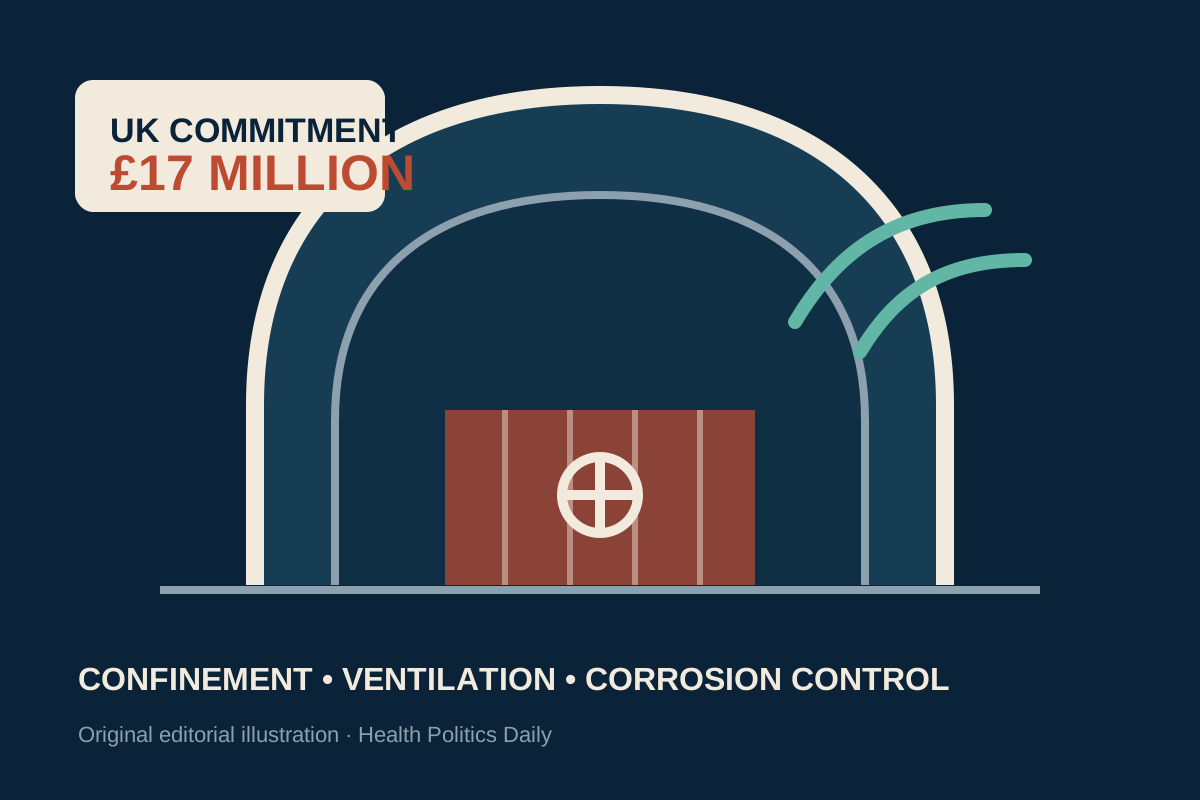
Britain committed £17 million to an international repair program
The British government announced Thursday that it will provide £17 million toward repairs at the Chornobyl nuclear power plant in northern Ukraine. The money will support work intended to restore the New Safe Confinement structure’s confinement and ventilation functions and protect its intended lifespan.
The program is coordinated by the European Bank for Reconstruction and Development with Ukraine and international donors. Britain described its pledge as part of a G7 package; it did not say the £17 million completes or fully funds the repair.
What Happened
A 2025 drone strike damaged the arch over reactor four
A February 2025 drone strike punctured the protective structure and caused a fire that damaged its sealing membrane. Ukraine attributes the strike to Russia; Moscow denies responsibility. No radioactive leak was detected, and the older sarcophagus beneath the arch remained intact, according to Reuters reporting from the site.
The 256-meter-wide steel arch was built to contain radioactive material from reactor four, which exploded in 1986. Workers installed a temporary patch, but permanent repairs are complicated by radiation exposure limits and the need for specialized labor.
Why It Matters
The immediate risk is controlled; long-term corrosion is the concern
The new pledge is preventive nuclear-safety funding, not a response to a newly reported radiation release. The British release says damaged confinement and ventilation could allow corrosion to undermine decades of international investment and create longer-term environmental and safety risks if repairs are not completed.
Earlier in 2026, the EBRD estimated that full repairs could cost at least €500 million. Analysis: Britain’s contribution helps move the program forward but represents only a fraction of that estimate, so additional donor commitments, engineering work and access conditions will determine the schedule.
Practical Implications
What the announcement changes—and what it does not
- For nearby communities: the pledge supports long-term containment; it does not signal a newly detected leak or an evacuation order.
- For workers: permanent repairs remain slow because time near highly contaminated areas is restricted and qualified crews are limited.
- For governments and donors: funding must be combined with an agreed engineering plan, procurement and safe site access.
- For travelers: the announcement does not change official travel advice or the controls governing access to the exclusion zone.
What Remains Uncertain
The final design, full cost and completion date are not settled publicly
The UK announcement does not provide a repair timetable or identify which contracts the £17 million will finance. The full international package, the share committed by each donor and the eventual total cost remain unclear.
Forecast: the new funding is likely to support near-term design, stabilization or restoration work, but a complete repair will probably depend on further international finance. Opinion: governments should publish milestones and radiation-monitoring data as the program proceeds; that would let the public distinguish measurable safety progress from political messaging.
Bias Lens: nuclear-safety repair or broader Ukraine-support story?
Britain pledged £17 million toward repairs to Chornobyl’s damaged protective shelter. The funding targets confinement and ventilation; no new radiation release was reported.
Left-leaning coverage: The Guardian places the pledge within concerns about the durability of Western support for Ukraine and the site’s longer-term corrosion risk. Center coverage: Reuters focuses narrowly on the amount and the confinement and ventilation work. Right-leaning coverage: no major right-leaning outlet had published a comparably specific report on the pledge at publication time, so this lens does not force a substitute or fringe source.
The difference is mainly scope: one frame connects the money to alliance politics, while the other treats it as a technical funding announcement. The government’s own release combines both nuclear-safety details and advocacy for continued pressure on Russia; those policy claims should not be confused with the verified funding terms.
Principal Sources
Official release, repair authority and on-site reporting
- UK government — funding announcement
- EBRD — Chornobyl nuclear-safety program
- Reuters — funding report
- Reuters — site conditions and repair estimate
No directly relevant official or publisher-authorized video with clear embedding permission was available at publication time.
Related Coverage