ENERGY — FINANCE — U.S. POLICY
U.S. Seeks Bids to Exchange Up to 17 Million Strategic Oil Barrels
The offer is the latest piece of a much larger emergency-release commitment. The headline number is a ceiling, not a guaranteed withdrawal: companies must bid and later return crude, generally with extra barrels.
By Health Politics Daily News Desk · Published Friday, October 16, 2026 at 2:00 p.m. America/New_York · Approximately 7 minutes
Verified Baseline
The Energy Department opened another exchange solicitation
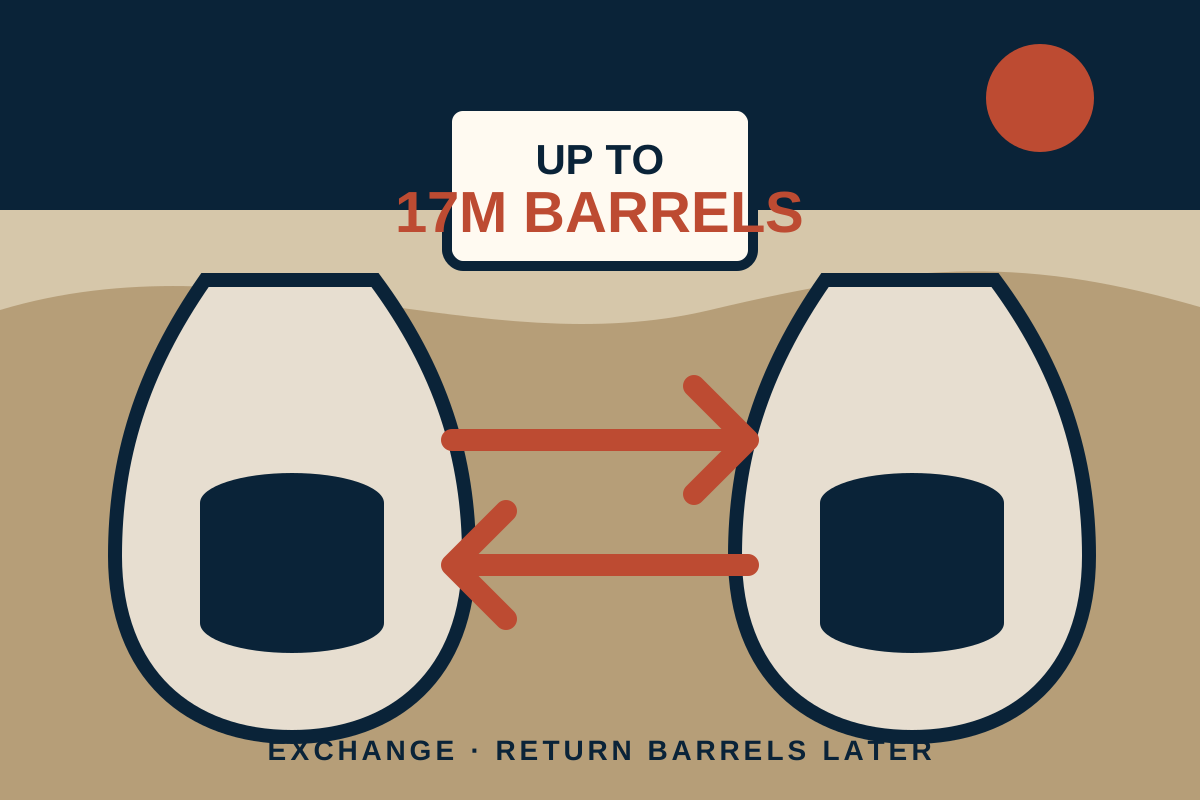
The U.S. Department of Energy issued a request for proposals Friday to exchange up to 17 million barrels of crude oil from the Strategic Petroleum Reserve, according to Reuters. The solicitation continues the government’s execution of a 172-million-barrel U.S. commitment announced in March as part of a coordinated 400-million-barrel action by International Energy Agency members.
An exchange is not an outright sale. The government lends crude to successful bidders, which must return barrels later under contract terms. Those terms can require a premium in additional oil, potentially leaving the reserve with more barrels after repayment even though inventory falls temporarily.
Why 17 Million Is Not a Forecast
Past offers show that available barrels may go unclaimed
The government is seeking bids for up to 17 million barrels; it has not announced awards or deliveries for the full amount. Reuters reported that companies borrowed only about 500,000 barrels from a previous offer for the remaining June tranche, when required premiums could reach 24% in extra crude returned to the reserve.
Analysis: that experience is essential context. A high repayment premium can protect taxpayers and replenish the stockpile, but it can also make borrowing unattractive. The final award therefore depends on the grades, locations, delivery windows, return schedule and bids—not only on the administration’s maximum offer.
Why It Matters
The government is trying to add supply while oil prices remain elevated
The March action followed oil-market disruption from the war with Iran and risks to shipping through the Strait of Hormuz. Emergency reserves can temporarily place more crude in commercial hands, giving refiners another source of feedstock and signaling that governments will respond to supply stress.
But 17 million barrels is small relative to global consumption, which runs near 100 million barrels a day. Even if fully awarded, the exchange would not by itself determine gasoline or diesel prices. Crude benchmarks, refinery outages, seasonal fuel specifications, shipping, taxes and local distribution all affect what drivers pay.
Practical Implications
Consumers should not expect an immediate one-for-one price drop
- Drivers: retail prices usually respond with a lag and can move differently by region.
- Refiners and traders: bid economics will turn on crude quality, transport costs and how expensive it may be to return barrels later.
- Taxpayers: the premium structure can add oil to the reserve when loans are repaid, but only if contracts are fulfilled.
- Policymakers: the quantity actually awarded and delivered will be more informative than the headline ceiling.
This report is general information, not a forecast of fuel prices or investment advice.
What Remains Uncertain
Awards, timing and market effect have not been established
The public announcement does not yet show how many companies will bid, how much oil they will request, or the weighted premium on successful awards. The timing of physical deliveries and repayments will determine the inventory path. Further military or shipping disruptions could overwhelm the price effect; improved flows could make the offer less attractive.
Forecast: the exchange may modestly improve near-term availability if bids are competitive and deliveries are prompt, but it is unlikely to erase the geopolitical risk premium on its own. Opinion: officials should publish award volumes, premiums and delivery schedules promptly so the public can distinguish announced capacity from oil that actually reaches the market.
Bias Lens: emergency buffer, price politics or limited market tool?
DOE is soliciting bids for exchanges totaling no more than 17 million barrels. The amount actually awarded may be smaller, and recipients must return crude under contract terms.
Left-leaning coverage: The Guardian framed the broader March reserve action within the administration’s handling of the Iran war and rising fuel prices. Center coverage: Reuters emphasizes the new quantity, the coordinated international commitment and the weak take-up of an earlier tranche. Center-right business coverage: The Wall Street Journal foregrounds current oil prices, shipping risks and skepticism that reserve releases alone can outweigh geopolitical pressure.
The differences are about emphasis, not separate facts: political accountability for the war and pump prices, implementation mechanics, or market limits. None of those frames establishes the final award volume or guarantees a retail-price response.
Principal Sources
Solicitation, program history and market context
- Reuters — new 17-million-barrel solicitation and earlier take-up
- U.S. Department of Energy — prior 40-million-barrel RFP and 172-million-barrel commitment
- U.S. Department of Energy — Office of Petroleum Reserves
- Associated Press — how the reserve and coordinated release work
No suitable directly relevant official or publisher-authorized video with clear embedding permission was available.
Related Coverage