GERMANY AND UKRAINE — DEVELOPING
Germany Announces €1.35 Billion Ukraine Package; Drone Deal Still Pending
Chancellor Friedrich Merz arrived in Kyiv with military and energy-repair support. The visit is expected to complete a broader joint-production agreement, but its signed text and delivery schedule were not public at publication time.
By Health Politics Daily News Desk · Published Sunday, October 4, 2026 at 4:01 a.m. America/New_York · Approximately 8 minutes
Verified Baseline
Merz arrived in Kyiv with two announced funding lines
German Chancellor Friedrich Merz arrived in Kyiv on Sunday with Economy Minister Katherina Reiche and executives from German energy and defense companies. German government officials told Reuters that the visit would release €1 billion in military aid and €350 million for repairs to Ukraine’s energy sector.
That is €1.35 billion in stated support, but the two amounts serve different purposes. The military portion is for defense assistance; the energy portion is for restoring infrastructure damaged during Russia’s war. The announcement is not a ceasefire, a security guarantee or a transfer of cash directly to Ukrainian households.
The Drone Agreement
Production cooperation is real; final terms are still incomplete
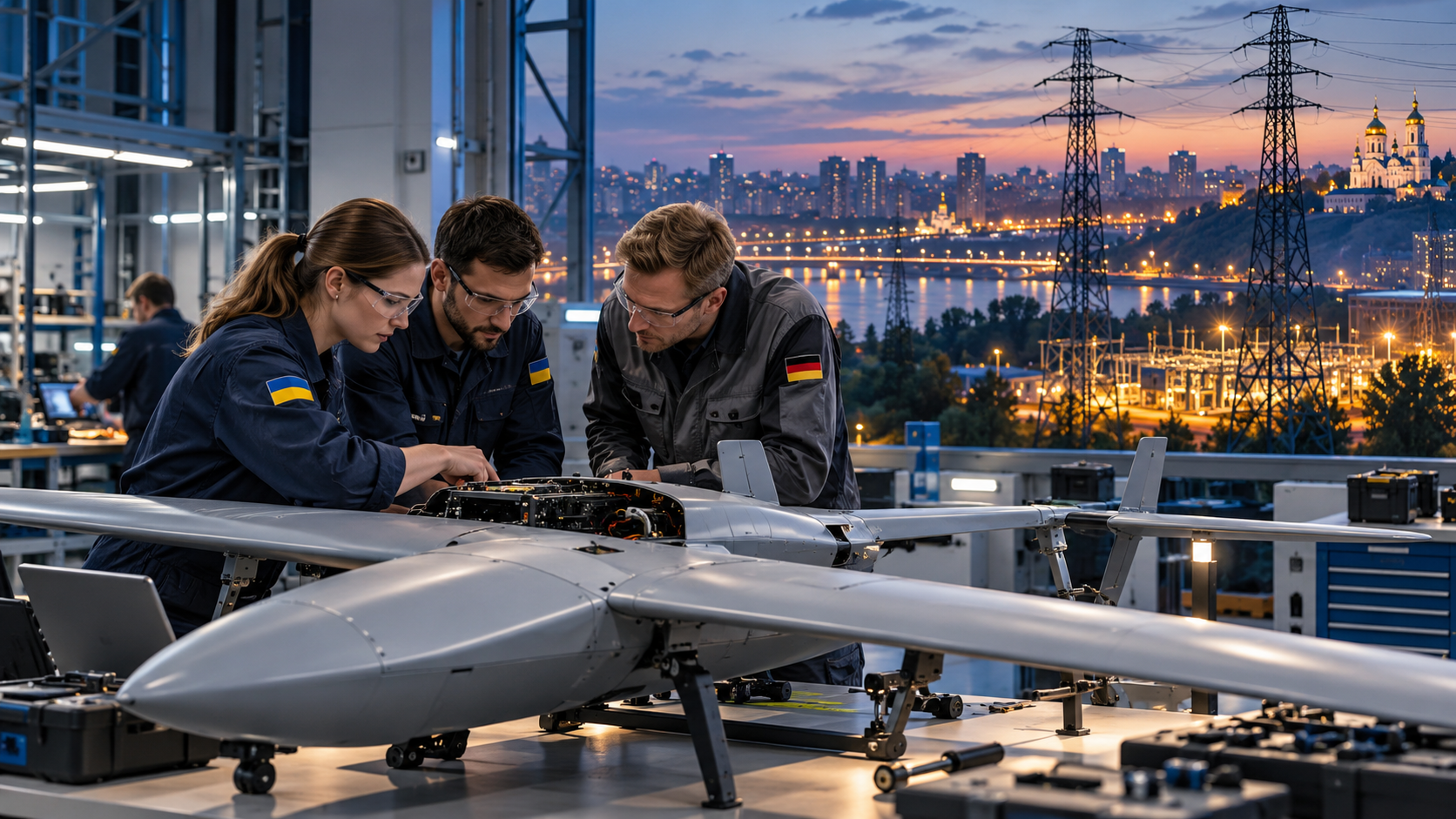
Ukraine’s presidential office said on September 2 that Ukrainian and German teams were “finalizing the text” of a Drone Deal. Earlier official announcements described joint ventures, German financing and production of Ukrainian-designed systems in Germany. Reuters reports that the package now under discussion covers drones, missiles and related software, with rapid production of interceptor drones a central focus.
One existing example is the German-Ukrainian Quantum WIY Industries joint venture, announced in April to make the Strila interceptor and related air-defense technology. That history shows the cooperation did not begin with Sunday’s visit. It does not, however, establish how many systems the new agreement will fund, where every production line will sit or when deliveries will begin.
Why It Matters
Ukraine needs lower-cost defenses and winter energy resilience
Ukraine says Russia is using more high-speed jet-powered attack drones, which are harder and costlier to stop than slower models. Interceptors designed for that threat could fill a gap between electronic defenses and expensive surface-to-air missiles, but performance at scale will depend on detection, manufacturing volume, reliability and training.
The €350 million energy line matters separately. Attacks on generation, heating and transmission can disrupt electricity and heat even when air defenses intercept many incoming weapons. Repair funding can restore equipment and help utilities prepare for winter, but it cannot prevent future strikes or guarantee uninterrupted service.
Practical Implications
What to watch after the visit
- Signed text: look for a joint communiqué or published agreement, not only statements that a deal is expected.
- Quantities and dates: a production commitment becomes more measurable when contracts, unit numbers and delivery windows are disclosed.
- Energy allocation: the usefulness of €350 million will depend on which substations, heating systems and replacement components are funded.
- Oversight: Merz is expected to press Kyiv on anti-corruption and other European Union reform requirements; aid and industrial contracts still require controls.
What Remains Uncertain
The announcement is larger than the public detail
The government has not yet published a complete breakdown of the €1 billion military package. The final drone agreement, production locations, intellectual-property rules, export controls and delivery timetable also remain unclear. Company demonstrations and political commitments are not the same as field performance or completed procurement.
Verified fact: Merz is in Kyiv, Germany says it will release €1 billion in military aid and €350 million for energy repairs, and the two countries have been negotiating joint production. Analysis: combining Ukrainian battlefield experience with German capital and manufacturing could accelerate interceptor supply. Forecast: the arrangement may strengthen European drone defenses, but output and effectiveness cannot be known until contracts and deliveries are documented.
Bias Lens: solidarity, industrial strategy or immediate security?
Merz arrived in Kyiv on October 4 with a German delegation. Officials described €1 billion in military aid and €350 million for energy repairs, while a joint drone-production agreement remained expected rather than fully published.
The left-leaning Guardian frames the wider story through civilian life, winter energy vulnerability and intensified Russian attacks. Center-oriented Reuters leads with the aid amounts, delegation and production mechanics, while the Associated Press emphasizes the diplomatic signal and escalation around Kyiv. The right-leaning German outlet Welt foregrounds long-range weapons and interceptor deliveries. These choices alter emphasis; they do not change the verified funding figures or the absence of published final terms.
Principal Sources
Official records and corroborating reporting
- President of Ukraine — teams finalizing the Drone Deal, September 2
- President of Ukraine — German contribution to drone production and strategic cooperation, April 14
- Reuters — Kyiv visit, aid amounts and expected production agreement
- Associated Press — visit and security context
No directly relevant official or publisher-authorized video with clear embedding permission was available at publication time.