CYBERSECURITY — FINANCE — SOUTH KOREA
South Korea Finds Hacking at 16 Financial Firms, About 100,000 Data Leaks
Regulators say names and contact details were exposed, but not account or card numbers. The final scope, attackers and whether artificial intelligence was used remain under investigation.
By Health Politics Daily News Desk · Published Wednesday, October 14, 2026 at 3:56 a.m. America/New_York · Approximately 6 minutes
Verified Baseline
Regulators identify 16 affected firms and about 100,000 leak cases
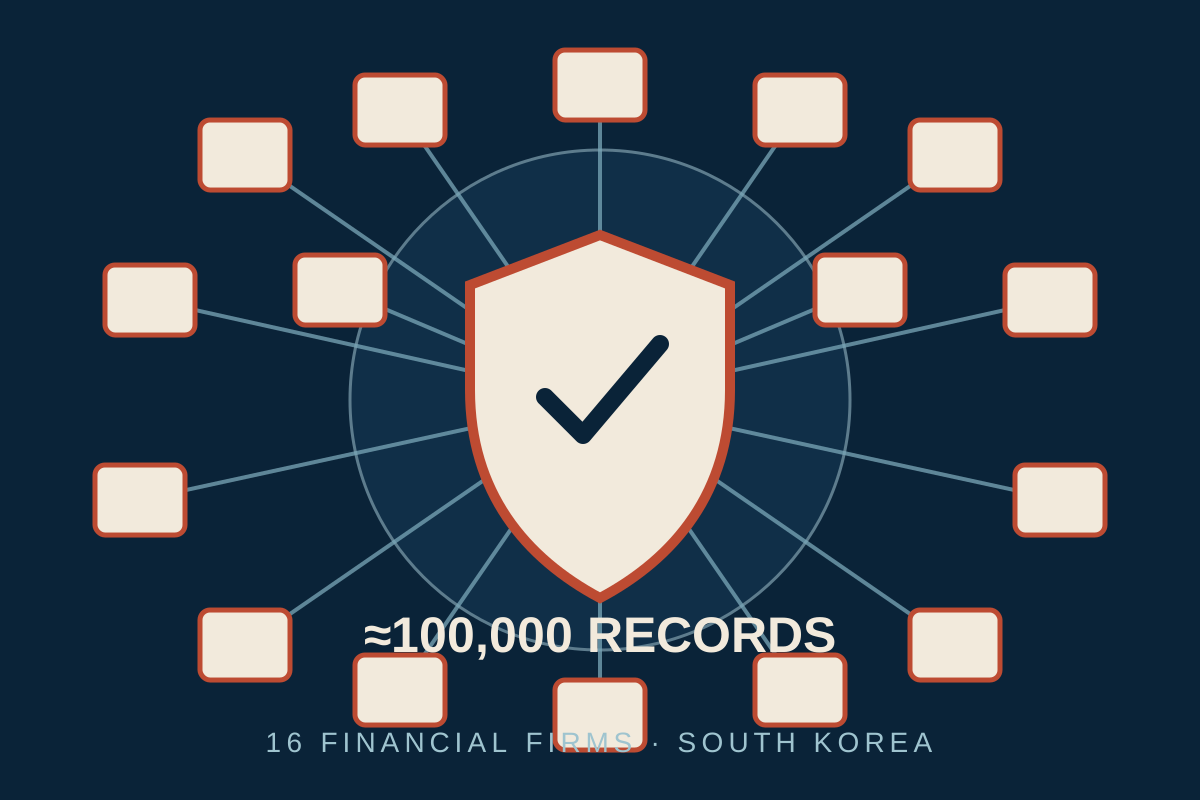
South Korea's Financial Services Commission said hacking incidents were found at 16 financial companies and that about 100,000 cases of personal-data leakage are presumed. The regulator said it is investigating the methods used and will inspect security systems across the affected sector.
Verified fact: the disclosed data included names, email addresses and telephone numbers. The FSC said account numbers, credit-card numbers and other sensitive financial credentials were not leaked in the incidents identified so far.
Still uncertain: the regulator has not publicly established a final number of people affected, identified the attackers or confirmed that artificial intelligence enabled the intrusions.
Why It Matters
Contact details can support convincing fraud even without account credentials
Names paired with phone numbers or email addresses can help criminals impersonate banks, government offices or relatives. That does not mean every exposed record will be misused, and the regulator has not reported theft from customer accounts as part of this disclosure.
South Korean authorities had already issued a consumer alert about phishing and fraudulent loans after earlier reports of attacks on several finance companies. The FSC and Financial Supervisory Service announced enhanced fraud monitoring, additional identity checks and a one-month special response period.
Practical implication: customers should treat unexpected messages requesting passwords, one-time codes or urgent transfers as unverified. Use a bank's official app, website or the number printed on a card to make contact independently; do not rely on a link or callback number inside an unsolicited message.
AI Question
Officials are investigating AI involvement, not declaring it proven
President Lee Jae Myung earlier said artificial intelligence appeared to have been used in the campaign. The FSC's October 14 account is more cautious: investigators are examining whether AI was involved and how the attacks were conducted.
Analysis: AI can make phishing text, reconnaissance and automation faster, but unusual scale alone does not prove that a particular model or tool caused a breach. Attribution requires technical evidence that authorities have not made public.
Regulatory Response
Inspections and faster information sharing are the immediate steps
The FSC said it will conduct security inspections at financial companies, strengthen early detection and build a joint response system. Earlier measures included help desks for potential victims, enhanced monitoring of new accounts, loans and transfers, and an AI-based platform for sharing fraud indicators across institutions.
Forecast: firms are likely to face tighter testing, reporting and third-party security reviews. Opinion: Health Politics Daily takes no position on a specific enforcement outcome; any penalties or compensation should follow documented failures and applicable law.
What Remains Uncertain
The count could change as firms finish reviewing systems
The disclosed figure refers to presumed leak cases and may include duplicate records or change as investigations continue. Authorities have not published a complete incident-by-incident timeline, the full technical route into every company, or a final assessment of responsibility.
The absence of leaked account and card numbers is important, but it does not eliminate phishing risk. It also does not establish that every affected firm had the same vulnerability or that a single actor was responsible.
Bias Lens: scope, consumer risk and the AI claim
South Korean regulators say 16 financial firms were hacked and about 100,000 personal-data leak cases are presumed. Names and contact details were exposed; account and card numbers were not, according to the FSC. AI involvement is under investigation.
A meaningful left-versus-right split did not emerge in the available coverage, so forcing one would mislead. International wire framing: Reuters leads with the regulator's systemwide count and investigation. Domestic public-service framing: Yonhap foregrounds the categories of exposed data and the absence of account or card-number leaks. Business framing: the Financial Times emphasizes the possible use of AI and attacks on third-party systems.
Those choices change the perceived center of the story—regulatory reach, consumer exposure or attack technique—without establishing contradictory core facts. The AI angle remains the clearest area where headlines can run ahead of the public evidence.
Principal Sources
Regulatory record and corroborating reporting
- South Korea Financial Services Commission — press releases and consumer response measures
- Reuters — regulator's October 14 disclosure
- Yonhap News Agency — exposed data categories and institutions' review
No directly relevant official or publisher-authorized video with clear embedding permission was available, so no video is embedded.
Related Coverage