GLOBAL FINANCE — BANK RESOLUTION — CRISIS PREPAREDNESS
FSB Finds Emergency-Funding Gaps in Most Major Banking Systems
Only a minority of the 19 jurisdictions reviewed fully met the global watchdog’s standard for temporary public funding when a systemic bank is being wound down or sold.
By Health Politics Daily News Desk · Published Friday, October 9, 2026 at 4:01 a.m. America/New_York · Approximately 7 minutes

Watch in this article
Pumpjack operating at the Kern River Oil Field
A short CC0 field video provides visual context for reporting on oil production and fuel supply.
Thomas Farley / Wikimedia Commons · CC0 1.0 · License and source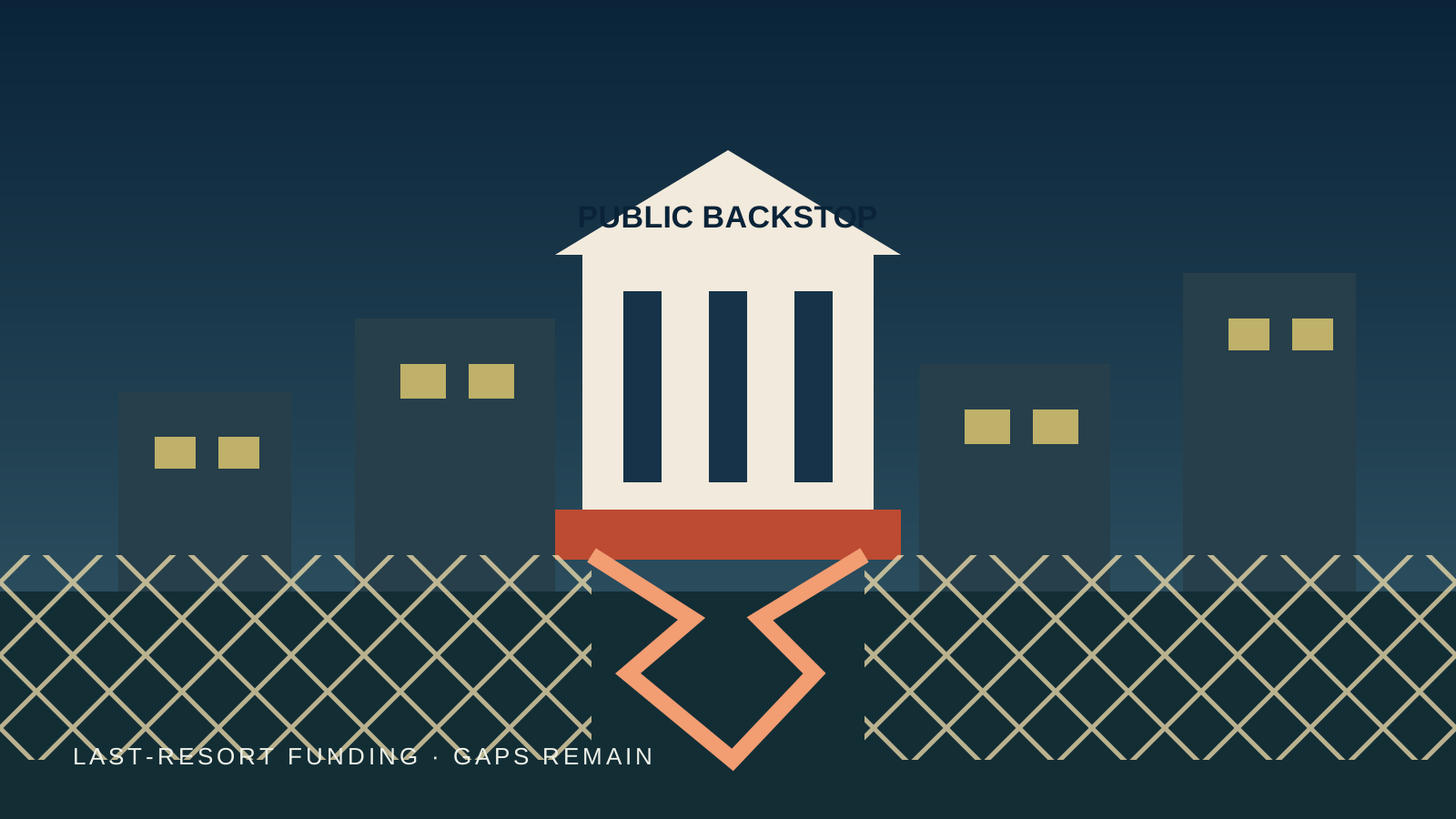
Verified Baseline
A peer review found incomplete crisis-funding arrangements
The Financial Stability Board said Friday that a majority of the 19 jurisdictions it reviewed need more work to provide temporary public funding when a systemically important bank is placed into resolution. Roughly half still have material gaps, 15 years after the FSB first set its standard.
The mechanism is meant to be a last resort after private and ordinary central-bank liquidity sources are exhausted. It supplies temporary cash so an authority can keep critical services operating while restructuring, selling or winding down a bank. It is not designed to restore an insolvent institution for its owners.
Important distinction: the review does not say a bank failure is imminent, rank the overall safety of national banking systems or assess every crisis-management tool. It evaluates one specific part of resolution planning.
What the Review Found
Four jurisdictions fully met the standard
According to the FSB review and reporting by the Financial Times, the United States, United Kingdom, Japan and Hong Kong fully met the recommendations. Other jurisdictions had frameworks judged largely or materially incomplete, while India and Argentina lacked a qualifying mechanism under the review’s criteria.
The FSB said a credible backstop needs clear legal authority, enough capacity, rapid access and a way to recover any public money used. Arrangements should be operational before a crisis rather than invented while depositors and markets are under stress.
Argentina disputed the assessment, pointing to high capital and liquidity in its banks. That response addresses the likelihood of needing a backstop; the FSB’s test asks whether one would work if it were needed.
Why It Matters
A solvent successor bank can still need cash immediately
Resolution tools are intended to let authorities handle a failing bank without interrupting deposits, payments or lending and without automatically nationalizing it. Even after losses are assigned to investors, the restructured institution may need large amounts of short-term liquidity before assets can be sold or market funding returns.
Analysis: the policy problem is a timing mismatch. A resolution authority may have legal power to close or restructure a bank yet still lack a prearranged source of cash large enough to prevent a disorderly run. The 2023 failures showed how rapidly deposits can leave in a digital banking system.
The report belongs to a broader debate over resilience covered in this site’s reports on rising yields and global financial pressure and measurement gaps in U.S. farm credit.
Practical Implications
What governments, banks and depositors should infer
- Governments: the FSB is urging legal and operational changes before the next crisis, including loss-recovery provisions that reduce long-term taxpayer exposure.
- Banks: institutions may face more detailed planning for how they would access temporary funding while in resolution.
- Depositors: the report does not change deposit-insurance limits or identify a particular bank as unsafe. Customers should use their national regulator’s current insurance guidance.
- Taxpayers: a backstop can put public money at temporary risk, but the recommended design requires recovery from the resolved firm or financial sector where possible.
- Investors: emergency liquidity is not the same as protecting shareholders or creditors from losses.
What Remains Uncertain
Implementation depends on national law and political choices
The FSB cannot compel legislatures to create or expand funding mechanisms. Timelines, maximum capacity, collateral rules and who ultimately bears unrecovered losses will vary. The review also does not show how each mechanism would perform during simultaneous failures across borders.
Forecast: jurisdictions with material gaps are likely to conduct legislative or regulatory reviews, but implementation could take years. No common deadline or binding enforcement process was announced.
Opinion: Health Politics Daily takes no position on a specific national design. Any public backstop should be transparent about eligibility, loss allocation and repayment so temporary liquidity does not become an open-ended subsidy.
Bias Lens: how coverage frames the finding
The FSB found that most of the 19 reviewed jurisdictions have not fully implemented its standard for temporary public funding of a systemic bank in resolution. The review addresses preparedness, not a forecast of imminent bank failures.
Center coverage: Reuters emphasizes the watchdog’s call to close operational gaps and explains the role of last-resort liquidity. Business-focused coverage: the Financial Times foregrounds the striking country comparison and the limited number judged fully compliant.
No clearly representative left- and right-leaning outlets had substantial original coverage of this technical peer review at publication. Forcing ideological labels onto syndicated or thin summaries would imply disagreement that is not evident. The meaningful framing difference is between institutional preparedness and the country-by-country scorecard.
Principal Sources
Primary report and independent reporting
- Financial Stability Board — peer-review release and report
- Reuters — findings, policy context and responses
- Financial Times — jurisdiction-level comparison
No suitable directly relevant official or publisher-authorized video with clearly confirmed embedding permission was available.