FINANCE — ENERGY — HOUSEHOLD COSTS
Oil Tops $100 as Treasury Yields Rise and Global Stocks Retreat
Global markets reversed after Tuesday’s records as a renewed oil-price rise and elevated government borrowing costs revived concerns about inflation, credit and economic growth.
By Health Politics Daily News Desk · Published Wednesday, October 7, 2026 at 11:57 a.m. America/New_York · Approximately 8 minutes

Watch in this article
Pumpjack operating at the Kern River Oil Field
A short CC0 field video provides visual context for reporting on oil production and fuel supply.
Thomas Farley / Wikimedia Commons · CC0 1.0 · License and source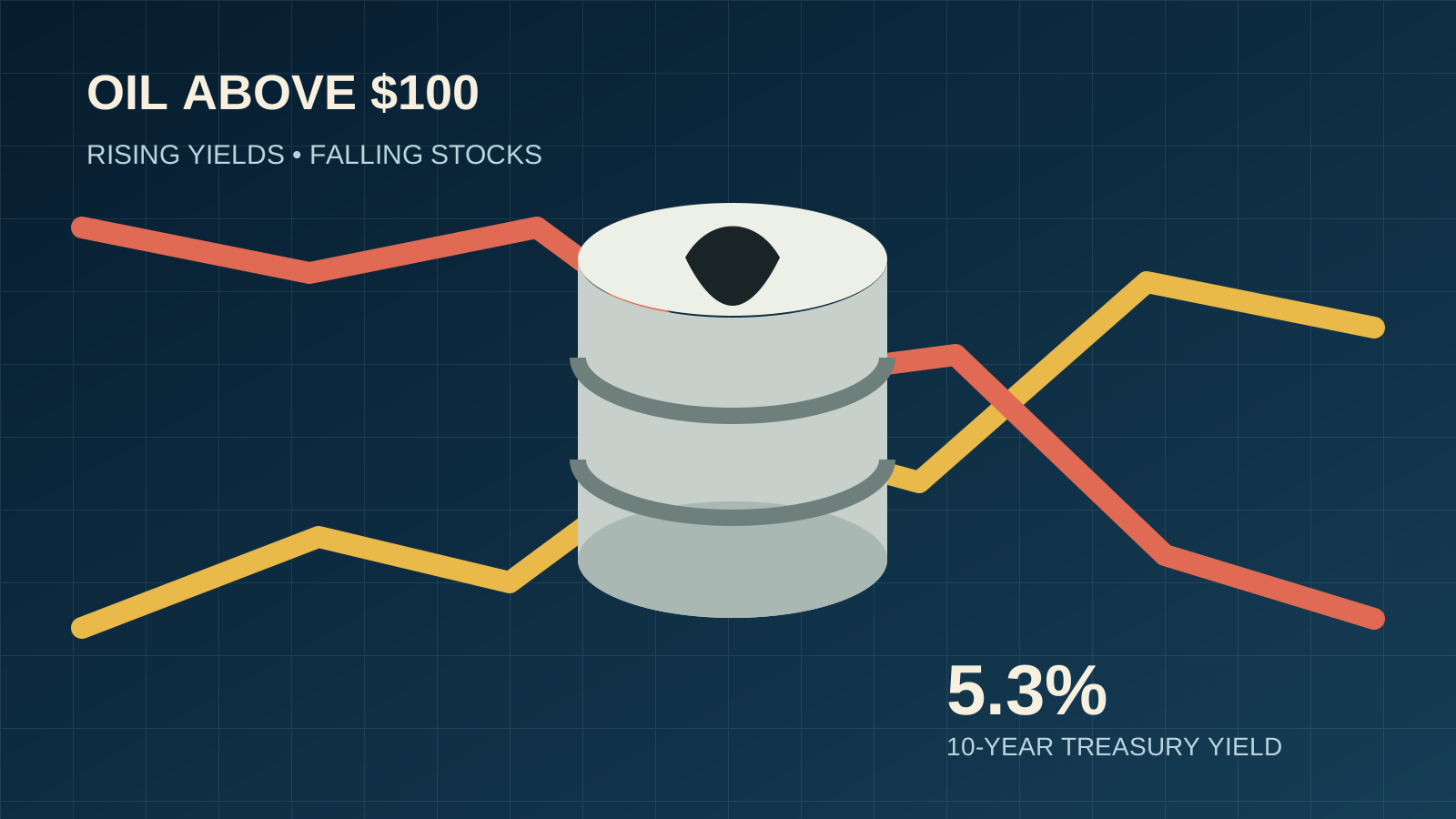
Verified Baseline
Oil, bond yields and stocks moved in a difficult combination
Brent crude traded above $100 a barrel Wednesday as attacks and shipping risks in the Middle East combined with a storm threat to U.S. Gulf production. Reuters reported Brent near $102.24 in late trading. The Associated Press reported the benchmark 10-year U.S. Treasury yield near 5.30%, around its highest level since 2002.
Stocks fell across major markets. By late morning in New York, the S&P 500 was down about 0.6%, the Dow had lost roughly 1% and the Nasdaq was lower by about 0.8%. Europe’s broad STOXX 600 and major Asian indexes also declined. These are market snapshots, not final closing levels.
Why It Matters
Energy and interest rates can reach households through different channels
Higher crude prices can raise gasoline, diesel, airfare, shipping and production costs, although retail prices do not move one-for-one or immediately with a daily oil quote. Higher Treasury yields influence benchmarks used to price mortgages, business loans and other long-term credit, but individual rates also depend on lenders, borrower circumstances and market competition.
When oil and bond yields rise together, investors may worry that energy costs will keep inflation elevated while financing becomes more expensive. That combination can pressure company profits and household budgets. It does not prove a recession is imminent, and one day of trading does not establish a lasting trend.
What Drove the Move
Supply risk, government debt and Federal Reserve uncertainty converged
Energy traders were weighing Houthi attacks in Saudi Arabia, continuing limits on traffic through the Strait of Hormuz and a U.S. Gulf storm that could interrupt production. Bond markets were also focused on heavy government borrowing needs and a $39 billion U.S. 10-year note auction.
The Federal Reserve was scheduled to release minutes from its September 15–16 meeting at 2 p.m. Eastern. At publication time, those minutes had not yet been released. They may clarify policymakers’ views, but they will describe a past meeting rather than announce a new rate decision.
Practical Implications
What consumers and borrowers can watch
- Fuel prices can lag crude oil and vary widely by location, taxes, refinery conditions and inventories.
- Mortgage and loan quotes may change as Treasury yields move, but advertised averages are not an offer to any particular borrower.
- Travel and freight costs can respond to sustained energy increases rather than a single trading session.
- People making long-term financial decisions should compare actual terms and avoid treating intraday headlines as personalized investment guidance.
This article provides general information, not personalized financial or investment advice.
What Remains Uncertain
The duration matters more than a single day
Verified fact: oil was above $100, long-term Treasury yields were near multi-decade highs and major stock indexes were lower Wednesday. Analysis: the combination raises the risk that household energy and borrowing costs remain elevated. Forecast: persistent supply disruption or higher-for-longer rates could deepen that pressure, but prices may reverse if production, shipping or policy expectations improve. Opinion: this report takes no position on whether readers should buy, sell or hold any asset.
Bias Lens: how the market move is framed
Brent crude traded above $100, the 10-year Treasury yield was near 5.3%, and major U.S. and overseas stock indexes fell. The causes are multiple and cannot be reduced to one political decision.
Left-leaning coverage: The Guardian’s energy coverage has emphasized how sustained fuel costs affect households, workers and public policy. Center coverage: The Associated Press foregrounded the simultaneous pressure from yields, oil and global debt. Right-leaning coverage: The Wall Street Journal led with commodity-market mechanics, supply risk and storm disruption.
The differences are primarily in emphasis—distributional consequences, broad market stress or trading fundamentals. All three frames are compatible with the verified prices and index moves.
Principal Sources
Official schedules and corroborating reporting
- Federal Reserve — monetary-policy documents and release calendar
- U.S. Treasury — official yield and auction data
- Reuters — global markets, oil and bond yields
- Reuters — U.S. market session
- Associated Press — global stock decline and household context
No suitable directly relevant official or publisher-authorized video with clearly confirmed embedding permission was available, so no video was embedded.