FINANCE — MEDIA — ARTIFICIAL INTELLIGENCE
Getty Images Plans Chapter 11 Restructuring and Return to Private Ownership
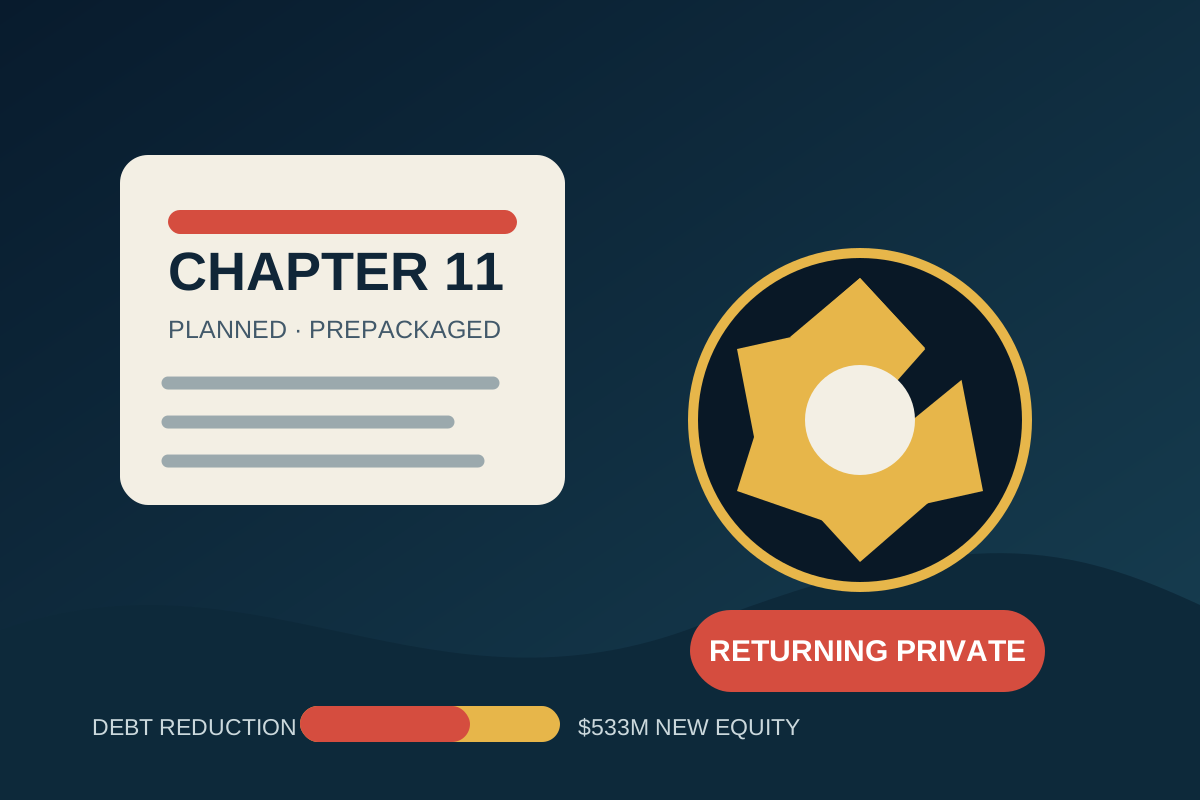
The prepackaged plan would reduce debt and bring up to $533 million in new equity after the company’s Shutterstock merger collapsed. Getty has not filed for bankruptcy yet, and the restructuring still requires court approval.
By Health Politics Daily News Desk · Published Tuesday, October 13, 2026 at 8:00 a.m. America/New_York · Approximately 8 minutes
Verified Baseline
Getty announced a deal with major creditors and investors
Getty Images announced Monday that it had reached a restructuring support agreement with its major financial stakeholder groups. The company said Getty family entities and affiliates of Koch Equity Development committed up to $533 million in new equity.
According to the company, holders of 83.5% of its unsecured bonds agreed to retire $270 million of senior unsecured notes. Holders representing about 89% of secured bonds and term loans, along with all revolving-credit lenders, agreed to reduce interest obligations and extend maturities.
Critical distinction: Getty said it plans to solicit votes and then begin a prepackaged Chapter 11 process in the coming weeks. At publication time, it had announced a planned filing—not completed one—and no bankruptcy court had approved the plan.
What the Plan Would Do
The company would shed debt, receive new capital and leave public markets
If implemented as announced, existing shares would be canceled, Getty would become privately held and qualifying trade creditors, employees, customers and contributors would be paid in the ordinary course. The company expects to finish the process by the end of 2026, but that timetable is a forecast dependent on creditor votes and court rulings.
A “prepackaged” bankruptcy means a company negotiates substantial creditor support before filing. That can shorten proceedings, but it does not eliminate judicial review, objections or execution risk.
Analysis: The high levels of announced lender support reduce uncertainty compared with an unnegotiated bankruptcy. They do not guarantee confirmation or future profitability.
Why It Matters
Getty is infrastructure for newsrooms, advertisers and creators
Getty licenses editorial photographs, video and commercial imagery used by publishers, brands and production companies. A balance-sheet restructuring does not mean its library disappears or that customers immediately lose access. The company says operations will continue normally during the process.
For contributors, the practical questions are whether royalty reporting and payments remain current and whether future contract terms change. For customers, the near-term issues are service continuity, licensing records and account support. Getty says ordinary-course obligations will continue, but users should rely on their contracts and official account notices.
The move also follows Getty’s failed plan to merge with Shutterstock. Britain’s Competition and Markets Authority said the transaction was abandoned after it required a divestiture of Shutterstock’s editorial business. Getty separately faced a New York Stock Exchange delisting process over its low share price.
AI Context
Generative imagery is part of the pressure, not a complete explanation
Generative-AI tools have increased competition for some stock-image work and raised questions about training rights, authenticity and commercial indemnification. The CMA said rapidly developing generative AI had become an increasing competitive constraint in stock content.
But Getty’s announced restructuring is also a capital-structure story: debt costs, maturities, the abandoned merger and a depressed share price all matter. Treating the planned bankruptcy as caused only by AI would overstate what the public record establishes.
Getty itself sells AI-image products trained on licensed content. The restructuring announcement presents new capital as funding for technology and growth, while independent reporting from Reuters situates the move within both heavy debt and AI competition.
What Remains Uncertain
Filing terms, court approval and the private company’s strategy remain open
Verified fact: Getty has signed a restructuring support agreement and announced committed new equity. Uncertain: the final court-filed plan, any objections, the exact ownership allocation and future pricing or contributor policies. Forecast: Getty expects to complete the process by year-end, but that is the company’s projection, not an assured outcome. Opinion: Health Politics Daily takes no position on the investment merits of Getty or its creditors.
Bias Lens: bankruptcy, ownership and AI disruption
Getty announced a creditor-backed restructuring and future prepackaged Chapter 11 filing. It has not yet filed, the court has not approved a plan and the company says it will continue operating.
Center coverage: Reuters foregrounded the balance-sheet reset, creditor support and AI competition; Axios emphasized the significance for the stock-image business. Right-leaning business coverage: The Wall Street Journal highlighted the Koch-backed transaction and private-ownership outcome.
No timely left-leaning national report added material independent verification at publication time, so one is not inserted merely to fill a label. The meaningful framing difference is between describing a negotiated financial restructuring and presenting the event chiefly as evidence of AI disruption; both are relevant, but neither alone captures the full record.
Principal Sources
Company terms, regulatory record and corroborating reporting
- Getty Images — restructuring announcement and stated terms
- SEC filing — NYSE delisting notice and financing context
- UK Competition and Markets Authority — abandoned merger and AI competition findings
- Reuters — restructuring and industry context
No suitable directly relevant official or publisher-authorized video with clearly established third-party embedding permission was available, so no video is embedded.
Related Coverage