DJIBOUTI — MIGRATION — DEVELOPING
Djibouti Migrant Boat Disaster Kills at Least 139, With 84 Missing
A boat carrying 305 people capsized shortly after leaving Djibouti for Yemen. The U.N. migration agency says 82 people survived, while searches and victim identification continue.
By Health Politics Daily News Desk · Published Sunday, October 11, 2026 at 4:05 p.m. America/New_York · Approximately 7 minutes
Verified Baseline
IOM reports 139 confirmed deaths, 82 survivors and 84 people missing
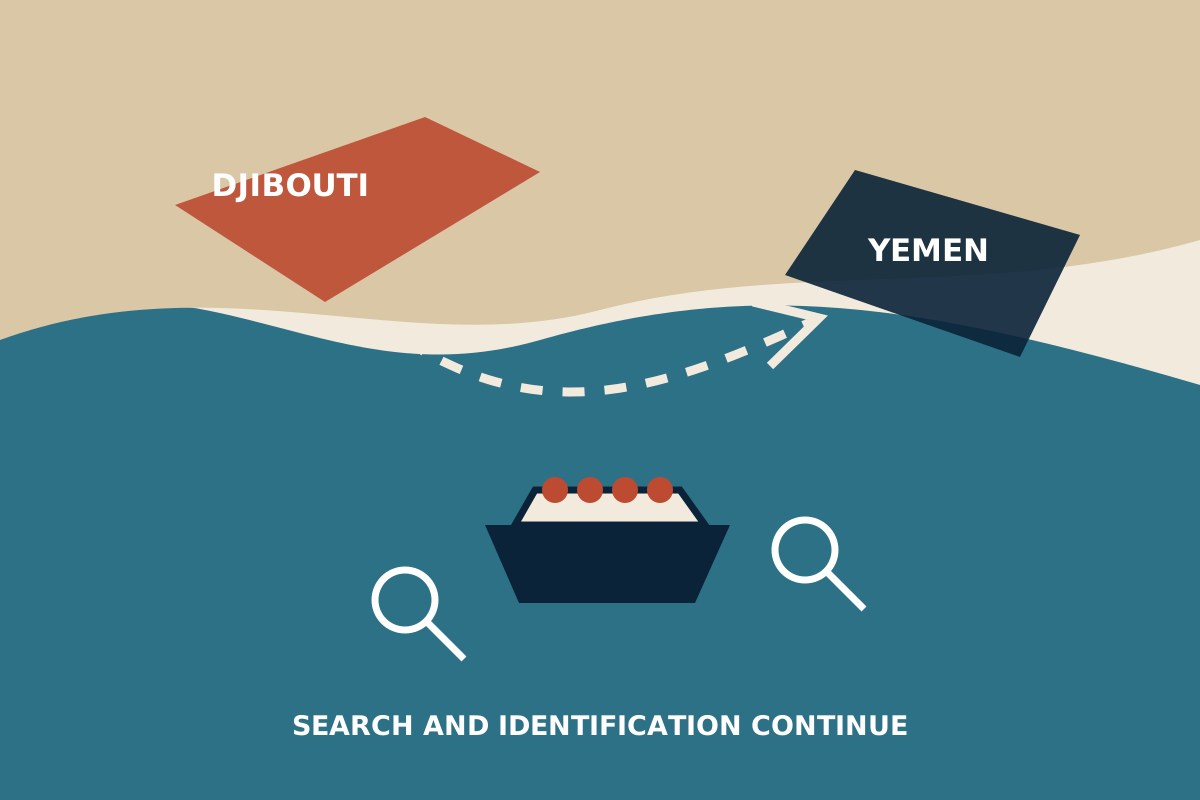
The International Organization for Migration said the vessel capsized near Guhere, north of Obock, during the night of October 8–9 while traveling from Djibouti toward Yemen. It carried 305 people. At least 139 bodies had been counted, including 15 children; 82 people survived and 84 remained missing as of Sunday.
Reuters reported IOM's updated figures, and Associated Press independently interviewed IOM's Djibouti chief. Verified fact: the confirmed count reflects bodies recorded by authorities. Still uncertain: the final toll, the identity of every victim and whether additional survivors will be found.
What Happened
The overcrowded vessel sank soon after departure
IOM Chief of Mission in Djibouti Alexandre Coissac told AP that the boat went down close to shore soon after leaving on October 8 and that overcrowding was the main apparent cause. Survivor accounts placed the sinking overnight into October 9. Authorities were continuing search, rescue and burial operations.
All identified survivors were Ethiopian nationals, according to IOM. That does not establish the nationality of every person aboard. Some victims were buried before full identification, making family notification and a complete manifest especially difficult.
Why It Matters
The disaster exposes a growing two-way humanitarian emergency
The Eastern Route carries migrants from Ethiopia and other parts of the Horn of Africa through Djibouti and Yemen toward Gulf labor markets. At the same time, escalating conflict in Yemen has pushed thousands of Yemenis in the opposite direction toward Djibouti.
IOM's 2025 Eastern Route report recorded 922 deaths or disappearances, the highest annual figure since its tracking project began. The latest shipwreck adds to that toll but should not be mechanically combined with earlier figures until IOM publishes an updated dataset.
Analysis: conflict, poverty, drought, smuggling networks and limited legal work pathways all sustain demand for the route; no single factor explains every passenger's decision. Forecast: the confirmed toll may rise as searches continue and authorities verify informal burials. Opinion: Health Politics Daily takes no position on national migration policy; governments should prioritize survivor care, identification and accurate public accounting.
Practical Implications
What authorities and families face now
- Rescue teams must search coastal waters while providing medical and psychological care to survivors.
- Authorities need passenger records, DNA and family reports to identify victims buried without names.
- Families should use official IOM or government tracing channels rather than unverified social-media lists.
- Humanitarian agencies may need additional shelter, translation, medical and repatriation capacity in Obock.
Important Context
People are crossing toward Yemen even as Yemenis flee war
Many migrants attempt to reach Saudi Arabia and other Gulf states through Yemen despite armed conflict, detention and trafficking risks. Read our reporting on the widening Yemen displacement crisis and the country's food emergency.
What Remains Uncertain
The passenger list and full casualty count are incomplete
IOM's figures may change as bodies are recovered or previously unrecorded burials are verified. Investigators have not published a vessel inspection, crew account or detailed reconstruction. Overcrowding is the reported apparent cause, but a final technical finding has not been released.
Bias Lens: how coverage frames the disaster
IOM says 305 people were aboard, 139 deaths were confirmed, 82 people survived and 84 remained missing. Search, assistance and identification work continue.
The Guardian, generally read as left-leaning, emphasizes the human toll and the dangers migrants face along the route. AP and Reuters, center-oriented wire services, foreground the evolving official count, survivor care and regional migration context.
No timely, directly comparable mainstream right-leaning report was available at publication. Substituting unrelated migration commentary or a tabloid report would create false symmetry. The shared factual baseline across available coverage comes from IOM.
Principal Sources
Official data and corroborating reporting
- IOM Displacement Tracking Matrix — Eastern Route report
- Reuters — latest IOM casualty and survivor figures
- Associated Press — IOM interview and survivor response
No suitable official or publisher-authorized video directly documenting the shipwreck or current rescue operation was available, so none was embedded.
Related Coverage