UKRAINE — CIVILIAN SAFETY — DEVELOPING
Russian Strike Beside Kramatorsk Buses Kills 30
A guided bomb exploded beside public buses, killing 30 people; officials initially reported 18 wounded, while a later Reuters update put the number at 20.
By Health Politics Daily News Desk · Published Thursday, October 8, 2026 at 8:05 p.m. America/New_York · Approximately 7 minutes

Watch in this article
Pumpjack operating at the Kern River Oil Field
A short CC0 field video provides visual context for reporting on oil production and fuel supply.
Thomas Farley / Wikimedia Commons · CC0 1.0 · License and source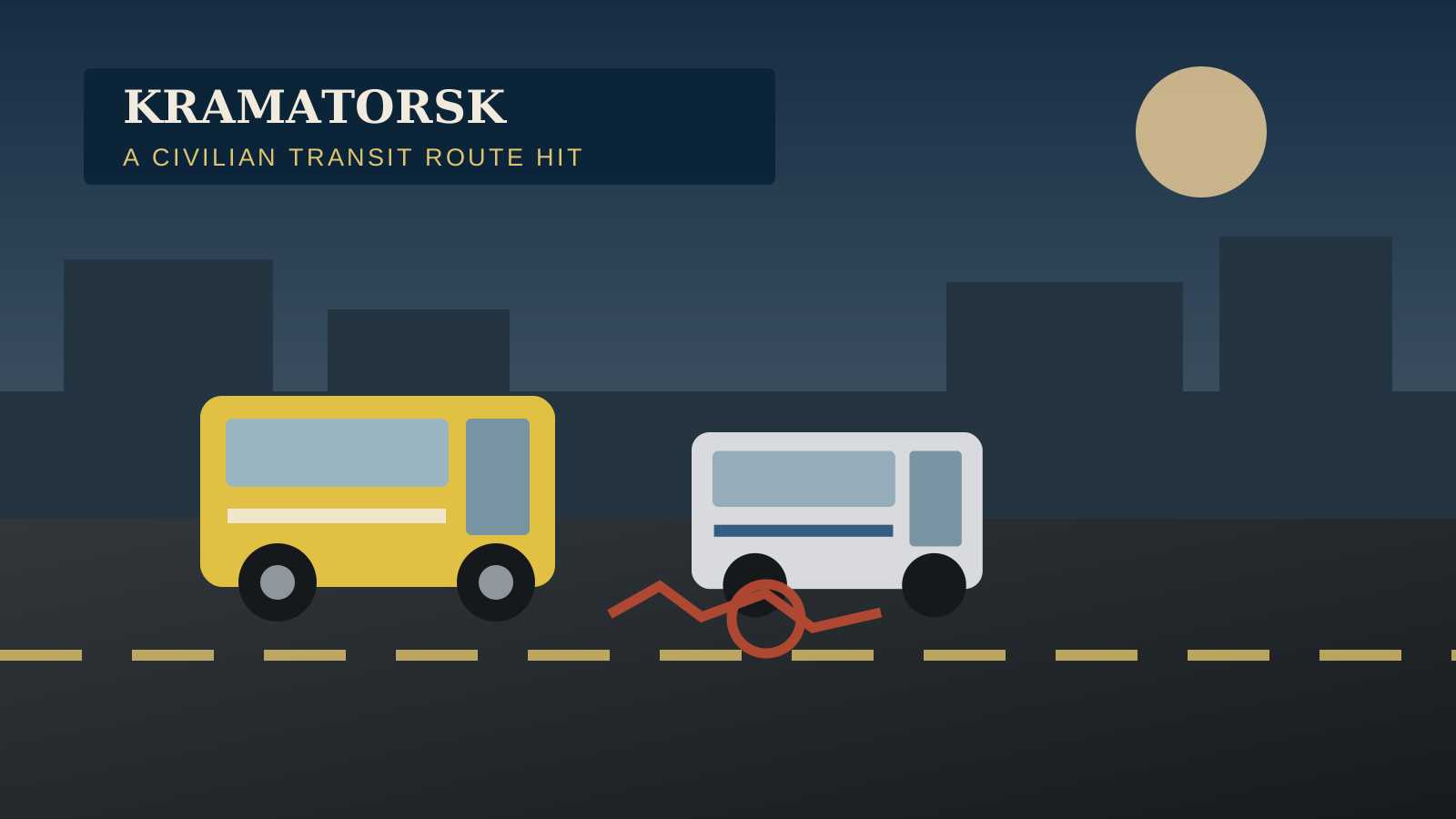
Verified Baseline
A bomb exploded beside public buses
Ukrainian authorities said a Russian guided aerial bomb exploded beside public buses in Kramatorsk, in the eastern Donetsk region, killing 30 people. The Associated Press, Reuters and The Guardian reported the same bus-strike death toll from regional and national officials. The regional prosecutor initially reported 18 wounded; Reuters later reported 20.
The blast occurred at about 10 a.m. near two buses. Authorities suspended public transportation in Kramatorsk and nearby Sloviansk. Rescue work was complicated by warnings of further drone attacks.
Important distinction: later attacks raised the wider city and regional death toll. This report keeps the confirmed 30 deaths at the bus site separate from people killed in subsequent strikes.
Why It Matters
A civilian transit system became the center of the attack
Public buses are essential for commuters and for residents without private vehicles, including older people and those trying to reach work, clinics or evacuation routes. Suspending transit reduces immediate exposure but also makes daily movement harder in a city already close to the front.
Analysis: the attack illustrates how guided bombs and drones can disrupt civilian life far beyond the blast site. The operational effect is not only casualties; it includes suspended transport, delayed rescue work and additional pressure on emergency services.
Forecast: transit may remain restricted while authorities inspect routes and assess the continuing air threat. Any reopening schedule will depend on local security conditions, not a fixed national timetable.
Opinion: Health Politics Daily takes no position on military strategy. Civilian transit and rescue operations should be protected under international humanitarian law, and allegations of unlawful attacks warrant independent investigation.
Wider Context
Strikes also hit Kyiv and other regions
The Kramatorsk bombing came during another broad wave of attacks. Officials reported deaths and injuries in Kyiv and elsewhere, along with power and water disruptions. The cumulative national toll was still changing at publication, so citywide and countrywide figures should be treated as provisional.
The latest attack follows the previous day’s large missile-and-drone barrage, covered in our explainer on the verified toll and damage across Ukraine. Readers can also review our earlier report on Germany’s Ukraine aid and drone agreement.
Practical Implications
What residents and families can verify now
- Transit: check municipal and regional channels before relying on bus service in Kramatorsk or Sloviansk.
- Casualty information: use official family-notification and hospital channels; social-media lists can be incomplete or wrong.
- Air alerts: continuing drone warnings can interrupt rescue and travel even after the first explosion.
- Travel: route availability can change quickly around damaged roads and emergency perimeters.
What Remains Uncertain
The weapon’s precise launch details and the full toll
Russian officials had not publicly commented on the specific bus strike at publication. Independent investigators had not released a site assessment identifying the exact munition, launch platform or intended target. The toll may change as hospitals update patient conditions and authorities separate the bus attack from later incidents.
Bias Lens: how coverage frames the strike
Ukrainian authorities reported 30 people killed when a guided bomb exploded beside public buses in Kramatorsk. The wounded count evolved from 18 in the regional prosecutor’s initial account to 20 in a later Reuters update.
Center coverage: AP and Reuters emphasize the verified toll, suspended transport and broader nationwide strikes. Left-leaning coverage: The Guardian gives greater prominence to the civilian setting and President Volodymyr Zelenskyy’s condemnation. Right-leaning coverage: the New York Post foregrounds the scale and graphic immediacy of the attack.
The principal difference is emphasis—operational facts, political condemnation or emotional impact—not a competing evidentiary record. All casualty counts remain subject to official revision.
Principal Sources
Official accounts and corroborating reporting
- Associated Press — attack, casualty toll and transit suspension
- Reuters — Kramatorsk and nationwide strike tolls
- The Guardian — regional official statements and context
No directly relevant official or publisher-authorized video with clearly confirmed embedding permission was available.