GLOBAL HEALTH — MATERNAL HEALTH — U.S. FOREIGN POLICY
U.S. and UNICEF Agree to One-Year Maternal and Child Health Supply Deal
The $25 million agreement will keep a limited channel open for medicines, equipment and nutrition supplies in at least 15 countries. It does not reverse broader foreign-aid cuts or guarantee that every existing shortage ends quickly.
By Health Politics Daily News Desk · Published Friday, October 16, 2026 at 4:00 p.m. America/New_York · Approximately 7 minutes
Verified Baseline
UNICEF will procure supplies under a $25 million U.S. agreement
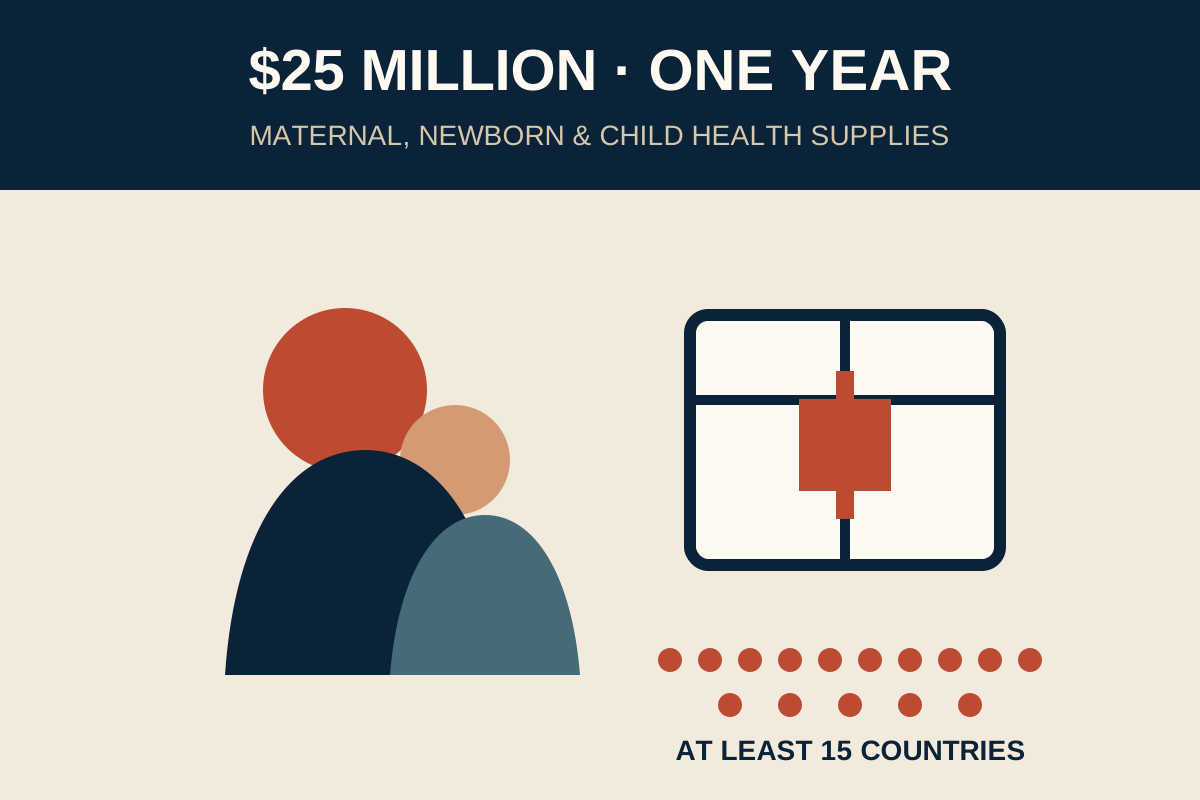
The U.S. government and UNICEF reached a one-year agreement worth $25 million for maternal, newborn and child-health supplies, plus some nutrition products, Reuters reported. UNICEF said at least 15 countries previously served by the program are covered, including the Democratic Republic of Congo, Haiti and Mali. A State Department spokesperson confirmed that UNICEF will procure the items.
The deal prevents an immediate expiration of one supply arrangement after the previous USAID contractor’s maternal-and-child-health work ended. It is not a restoration of USAID, a five-year commitment or a replacement for all canceled global-health programs.
What the Supplies Do
Basic medicines can prevent deaths during childbirth and early childhood
Products previously supplied through the program included oxytocin to prevent and treat postpartum hemorrhage and amoxicillin used in pediatric and childbirth care. Health workers in eastern Congo told Reuters that both were unavailable locally after earlier disruptions.
UNICEF’s procurement role should allow orders to resume, but ordering is not the same as delivery. Manufacturing lead times, international freight, customs clearance and distribution to clinics can still produce gaps.
Why It Matters
The agreement offers continuity during a contested aid transition
The administration is shifting remaining health assistance toward bilateral, co-financed agreements and away from the contractor system once managed through USAID. Supporters say the approach can reduce overhead and promote national self-reliance. Critics say rapid transitions have left unclear responsibilities and supply interruptions.
Analysis: the practical value is continuity, not scale. KFF estimates that U.S. maternal-and-child-health funding was about $1.31 billion in fiscal 2024, so $25 million protects a narrow procurement function rather than recreating the former system. Opinion: performance should be judged by public delivery data, stockout rates and health outcomes—not by either claims of complete restoration or claims that the agreement has no value.
Practical Implications
Clinics may gain a supply route, but patients should expect uneven timing
- Health ministries: can coordinate orders with UNICEF while negotiating longer-term U.S. agreements.
- Clinics: should not treat the announcement as confirmation that every medicine is already in stock.
- Donors and lawmakers: can compare country orders, delivery dates and shortages with the agreement’s stated coverage.
- Families: should use local health-authority guidance; this report does not replace medical advice.
What Remains Uncertain
Country allocations, product quantities and delivery dates are not public
The parties have not published a country-by-country budget, full product list, delivery calendar or rules for what happens after one year. It is also unclear how quickly countries can assume procurement costs under bilateral health agreements.
Forecast: the arrangement should reduce the risk of a sudden systemwide cutoff, but localized stockouts may persist while orders move through the supply chain. A durable transition will require longer commitments or credible domestic financing beyond this one-year bridge.
Bias Lens: bridge funding or evidence of a damaged aid system?
The agreement is worth $25 million, lasts one year and covers supplies for at least 15 countries. It preserves a limited channel but does not restore the former aid system.
Left-leaning coverage: The Guardian’s earlier aid-cut reporting emphasized humanitarian disruption and the consequences of dismantling USAID. Center coverage: Reuters foregrounds the new agreement, reported shortages and the limits of its scale. Right-leaning policy framing: the administration’s America First Global Health Strategy emphasizes bilateral responsibility, co-financing and reduced contractor dependence.
These frames answer different questions: the human cost of disruption, the mechanics of the bridge agreement and the rationale for redesign. None alone establishes whether the new system will deliver supplies more reliably over time.
Principal Sources
Agreement, context and health-system baseline
- Reuters — agreement details and field reporting
- UNICEF Supply Division — procurement and delivery role
- KFF — U.S. maternal and child health funding context
- WHO — maternal-health evidence and preventable mortality
No suitable directly relevant official or publisher-authorized video with clear embedding permission was available.
Related Coverage