CONSUMER HEALTH — SUNSCREEN — FDA
First New U.S. Sunscreen Ingredient in 25 Years Reaches Stores
Bemotrizinol offers broad UVA and UVB protection with minimal skin absorption under the FDA-reviewed conditions. Its arrival expands consumer choice, but it does not make every formula interchangeable or replace other sun-protection measures.
By Health Politics Daily News Desk · Published Thursday, October 15, 2026 at 12:00 p.m. America/New_York · Approximately 8 minutes
Verified Baseline
The ingredient was authorized in June and products are now reaching shelves
The Food and Drug Administration added bemotrizinol, also called BEMT, to the federal over-the-counter sunscreen monograph in June. The Associated Press reported Thursday that the first U.S. products containing it are now reaching stores, including formulas from Neutrogena and other manufacturers.
The FDA’s final action permits bemotrizinol at concentrations up to 6% when products meet the monograph’s other conditions. This is a regulatory pathway for compliant nonprescription products—not approval of every sunscreen brand or claim.
What the Ingredient Does
Bemotrizinol filters both UVA and UVB radiation
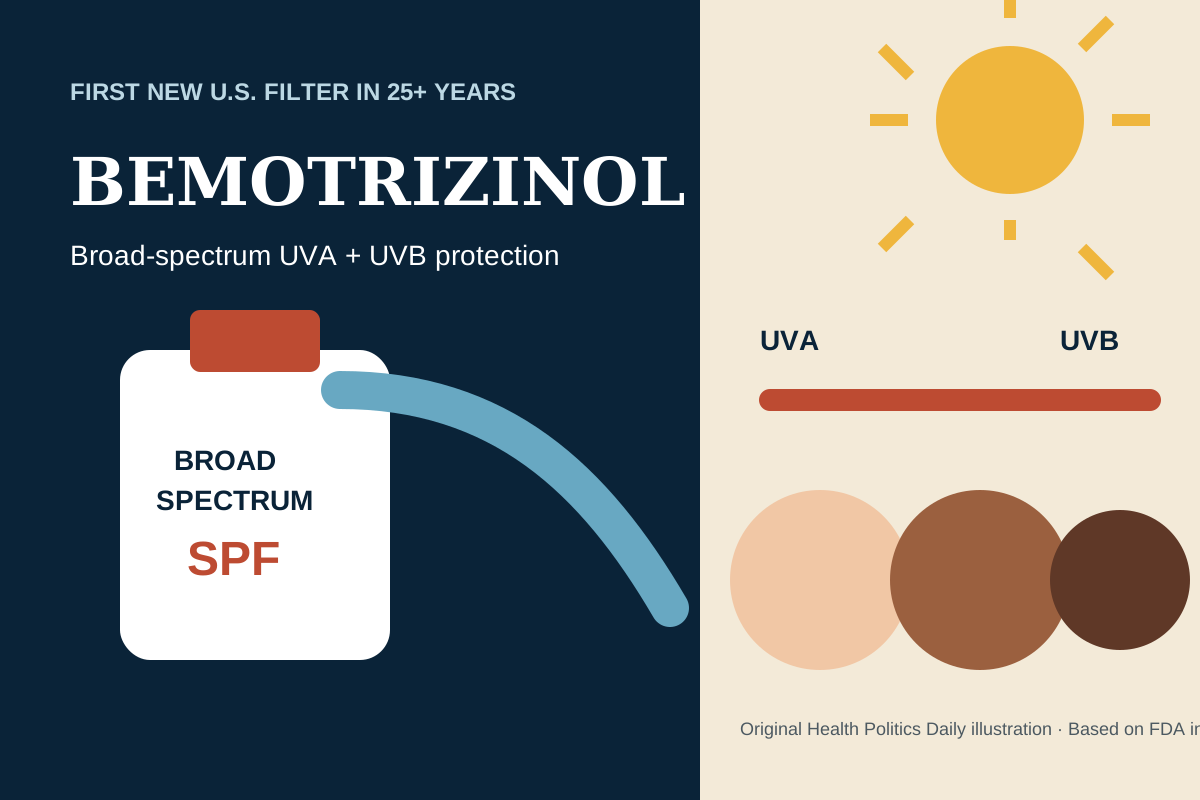
Bemotrizinol is a photostable chemical ultraviolet filter. It absorbs across UVA and UVB wavelengths, allowing broad-spectrum protection without relying on multiple active filters to cover the same range. Mineral filters zinc oxide and titanium dioxide also provide broad coverage but can leave a visible cast, especially on darker skin tones.
The FDA found bemotrizinol generally recognized as safe and effective under specified conditions for adults and children at least 6 months old. The agency reviewed clinical and nonclinical evidence, including studies finding nearly undetectable systemic absorption and little irritation or allergy signal under the tested conditions.
Why It Matters
More usable sunscreen options can improve real-world protection
A sunscreen works only when people apply enough and reapply it. Texture, appearance and irritation can affect whether someone uses a product consistently. A stable, broad-spectrum filter that avoids much of the white cast associated with some mineral formulas may therefore expand practical options for people who dislike existing products.
Analysis: the public-health value is less about one ingredient being universally “best” and more about reducing barriers to regular broad-spectrum use. Formula quality, water resistance, SPF, labeling and individual tolerance still matter.
Practical Guidance
How to read the label without treating one ingredient as a cure-all
- Look for broad spectrum: that label indicates UVA and UVB protection under FDA testing rules.
- Choose SPF 30 or higher: the FDA and dermatology groups recommend combining sunscreen with shade and protective clothing.
- Reapply: follow the product directions, especially after swimming, sweating or toweling off.
- Check the active ingredients: bemotrizinol may appear under the trade name Parsol Shield, but the Drug Facts panel lists regulated actives.
- For infants under 6 months: seek shade and protective clothing and ask a clinician before using sunscreen.
This is general information, not individualized medical advice. People with allergies, skin disease or treatment-related sun sensitivity should consult a qualified clinician.
What Remains Uncertain
Long-term environmental effects and market uptake need more evidence
The FDA’s decision addresses human safety and effectiveness under defined conditions; it does not certify a product as “reef safe,” a term without a uniform federal definition. AP reports that available evidence suggests limited environmental toxicity, but longer-term research is still needed.
Forecast: more U.S. brands are likely to add bemotrizinol after the current commercial-exclusivity period, provided formulation and testing costs support adoption. Opinion: consumers should compare complete product labels and usability rather than assuming the newest active ingredient automatically makes a sunscreen superior.
Bias Lens: innovation, regulation and practical sun protection
FDA added bemotrizinol to the OTC sunscreen monograph in June 2026, and compliant products containing it are now reaching U.S. stores. The ingredient provides UVA and UVB filtration under the authorized conditions.
Center coverage: AP emphasizes consumer choice, absorption evidence and practical application. Left-leaning lifestyle coverage: The Guardian situates the ingredient within debates over chemical versus mineral products and warns that marketing terms such as “clean” are not regulated. Right-leaning coverage: no substantial, directly comparable original report was available at publication time, so this lens does not force commentary or a thin rewrite into the comparison.
The meaningful framing difference is between regulatory innovation, ingredient caution and whether the main benefit is safety evidence, cosmetic acceptability or broader market choice. The FDA order remains the common factual baseline.
Principal Sources
Primary records and independent reporting
- FDA — final action and evidence summary
- FDA — Final Administrative Order OTC000039
- FDA — consumer sunscreen guidance
- Associated Press — first products reaching stores
No directly relevant official or publisher-authorized video with clear embedding permission was available.
Related Coverage