IMMIGRATION — REFUGEE POLICY — DUE PROCESS
Refugees Get 10 Days to Contest Status Termination Under New U.S. Policy
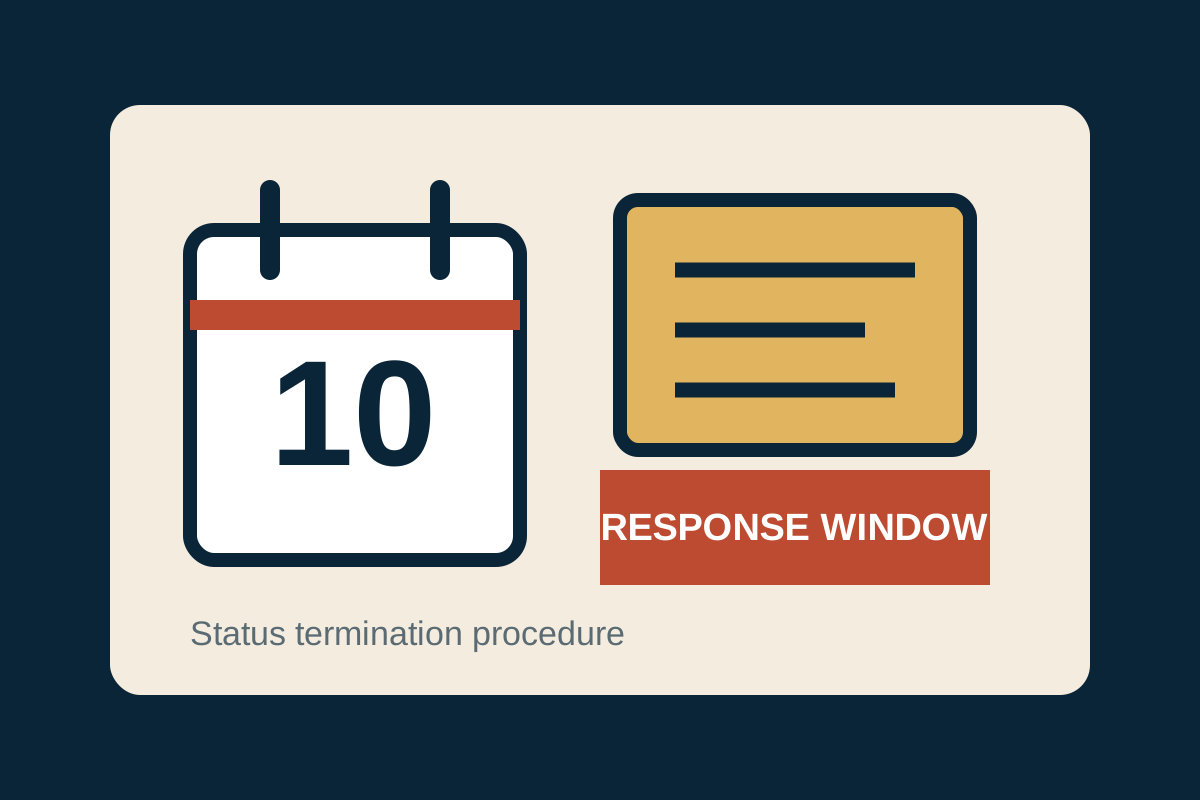
The response window falls from 30 days to 10 beginning October 14. The change accelerates one step in the process; it does not make every notice a final deportation order.
By Health Politics Daily News Desk · Published Tuesday, October 13, 2026 at 6:00 p.m. America/New_York · Approximately 7 minutes
Verified Baseline
The response period is being cut by two-thirds
A new administration policy taking effect Wednesday reduces from 30 days to 10 the period refugees receive to answer a notice that the government intends to terminate their refugee status, according to a policy document reviewed by the Associated Press.
The administration says the change is intended to mitigate risks involving people who were admitted but were not eligible for refugee status. The document specifically points to admissions during the Biden administration, while refugee advocates dispute the premise and warn that ten days may be insufficient to find counsel and collect records.
Verified fact: the response deadline changes on October 14. Not established: how many termination notices will be issued or how many cases will ultimately end in removal.
What the Deadline Covers
It applies to contesting termination, not to every immigration proceeding
Federal regulations authorize termination when the government concludes a person was not a refugee at admission or is otherwise subject to termination. Under 8 C.F.R. § 207.9, the person must receive notice, reasons and an opportunity to present evidence.
Refugee status, asylum, humanitarian parole and Temporary Protected Status are different legal categories. The new ten-day policy should not be read as automatically changing deadlines for all of them.
Who May Be Affected
The review focuses on refugees admitted during the Biden years
AP reports that the government is reviewing roughly 185,000 cases involving Biden-era refugees with pending green-card applications. That figure describes a review pool, not a count of people whose status has been terminated.
Refugees normally may seek lawful permanent residence after one year in the United States. A pending application can contain medical, identity, family and security records, which is one reason the shorter response period may have practical consequences for gathering evidence.
Practical Implications
A notice now requires a faster response
A person who receives a proposed-termination notice should read the stated deadline and delivery date carefully, preserve the envelope and every page, and promptly contact a qualified immigration attorney or accredited nonprofit legal representative. General news coverage cannot determine an individual’s status or deadline.
The Justice Department maintains a list of pro bono legal-service providers. Immigration fraud is common; the department warns that notarios and document preparers who are not authorized representatives cannot provide legal advice.
What Remains Uncertain
Volume, implementation and litigation are open questions
Analysis: shrinking the period may increase default or incomplete responses, especially when a person needs translation, records from overseas or new counsel. That is a procedural risk, not a forecast that every reviewed case will be terminated.
Uncertain: how USCIS will calculate service dates, whether extensions will be available, how many notices are planned and whether courts will review the policy. Forecast: legal challenges are plausible because advocates are already raising due-process concerns, but no ruling has been issued. Opinion: Health Politics Daily takes no position on the policy’s legality.
Bias Lens: screening integrity versus procedural access
The government is reducing the response window from 30 days to 10. The policy does not itself establish how many people were wrongly admitted or how many will be removed.
Center coverage: AP leads with the shortened deadline and advocates’ fear of deportation, while also quoting the administration’s stated screening-integrity rationale and distinguishing the review pool from final outcomes. Left- and right-leaning coverage: no timely, independently reported national accounts directly examining this specific policy were available at publication, so the article does not force ideological counterparts from unrelated immigration stories.
The main framing choice is whether to emphasize program integrity or the ability to prepare a defense. Both claims should be evaluated against the actual notice, case outcomes and any later court review.
Principal Sources
Regulation, legal-help resources and reporting
- Electronic Code of Federal Regulations — 8 C.F.R. § 207.9
- Justice Department — Pro bono legal-service providers
- Associated Press — October 13 report
No directly relevant official or publisher-authorized video with clear embedding permission was available, so no video is embedded.
Related Coverage