IMMIGRATION — TECHNOLOGY — LABOR POLICY
U.S. Freezes Green-Card Processing for Microsoft, Adobe and Six IT Firms
The Labor Department says it will stop accepting new or processing pending PERM applications involving eight companies while alleged visa-program abuses are investigated.
By Health Politics Daily News Desk · Published Thursday, October 8, 2026 at 1:59 p.m. America/New_York · Approximately 8 minutes

Watch in this article
Pumpjack operating at the Kern River Oil Field
A short CC0 field video provides visual context for reporting on oil production and fuel supply.
Thomas Farley / Wikimedia Commons · CC0 1.0 · License and source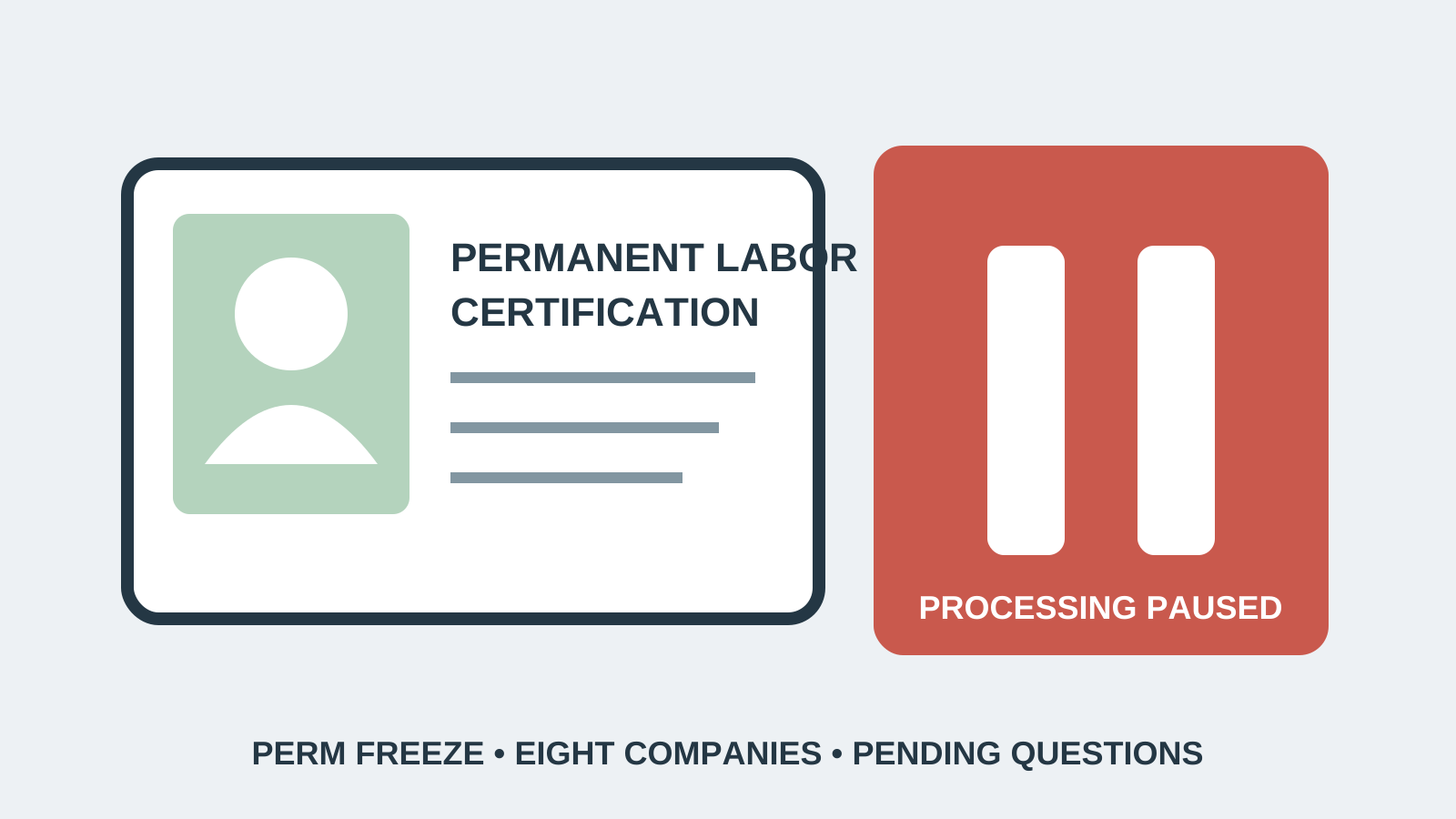
Verified Baseline
Eight companies are covered by the processing freeze
The Trump administration announced that the Labor Department will neither accept new nor process pending permanent labor-certification applications involving Microsoft, Adobe, Cognizant, Infosys, Tata Consultancy Services, Wipro, HCL Technologies and Capgemini. Vice President JD Vance and Labor Secretary Keith Sonderling said the action is tied to investigations into alleged abuse of skilled-worker programs.
Reuters and the Associated Press independently reported the announcement. The companies had not generally provided detailed public responses at publication; Tata declined comment to Reuters.
What PERM Does
The freeze targets a step in employment-based green cards
PERM is the Labor Department process through which an employer generally must show that hiring a foreign worker permanently will not adversely affect U.S. workers' wages, working conditions or job opportunities. An approved labor certification can support a later petition to U.S. Citizenship and Immigration Services; it is not itself a green card.
The action applies to new and pending PERM cases involving the named companies. It does not appear to cancel every existing H-1B visa, automatically revoke lawful status or terminate already approved green cards.
Why It Matters
Thousands of workers could face longer uncertainty
Microsoft and large IT-outsourcing companies are major users of skilled-worker immigration pathways. Blocking a common route from temporary employment to permanent residency can affect career planning, family decisions and employers' ability to retain workers whose cases are pending.
Analysis: the administration is using program-wide processing leverage before publicly resolving allegations company by company. That may create immediate pressure on employers, but it also means workers who did not control corporate recruiting practices can bear much of the uncertainty.
Forecast: affected companies or workers may seek administrative or judicial review, especially if the freeze lasts or lacks individualized procedures. No duration or reinstatement process has been announced.
Opinion: Health Politics Daily takes no position on immigration levels. Enforcement claims should be supported by publicly testable evidence, and workers should receive clear notice about how pending cases will be handled.
Practical Implications
What affected workers should—and should not—assume
- Do not assume immediate loss of status: a PERM freeze is not the same as automatic cancellation of a current H-1B or another valid status.
- Pending cases may stop moving: officials said pending labor-certification applications involving the named firms will not be processed.
- Other stages are separate: already approved certifications, immigrant petitions and adjustment applications may raise different questions; the announcement did not fully address each category.
- Use case-specific guidance: workers should obtain information from official case notices and qualified immigration counsel rather than social-media summaries. This article is not legal advice.
For related context, read our reporting on federal oversight of universities and U.S. policy toward technology and trade.
What Remains Uncertain
Evidence, duration and treatment of later-stage cases
Officials have not published a complete evidentiary record for each company, a fixed end date, or comprehensive instructions covering approved PERM certifications and later immigration filings. Allegations of fraud are not final adjudications, and the legal basis and review process may be contested.
Bias Lens: how coverage frames the freeze
The Labor Department says it will stop accepting new and processing pending PERM applications involving eight named companies. The announcement does not amount to a blanket revocation of current H-1B status.
Center coverage: Reuters emphasizes the policy scope, named firms and uncertainty for thousands of workers. Left-leaning coverage: The Guardian places the move within a broader immigration crackdown. Right-leaning coverage: The Daily Signal foregrounds the administration's worker-protection and alleged-fraud rationale.
The framing difference is whether the central concern is program abuse, the breadth of immigration enforcement or consequences for workers. The suspension itself and the list of companies are common facts; the allegations remain allegations.
Principal Sources
Program records and corroborating reporting
- U.S. Department of Labor — Permanent Labor Certification
- USCIS — employment-based permanent workers
- Reuters — administration announcement and affected companies
- Associated Press — Microsoft suspension and policy context
PBS NewsHour hosts publisher-authorized video of the announcement. It is linked rather than embedded because site-level embedding permission was not independently confirmed.