GLOBAL FINANCE — U.S.–CHINA — Verified explainer
U.S.–China Trade Truce Extended to January: What Changes Now
Washington and Beijing moved the deadline from November 10 to January 10 while they negotiate a broader agreement. The extension reduces an immediate tariff risk but does not resolve the trade dispute.
By Health Politics Daily News Desk, Washington · Published Thursday, September 24, 2026 at 6:01 a.m. America/New_York · Approximately 6 minutes

Watch in this article
Pumpjack operating at the Kern River Oil Field
A short CC0 field video provides visual context for reporting on oil production and fuel supply.
Thomas Farley / Wikimedia Commons · CC0 1.0 · License and source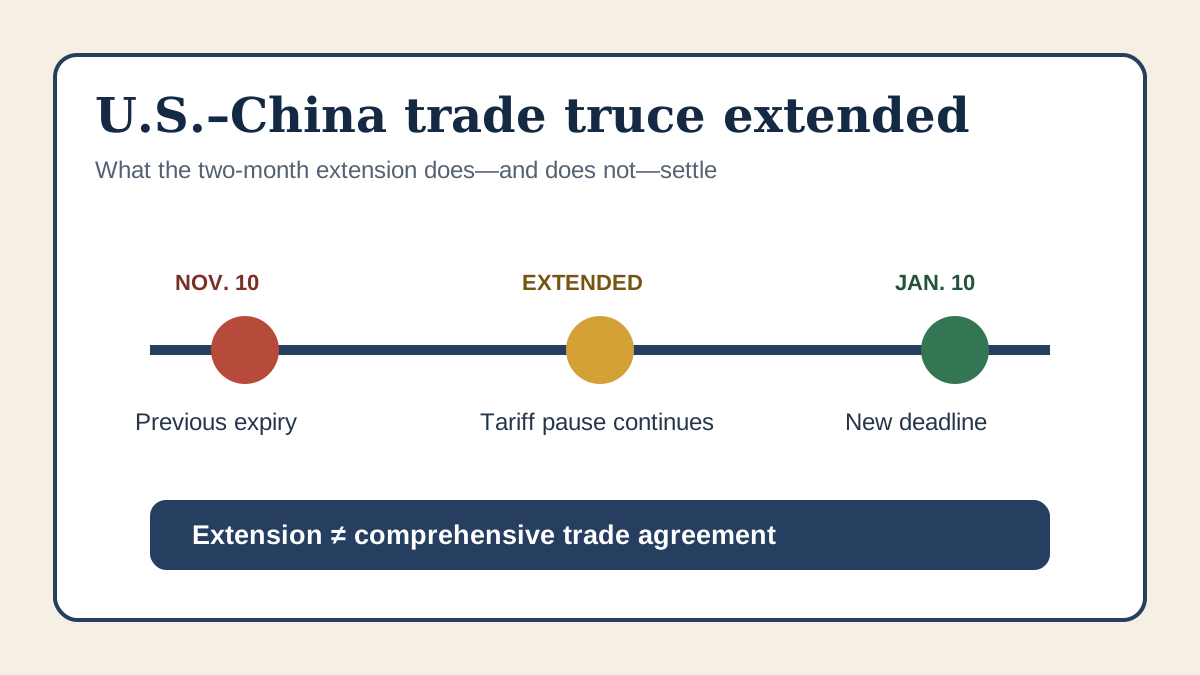
Verified Baseline
The existing truce now runs through January 10
U.S. Treasury Secretary Scott Bessent said the United States and China agreed to extend what officials call the Busan agreement by two months. Reuters reported the new deadline after Bessent met Chinese Vice Premier He Lifeng ahead of President Donald Trump’s talks with President Xi Jinping.
The previous truce was scheduled to expire November 10. The extension moves that deadline to January 10, 2027. It maintains the current pause; it does not erase tariffs already in force or create a permanent settlement.
What Changes
Businesses gain two more months of relative predictability
The immediate risk of the suspended tariff measures returning in November is pushed into January. Importers, exporters and manufacturers therefore have a longer window to plan shipments and inventories under the present arrangement.
That does not guarantee stable prices. Freight costs, currency movements, existing duties and company decisions still influence what households pay. Markets may react to the reduced near-term risk, but the announcement is not a promise that consumer prices will fall.
What Is Still Unsettled
Critical minerals, agriculture, technology and enforcement remain in negotiation
Officials say they will work toward a larger deal. The difficult questions include Chinese purchases of U.S. farm goods, export controls, access to critical minerals and how each side would verify and enforce new commitments.
No final public text resolves those issues. The leaders’ meeting could produce additional announcements, but ceremony, broad political statements and negotiation goals should not be confused with implemented policy.
Why It Matters
The deadline affects supply chains far beyond the two countries
The United States and China sit at the center of global manufacturing, agriculture and technology networks. A sudden tariff escalation could alter sourcing costs, delay investment and affect businesses that never trade directly with either government.
The extension lowers that immediate escalation risk. Its value is time: negotiators have another two months to reach narrower agreements or a larger package. The same feature creates uncertainty because businesses again face a dated cliff if talks stall.
What to Watch
Written terms matter more than summit language
The key evidence will be any published executive action, tariff schedule or joint statement that specifies what is suspended and for how long. Readers should also watch whether China confirms the same deadline and obligations in its own official account.
A durable agreement would need clear coverage, effective dates, verification and consequences for noncompliance. Without those elements, the safest conclusion is narrow: the existing truce lasts longer, while the underlying disputes remain.
Bias Lens: the U.S.–China trade-truce extension
U.S. officials say the existing truce was extended from November 10 to January 10 while negotiations continue. No comprehensive trade agreement has been announced.
The Guardian places more weight on political leverage and congressional concern. Reuters and AP emphasize the deadline and unfinished negotiations. The New York Post stresses bargaining leverage and U.S. demands. Those frames differ; the date and limited legal effect remain checkable facts.
Principal Sources
Evidence and reporting used
- Reuters — extension, deadline and negotiations
- Associated Press — state visit and trade-truce coverage
- State Council of China — official government releases
- U.S. Treasury — official department releases
No suitable directly relevant authorized video with clear embedding permission was available.