INTERNATIONAL POLITICS — U.S.–CHINA — Verified update
Trump and Xi Meet Thursday: What Is—and Is Not—Agreed Yet
China’s leader has arrived in Washington for a state visit. The consequential negotiations are still ahead, and an elaborate welcome should not be mistaken for a policy agreement.
By Health Politics Daily News Desk, Washington · Published Wednesday, September 23, 2026 at 10:01 p.m. America/New_York · Approximately 6 minutes

Verified Baseline
Xi arrived Wednesday; the substantive summit is Thursday
Chinese President Xi Jinping arrived at Joint Base Andrews on September 23 for his first U.S. visit in more than a decade. President Donald Trump greeted him at the airport—an unusual diplomatic gesture—but the leaders’ principal meeting is scheduled for September 24.
As of publication Wednesday night, neither government had announced a new trade, technology or security agreement from this visit. Arrival ceremonies indicate diplomatic priority; they do not by themselves change tariffs, export controls or U.S. policy toward Taiwan.
What Is on the Agenda
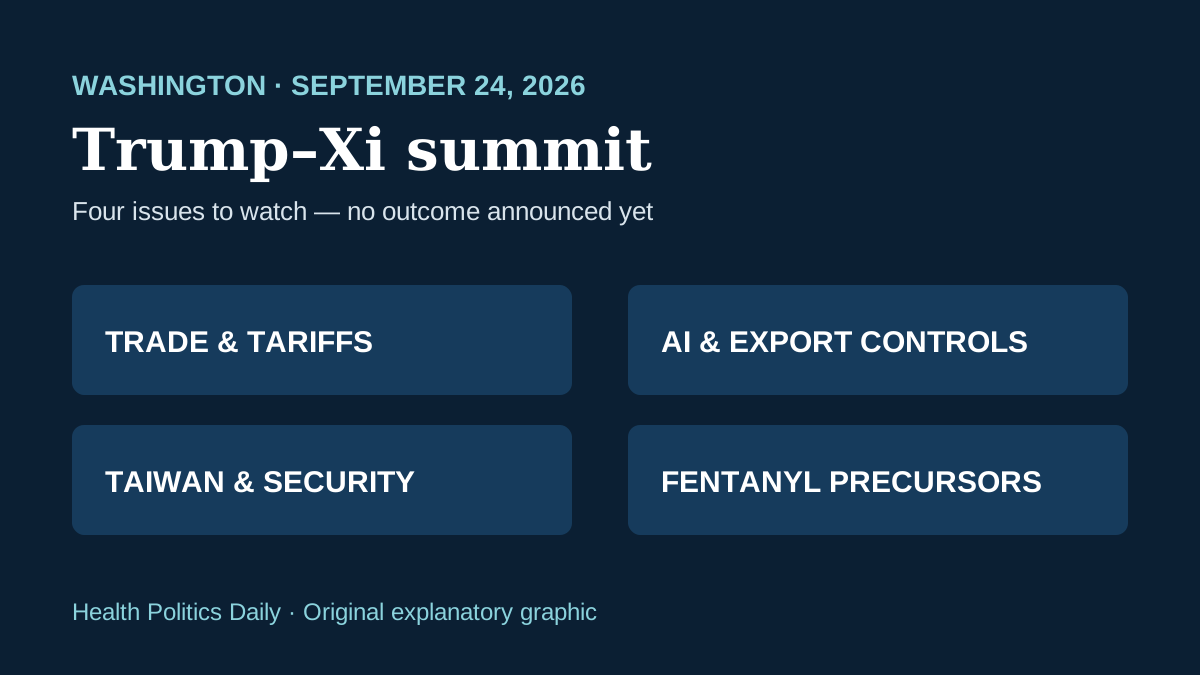
Trade and technology are the most immediate economic questions
Reuters’ summit preview identifies tariffs, China’s rare-earth position, advanced technology and the existing trade truce as central issues. Businesses will watch for written changes to tariff rates, export licenses or deadlines—not broad statements about cooperation.
Artificial intelligence is both a commercial race and a security issue. Any meaningful outcome would need specific commitments, such as an incident-communication channel, defined controls or a timetable. Discussion alone would not create enforceable rules.
Security and Public Health
Taiwan and fentanyl carry consequences beyond trade
Taiwan remains a major source of strategic risk. The summit may lower the temperature or clarify positions, but it cannot settle Taiwan’s status, and ceremonial warmth should not be read as a change in longstanding policy without an official statement.
China recently added two drug-precursor chemicals to export controls for shipments to the United States, Mexico and Canada, according to the Associated Press. That is a concrete pre-summit action. Its effect on illicit fentanyl supply will depend on enforcement, substitution and cooperation across multiple countries.
Practical Implications
Consumers and markets should wait for documents, not optics
Tariff changes could eventually affect import costs and supply chains, while rare-earth or chip rules could affect manufacturers. None of those effects is automatic tonight. Businesses need official text, effective dates and agency guidance before changing compliance plans; households should be cautious about claims that one meeting will immediately lower prices.
What Remains Uncertain
The hardest questions concern verification and durability
The leaders could announce a framework, extend a truce or produce no major agreement. Even a joint statement may leave unresolved how commitments are measured, enforced and insulated from later political disputes. The clearest test will be whether Thursday produces specific, published obligations.
Bias Lens: covering the Trump–Xi visit
Xi arrived September 23 and Trump greeted him at Joint Base Andrews. Their main meeting is September 24; no new summit agreement had been announced by publication.
The Guardian, Reuters and Fox News foreground different risks. Their framing should be separated from confirmed government action.
Principal Sources
Evidence and reporting used
- Reuters — official visit dates and diplomatic baseline
- Reuters — summit issues and negotiation context
- Associated Press — schedule and agenda
- Associated Press — precursor-chemical export controls
A directly relevant PBS NewsHour segment is linked on its publisher page. It is not embedded here.