DIGITAL FINANCE — CYBER FRAUD — GLOBAL POLICY
IMF and World Bank Launch Bangkok Blueprint Against Digital Financial Fraud
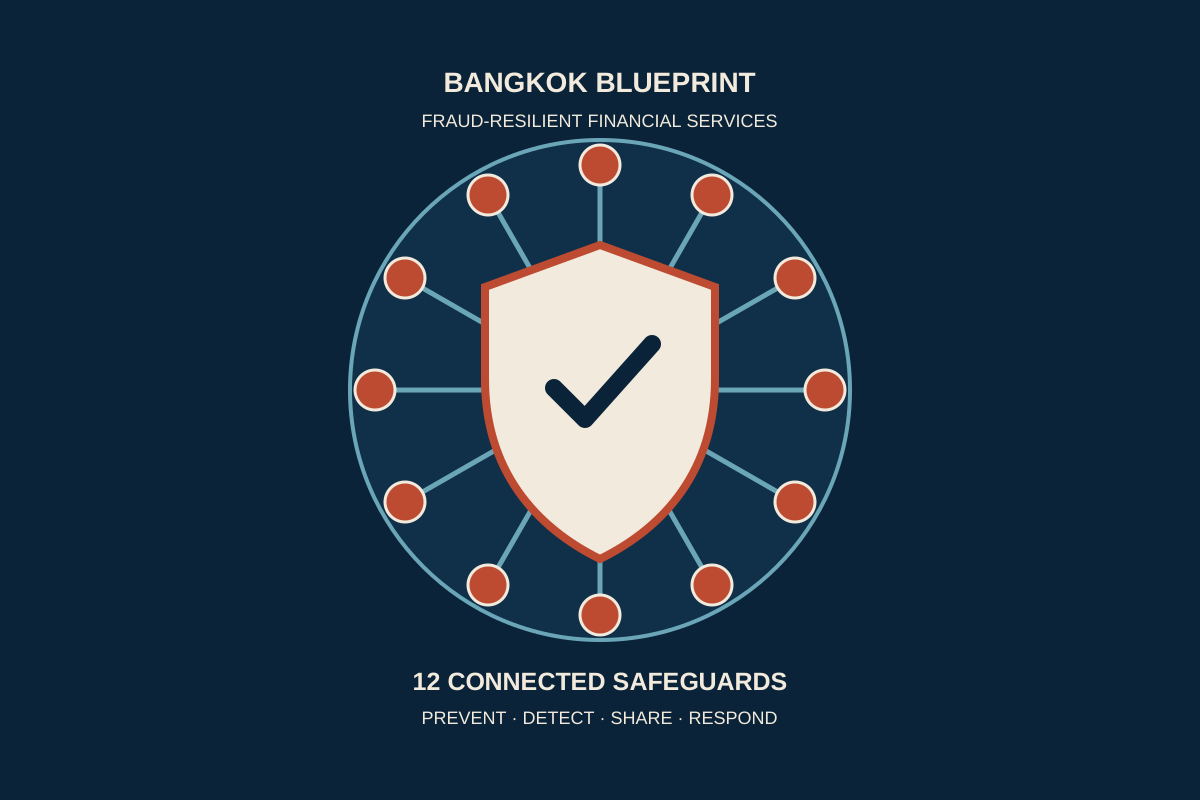
The 12-point framework calls for coordinated prevention, detection and information-sharing across banks, platforms, telecom providers and governments. It is guidance—not a binding global law or an automatic consumer remedy.
By Health Politics Daily News Desk · Published Wednesday, October 14, 2026 at 8:00 a.m. America/New_York · Approximately 7 minutes
Verified Baseline
A cross-border framework, not a new global regulator
The International Monetary Fund and World Bank, working with the Bank of Thailand, launched the Bangkok Blueprint for Fraud-Resilient Financial Services on October 14. The framework contains 12 key considerations intended to guide policymakers, regulators, financial companies and other parts of the digital ecosystem.
The official event description calls for a “whole-of-ecosystem” approach: stronger domestic coordination, international collaboration and preventive technology. Reuters reported that the blueprint is intended as assistance and is not formal IMF–World Bank policy guidance.
Verified fact: the institutions released a high-level framework. Important limit: it does not itself change national law, create a global enforcement agency or guarantee reimbursement to a fraud victim.
What It Proposes
Prevention, detection and faster information-sharing
Thailand’s government says the blueprint emphasizes stronger policy and legal foundations, cross-border prevention and detection, domestic and international information-sharing, and technology that can trace money moving between jurisdictions. Those goals respond to a basic operational problem: scammers can reach a victim on one platform, receive money through another institution and move proceeds across borders before separate agencies connect the evidence.
Analysis: the blueprint’s value will depend less on its title than on whether countries translate broad principles into compatible rules, secure data-sharing and rapid procedures for freezing suspicious transfers. Privacy, due process and cybersecurity safeguards remain essential when institutions exchange more customer information.
Why It Matters
Fraud can erode access as well as savings
At the launch, IMF Managing Director Kristalina Georgieva warned that cyber fraud could reverse gains from digital financial inclusion if people lose trust in formal services. Reuters reported that Asia accounted for 67% of global fraud losses in 2024, according to the Bank of Thailand governor, while the United Nations estimates scam operations took at least $88 billion from people in the Asia-Pacific region in 2025.
For consumers, the practical lesson is unchanged: unexpected payment requests, urgent account warnings and investment offers should be verified through a separately located official number or app. People who believe they have transferred money to a fraudster should contact their bank or payment provider quickly and use the reporting channel in their jurisdiction. This is general information, not legal or financial advice.
What Remains Uncertain
Implementation, liability and victim recovery
The launch did not establish a shared timetable, enforcement mechanism or universal rule for losses. National regulators differ over who bears responsibility when fraud begins on a social platform, passes through a telecom network and ends in a bank or crypto account.
Forecast: countries are likely to use the blueprint as a common checklist for new laws, supervisory expectations and bilateral agreements, but adoption will be uneven. Opinion: Health Politics Daily takes no position on a preferred liability model; any system should publish measurable results and protect both fraud victims and lawful users from opaque account restrictions.
Bias Lens: who is responsible for digital fraud?
The IMF, World Bank and Bank of Thailand launched a 12-consideration framework on October 14. It promotes coordinated prevention, detection, information-sharing and response, but is not binding law or formal IMF–World Bank policy guidance.
Left-leaning framing: The Guardian emphasizes the risk that fraud destroys public trust and highlights calls for social-media platforms to share responsibility. Center framing: Reuters leads with the framework’s release, its nonbinding status and regional loss estimates. Right-leaning framing: The Times centers Bank of England Governor Andrew Bailey’s experience as a deepfake target and his call for a crackdown on platform-enabled scams.
The outlets do not dispute that the blueprint was launched. Their differences are chiefly about emphasis: systemic trust and platform accountability, institutional design and data, or a prominent victim’s case and enforcement rhetoric.
Principal Sources
Framework and corroborating coverage
- IMF–World Bank Annual Meetings — official Bangkok Blueprint event and framework overview
- Royal Thai Government — policy, legal and cross-border implementation priorities
- Reuters — launch details, status and regional context
No directly relevant official or publisher-authorized video with clearly documented embedding permission was available. The official World Bank annual-meetings video page is linked rather than embedded.
Related Coverage