SOCIAL SECURITY — INFLATION — HOUSEHOLD FINANCE
Social Security Benefits Will Rise 3.6% in 2027
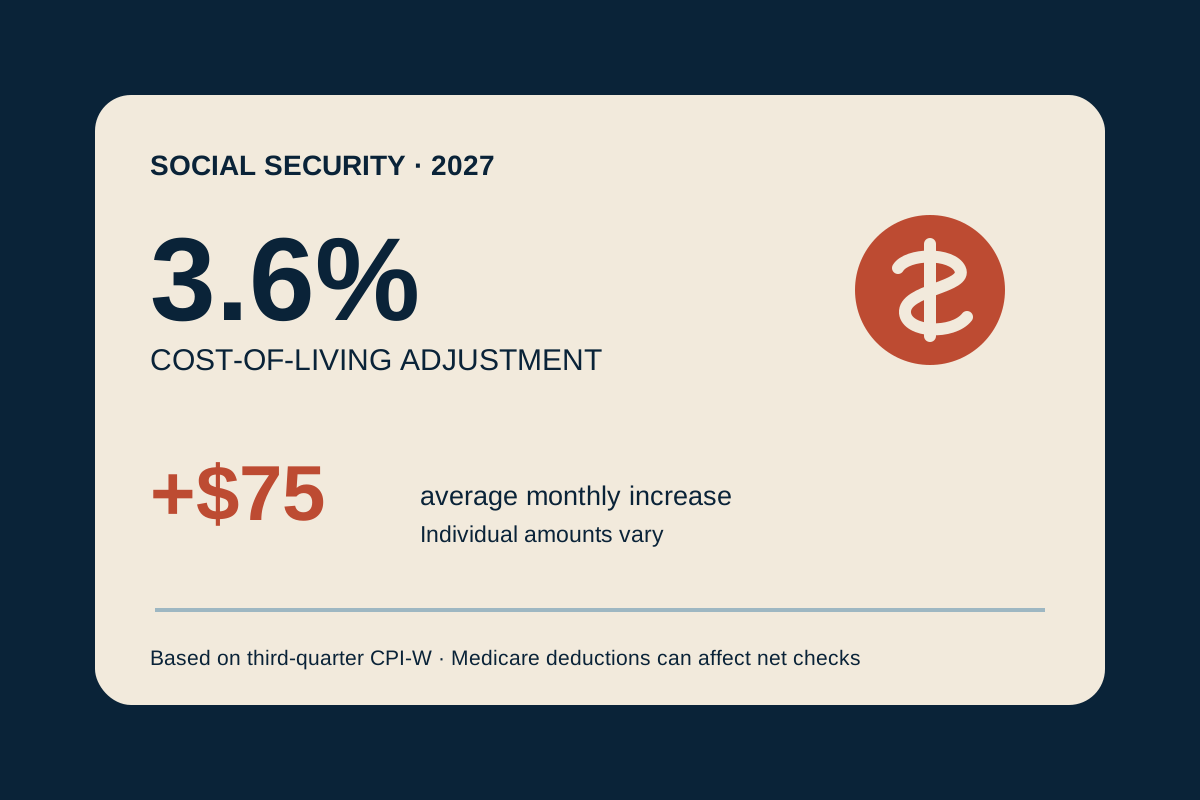
The average monthly increase is about $75, but each person’s dollar change depends on the current benefit and deductions such as Medicare premiums. SSI recipients receive the adjustment first, on December 31.
By Health Politics Daily News Desk · Published Wednesday, October 14, 2026 at 10:00 a.m. America/New_York · Approximately 7 minutes
Verified Baseline
A 3.6% adjustment for Social Security and SSI
The Social Security Administration announced a 3.6% cost-of-living adjustment for 2027 after the Bureau of Labor Statistics released September inflation data. Reuters reports that roughly 76 million people receiving Social Security or Supplemental Security Income will be affected. Social Security increases begin with January payments; SSI’s increase begins December 31, 2026.
The agency calculates the adjustment under a statutory formula using the third-quarter average of the Consumer Price Index for Urban Wage Earners and Clerical Workers, or CPI-W. That index averaged about 3.6% higher across July, August and September than in the comparison period.
Verified fact: the percentage is automatic under existing law. Important limit: it is not a flat $75 payment, and the announcement does not mean every person’s net deposit will rise by the same amount.
What It Means
The dollar increase depends on the current benefit
The Associated Press estimates the average monthly increase at about $75. A simple illustration: a $1,500 monthly benefit would rise about $54 before deductions, while a $2,500 benefit would rise about $90. These examples apply the announced percentage; they are not individualized benefit estimates.
Beneficiaries generally do not need to apply for the adjustment. SSA publishes payment calendars and typically makes individual COLA notices available through a person’s secure “my Social Security” account and by mail.
Medicare Interaction
The gross increase is not always the net-check increase
Medicare Part B premiums are commonly deducted from Social Security payments. The 2026 Medicare trustees projected a standard 2027 Part B premium of $209.50, up $6.60 from 2026, but final premium amounts can differ from projections and some people pay income-related surcharges. Part D premiums vary by plan and region.
A statutory “hold harmless” rule limits the Part B premium increase for many—but not all—beneficiaries so that it does not exceed their Social Security dollar increase. New enrollees, higher-income beneficiaries and certain other groups may not receive that protection.
Practical implication: household budgeting should use the individual SSA notice and final Medicare premium information rather than multiplying the average $75 figure. This is general information, not personalized financial or benefits advice.
Why It Rose
Inflation accelerated, led in part by energy costs
The broader Consumer Price Index increased 0.6% in September and 3.7% over 12 months. Gasoline prices rose sharply during the month. The headline CPI and the CPI-W used for Social Security are related but are not the same index, which is why their published rates can differ.
Analysis: a larger COLA helps benefits track measured inflation, but it does not restore the price level to an earlier year or guarantee that every retiree’s personal expenses rose by exactly 3.6%. Medical care, housing, food and energy weigh differently in each household.
What Remains Uncertain
Net payments and the program’s long-term finances
Final Medicare premiums, individual deductions and benefit-specific rounding will determine net deposits. Separately, the 2026 trustees projected that Social Security’s combined trust funds could pay full scheduled benefits until 2034, after which incoming revenue would cover about 83% absent legislative action. The 2027 COLA neither causes nor resolves that long-term shortfall.
Forecast: recipients will see personalized notices before the new amounts begin, while Congress will continue debating financing changes. Opinion: Health Politics Daily takes no position on a specific solvency package; proposals should state clearly who pays, who receives less and when changes would begin.
Bias Lens: increase, affordability or solvency?
The 2027 COLA is 3.6%, calculated under existing law from third-quarter CPI-W data. The average increase is about $75 per month, but individual and net amounts vary.
Left-leaning framing: The Washington Post emphasizes household purchasing power, Medicare offsets and the approaching trust-fund shortfall. Center framing: The Associated Press pairs the average gain with beneficiaries’ concerns that healthcare and other costs are rising faster. Right-leaning framing: Fox Business foregrounded the inflation formula, projected increase and program solvency before the final announcement.
The difference is emphasis rather than disagreement over the formula: immediate affordability, a neutral benefits-and-recipient account, or inflation and fiscal sustainability.
Principal Sources
Official methodology and corroborating coverage
- Social Security Administration — statutory COLA methodology
- Social Security Administration — 2027 payment calendar
- Medicare trustees — Part B projection and hold-harmless explanation
- Reuters — announcement, timing and CPI-W calculation
- Associated Press — average increase and recipient context
No directly relevant official or publisher-authorized video with clear embedding permission was available, so no video was embedded.
Related Coverage