IRAN — STRAIT OF HORMUZ — DEVELOPING
Iran Calls U.S. Hormuz Response Insufficient, Leaving Strait Deal Unresolved
Iran says Washington accepted some parts of its seven-condition proposal but left others unclear. The negotiating text, precise concessions and a reopening timetable have not been made public.
By Health Politics Daily News Desk · Published Sunday, October 11, 2026 at 2:02 p.m. America/New_York · Approximately 7 minutes
Verified Baseline
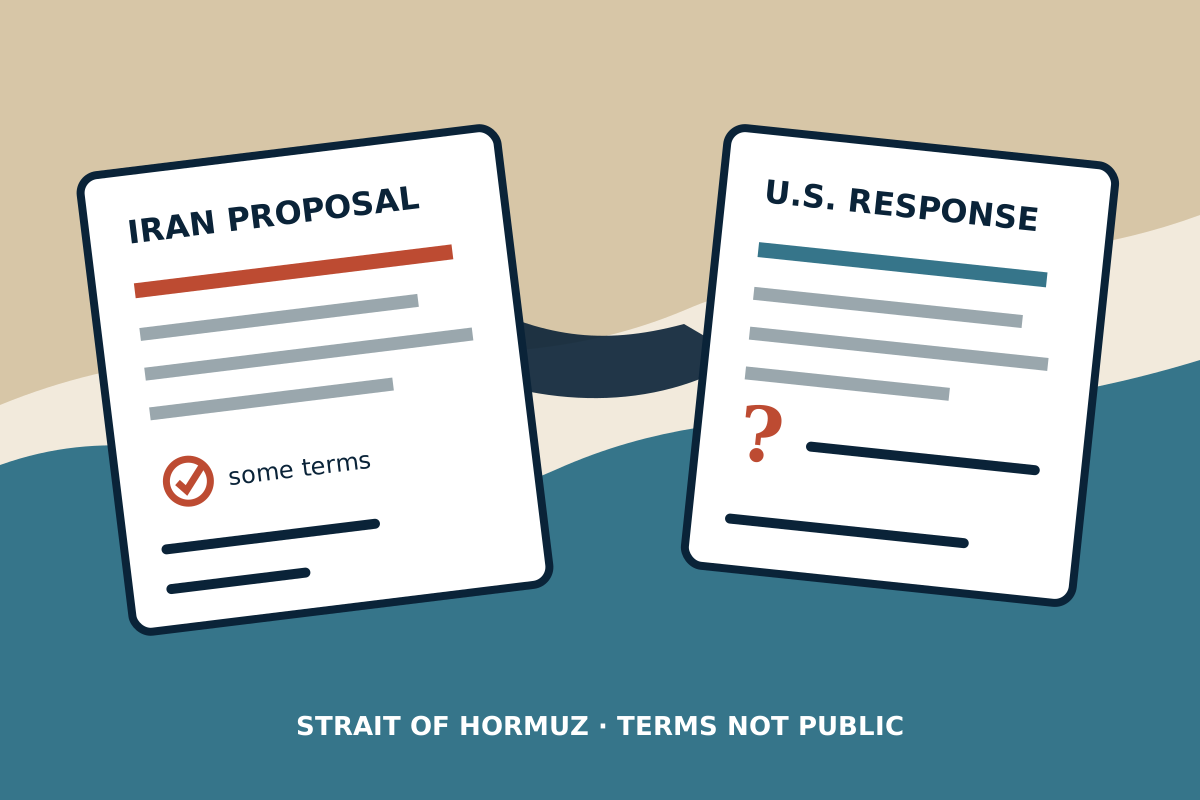
Iran says the U.S. answer falls short; Washington has not published it
Mohsen Rezaei, a senior Iranian official, said Sunday that the United States responded through mediators to Tehran's proposal for reopening the Strait of Hormuz. He said Washington accepted some conditions, left others unclear and produced an answer Iran considers insufficient. Reuters reported the statement, while Associated Press reported the continuing impasse.
Verified fact: Iran publicly characterized a U.S. response as inadequate. Not independently verified: which conditions Washington accepted, the exact language exchanged through mediators or whether either side has authorized a near-term reopening.
What Happened
The latest exchange narrows differences without producing a public agreement
Iran previously tied reopening to seven conditions, including security and sanctions-related demands. The full negotiating documents remain confidential. Rezaei's account indicates movement on some points, but a partial response is not the same as mutually accepted terms.
The White House had not publicly detailed its answer at publication. That means Iran's description should be treated as an attributed negotiating claim, not as a jointly verified summary of the U.S. position.
Why It Matters
Hormuz is a strategic chokepoint for energy and commercial shipping
A durable reopening could reduce shipping risk, insurance costs and uncertainty in energy markets. Continued closure or restricted passage can affect importers, exporters and consumers far beyond the Gulf, even when physical supplies remain available elsewhere.
Analysis: public acknowledgment of a response suggests indirect diplomacy is active, but the disagreement over sufficiency shows the central bargain remains unresolved. Forecast: markets and carriers will watch for an agreed text, operational guidance and evidence that vessels can pass safely. Opinion: Health Politics Daily takes no position on the terms; both governments should publish enough detail to distinguish an enforceable arrangement from competing political claims.
Practical Implications
What changes now—and what does not
- Shipping companies should continue relying on official maritime and insurer guidance, not political statements alone.
- Energy-price movements may reflect negotiation expectations, but no public agreement guarantees lower costs.
- Governments and businesses exposed to Gulf trade still face planning uncertainty until transit rules and security arrangements are published.
- The exchange does not itself settle the broader U.S.–Iran conflict or remove sanctions.
Important Context
Earlier proposals also stopped short of a final reopening deal
Iran announced its seven conditions on October 4 after previous frameworks and time-limited proposals failed to produce a lasting agreement. See our earlier explainers on Iran's conditions for reopening Hormuz and the U.S. response to Iran's earlier proposal.
What Remains Uncertain
No text, implementation schedule or enforcement plan is public
It is unknown which provisions remain disputed, who would verify compliance, whether sanctions relief would precede reopening or follow it, and how quickly maritime authorities could implement a deal. Further statements from either side could change this assessment.
Bias Lens: how coverage frames the impasse
Iran says a U.S. response arrived through mediators, accepted some conditions and left others unresolved; no agreed text or reopening date is public.
The Guardian, generally read as left-leaning, emphasized the diplomatic tradeoffs and economic pressure surrounding the proposal. AP, a center-oriented wire service, foregrounds the latest exchange and unresolved terms. Fox News, generally read as right-leaning, framed the earlier stalled talks around U.S. pressure and the possibility of further strikes.
The Guardian and Fox items predate Sunday's response and provide framing context rather than separate confirmation of it. These differences in emphasis are not proof that any outlet's factual reporting is false; the baseline remains the limited facts corroborated across reporting and the absence of a published agreement.
Principal Sources
Statements and corroborating reporting
- Reuters — Iranian account of the latest U.S. response
- Associated Press — negotiations and maritime context
- Reuters — Iran's previously stated conditions
No suitable official or publisher-authorized video directly documenting the confidential exchange was available, so none was embedded.
Related Coverage