NORTH KOREA — MISSILE SECURITY
North Korea Hypersonic Missile Drill: What Is Confirmed
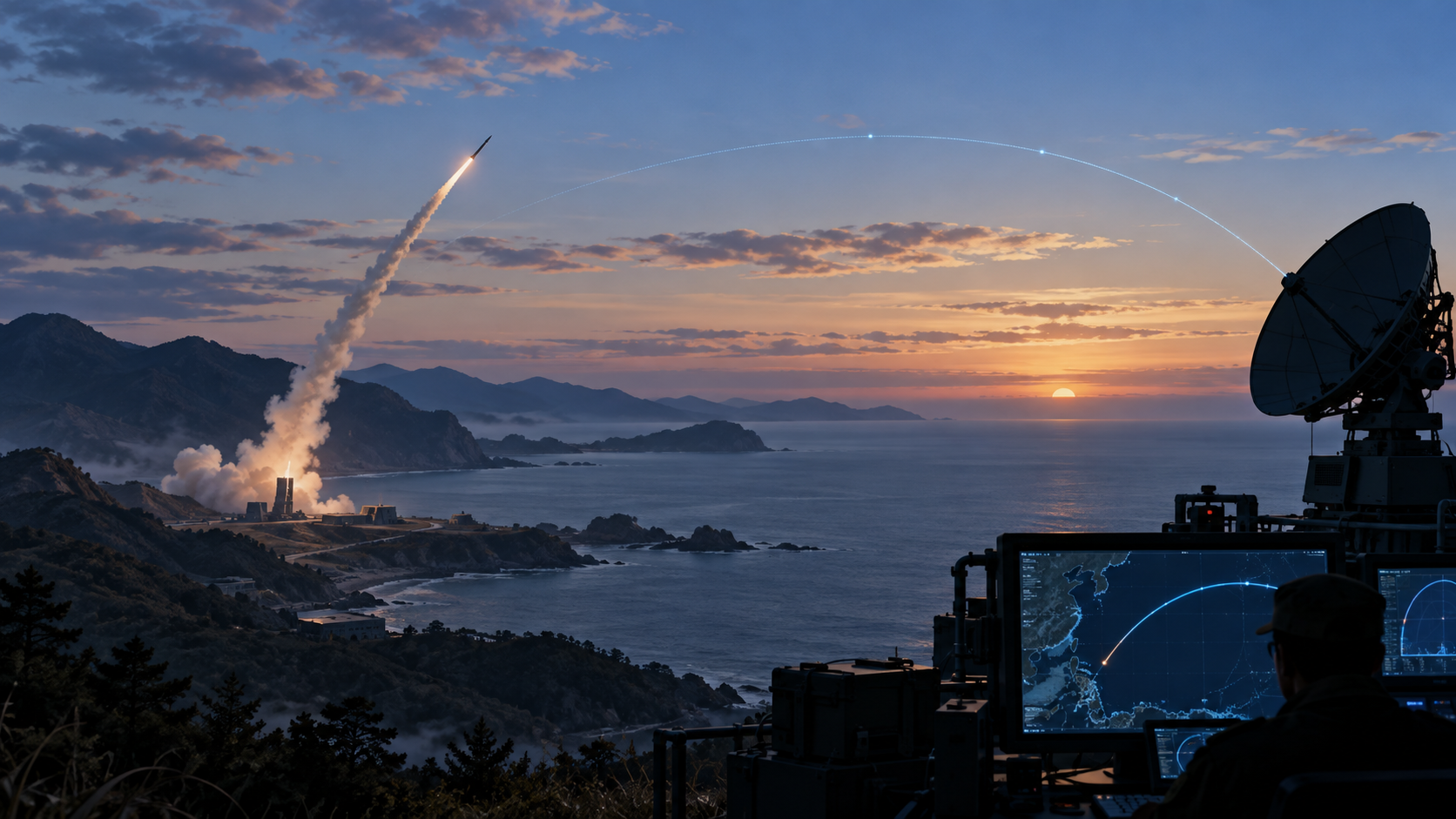
A missile launch from the Wonsan area is independently confirmed. North Korea says it was a 1,000-kilometer hypersonic drill; South Korea detected a flight of more than 700 kilometers and disputes claims that allied defenses could not track or intercept it.
By Health Politics Daily News Desk · Published Sunday, October 4, 2026 at 9:57 a.m. America/New_York · Approximately 7 minutes
Verified Baseline
A ballistic missile launched from near Wonsan and landed at sea
South Korea’s Joint Chiefs of Staff said it detected a North Korean ballistic missile at about 6:30 a.m. local time Saturday, October 3, from the Wonsan area toward waters east of the Korean Peninsula. Seoul assessed that it traveled more than 700 kilometers and said South Korean and U.S. intelligence tracked the launch from its early stage while sharing information with Japan.
North Korea’s Korean Central News Agency said Sunday that leader Kim Jong Un supervised the drill and that the missile struck a target 1,000 kilometers away. Those figures differ, but they agree on the essential event: an intermediate-range missile was launched eastward and landed at sea. No injury or property damage from the missile has been reported.
Claims and Evidence
“Hypersonic,” AI-guided and hard to intercept are performance claims
Pyongyang described the weapon as part of a “hypersonic strategic weapon system.” Kim Yo Jong also claimed it could change course at low altitude with artificial-intelligence-assisted guidance and said South Korean and Japanese authorities failed to track the full trajectory.
Those claims have not been independently demonstrated in public data. South Korea’s Defense Ministry said the launch remained within the detection and interception capabilities of South Korean and U.S. assets. Analysts cited by Reuters said images resembled a cone-shaped system North Korea has tested before and may signal movement toward operational deployment, but image-based assessment cannot establish every claimed capability.
Why It Matters
Maneuverability can complicate warning and missile defense
“Hypersonic” generally describes flight above five times the speed of sound, but speed alone is not the central concern: ballistic missiles can also travel at hypersonic speeds. The military challenge is a weapon that flies lower or changes course unpredictably, reducing the time and certainty available to radars and interceptors.
The drill also matters politically. North Korea said it was testing the reliability and mobility of its nuclear deterrent and has conducted more than 10 missile tests this year. The launch followed a September 21 landmine blast in the Demilitarized Zone that wounded three South Korean soldiers, deepening tensions even though Pyongyang denies deliberately targeting them.
Practical Implications
What changes—and what does not
- Regional monitoring: South Korea, Japan and the United States are likely to review trajectory and sensor data for signs of maneuvering, range and operational readiness.
- No automatic proof of deployment: a drill can show progress, but public evidence does not establish how many systems exist, their reliability under combat conditions or whether units are fully operational.
- No direct civilian action outside official alerts: people in Japan and South Korea should follow national and local emergency systems. The launch did not produce a publicly reported impact on populated territory.
- Diplomacy remains stalled: the test increases pressure but does not by itself show that war is imminent or that negotiations are impossible.
What Remains Uncertain
Range, trajectory and interception performance
Verified fact: regional militaries detected a ballistic launch from the Wonsan area and North Korea acknowledged conducting an intermediate-range drill. Analysis: the detailed North Korean release appears designed to advertise deterrence and challenge confidence in regional tracking systems. Forecast: further tests and allied surveillance are likely, but one launch cannot establish the system’s wartime reliability or predict the next political step.
Bias Lens: weapons advance, deterrence message or escalation?
A missile launched from the Wonsan area and flew hundreds of kilometers before landing at sea. North Korea calls it hypersonic and says it flew 1,000 kilometers; South Korea says it flew more than 700 kilometers and disputes claims that allies could not detect or intercept it.
The Guardian, generally described as left-leaning, places the launch prominently within the border-mine dispute and risks of renewed escalation. Center-oriented Reuters and the Associated Press emphasize competing technical claims, missile-defense implications and stalled diplomacy. No major right-leaning outlet had comparable original reporting on this specific drill at publication time; inserting older commentary would obscure rather than clarify the evidence. These framing differences do not change the confirmed launch.
Principal Sources
Regional military statements and corroborating reporting
- Yonhap — South Korea Joint Chiefs of Staff launch account
- Yonhap — KCNA claims and South Korean Defense Ministry response
- Reuters — drill details and independent analysis
- Associated Press — regional security and diplomatic context
No suitable directly relevant official or publisher-authorized video with clear embedding permission was available at publication time.