U.S. POLICY — TIME CHANGE
Will the U.S. End Clock Changes? Daylight Saving Bill Explained
The House voted to make daylight saving time permanent, but the Senate has not acted. For now, most Americans should still plan to set clocks back on November 1.
By Health Politics Daily News Desk · Published Saturday, October 3, 2026 at 3:56 p.m. America/New_York · Approximately 7 minutes
Verified Baseline
The House passed the bill; the Senate did not
The House approved the Sunshine Protection Act on July 14 by a 308–117 vote. The measure would end the twice-yearly clock change by making daylight saving time the default year-round.
It is not law. The Senate has not passed the bill, and President Donald Trump’s renewed pressure on Senator Tom Cotton does not alter its legal status. The Senate left Washington without scheduling a vote before the November 3 midterm election, according to Reuters.
What Happens This Fall
Clocks are still scheduled to fall back November 1
The National Institute of Standards and Technology says daylight saving time ends at 2 a.m. local time on Sunday, November 1, 2026. In places that observe the change, clocks move back one hour to 1 a.m.
Hawaii, most of Arizona and several U.S. territories do not observe seasonal daylight saving time. Federal law currently lets a state choose permanent standard time, but not permanent daylight saving time. Nothing in Saturday’s political dispute changes those rules.
What the Bill Would Do
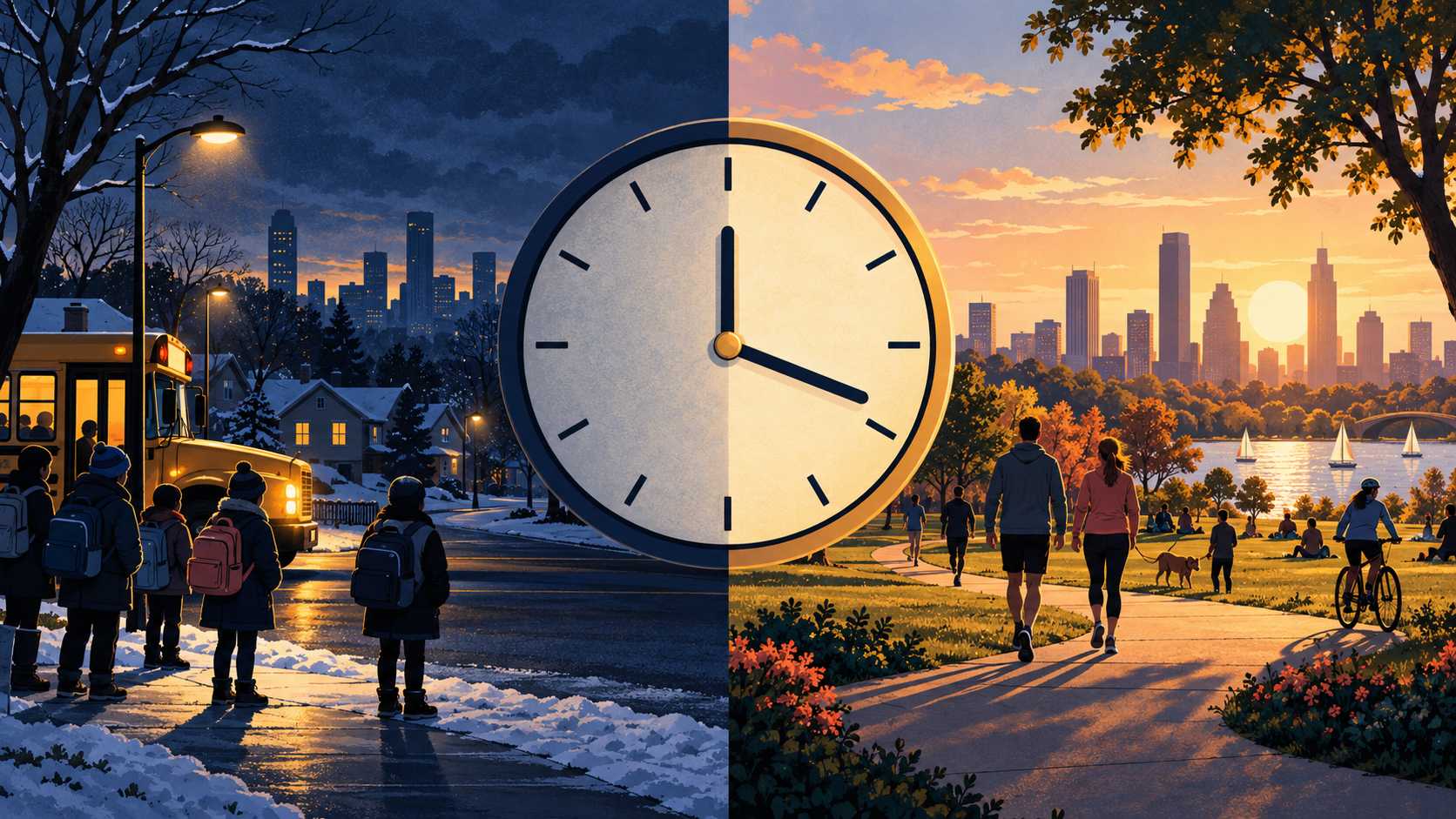
Evenings would stay lighter while winter mornings would get darker
Permanent daylight saving time shifts one hour of usable light from the morning to the evening compared with standard time. It does not create additional sunlight. The practical effect depends on latitude, longitude, work schedules and school start times.
The House bill would take effect in 2027. States and areas already exempt from daylight saving time could retain standard time, and the legislation provides an opt-out path for other states. The final legal details would depend on whether the Senate passes identical language or amends it.
The Case for It
Supporters emphasize evening activity and ending disruption
Supporters argue that later daylight would give families, retailers, restaurants, sports and outdoor recreation more usable time after work and school. They also point to the inconvenience and short-term disruption of changing clocks twice each year.
Trump intensified his campaign Saturday, publicly urging voters to pressure Cotton. The political clash made the issue newly prominent, but supporters’ claims about crime, traffic, health and economic benefits vary in quality and should not be treated as settled simply because they appear in political messaging.
The Case Against It
Opponents emphasize dark school mornings and circadian health
Cotton and other senators argue that permanent daylight saving time would push winter sunrise later, leaving more children, commuters and early-shift workers traveling in darkness. Congress tried year-round daylight saving time in 1974 and reversed course after public opposition.
The American Academy of Sleep Medicine supports ending seasonal clock changes but recommends permanent standard time, which it says aligns more closely with human circadian rhythms. That position is distinct from defending the current system: someone can oppose clock switching and still oppose permanent daylight saving time.
Practical Implications
Plan for the November change unless Congress completes the bill
- Most Americans should expect clocks to move back one hour on November 1.
- Travelers should verify departure times, especially for overnight or early-morning trips during the transition.
- People who take time-sensitive medication or operate scheduled equipment can review timing with an appropriate professional or manufacturer rather than improvising.
- Automatic phones and computers usually update themselves; appliances and manual clocks may not.
These are general planning considerations, not individualized medical advice.
What Remains Uncertain
The Senate’s next move and final bill language are unresolved
The Senate could take up the House bill after the election, amend it, advance a different permanent-time proposal or take no action. Any amendment would require the House to agree again before the measure could reach the president.
Verified fact: the House passed permanent daylight saving time, while the Senate has not. Analysis: the dispute reflects geography and competing preferences for morning versus evening light more than a simple partisan divide. Forecast: claims that the bill is certain to pass—or permanently dead—go beyond the current record.
Bias Lens: political feud or practical time policy?
The House passed the Sunshine Protection Act 308–117. The Senate has not passed it, and NIST still lists November 1 as the 2026 return to standard time.
The left-leaning Daily Beast centers Trump’s disclosure of Cotton’s phone number and describes the episode as an angry political escalation. The center-oriented Associated Press combines the dispute with the bill’s status, prior U.S. experience and competing safety arguments. Right-leaning Fox News also foregrounds the phone-number episode but gives more space to the geographic divide among Republicans and Trump’s case for evening light. The difference is mainly whether the story is framed as presidential conduct, legislative status or an intraparty policy split; all three sources agree the Senate has not passed the bill.
Principal Sources
Official records and reporting used
- GovInfo — official House-passed Sunshine Protection Act text
- House Energy and Commerce Committee — July passage and vote
- NIST — official 2026 daylight saving dates
- U.S. Department of Transportation — Uniform Time Act responsibilities
- Reuters — October 3 political dispute and Senate status
- Associated Press — current political and historical context
No suitable directly relevant official or publisher-authorized video with clear embedding permission was available.