HEALTH — FLORIDA
Florida Dengue Outbreak Reaches 252 Local Cases: What to Know
Locally acquired infections now outnumber travel-associated cases in Florida this year. The outbreak is concentrated around Tampa Bay, but mosquito precautions matter statewide.
By Health Politics Daily News Desk · Published Saturday, October 3, 2026 at 9:57 a.m. America/New_York · Approximately 7 minutes
Verified Baseline
Florida has reported 252 locally acquired cases
Florida’s latest surveillance count lists 252 dengue infections acquired within the state during 2026, compared with 245 infections associated with recent travel to dengue-endemic areas. Most local transmission has been reported in Hillsborough County, which includes Tampa, with additional cases in several other counties.
One dengue-associated death has been confirmed in Florida this year. The locally acquired total exceeds the state’s previous annual record of just under 200 cases in 2023 and appears to be the largest calendar-year outbreak in the continental United States in decades, according to the Associated Press’s review of available state and federal records.
What the Number Means
“Locally acquired” identifies likely exposure—not person-to-person spread
Local acquisition means public-health investigators found no recent travel to an area where dengue is endemic and concluded that infection most likely followed a mosquito bite in Florida. Dengue does not ordinarily spread through casual contact, coughing or sharing a room.
The reported total is not a count of every infection. Many people have no symptoms or do not seek testing, while surveillance systems depend on clinicians considering dengue, obtaining the right laboratory test and reporting the result. State and CDC totals can also differ temporarily because they update on different schedules.
Symptoms and Care
Most infections are mild or silent, but severe dengue can be dangerous
About one in four infected people becomes ill. Symptoms can include fever, severe headache, pain behind the eyes, muscle or joint pain, nausea, vomiting and rash. Symptoms generally begin several days after an infected mosquito bite.
CDC warns that severe dengue can develop as fever subsides. Emergency warning signs include severe abdominal pain, repeated vomiting, bleeding from the nose or gums, vomiting blood, blood in stool, extreme tiredness or restlessness, and rapid breathing. Anyone with concerning symptoms should contact a health professional; severe warning signs require urgent care.
Practical Prevention
Drain small water sources and prevent bites during the day
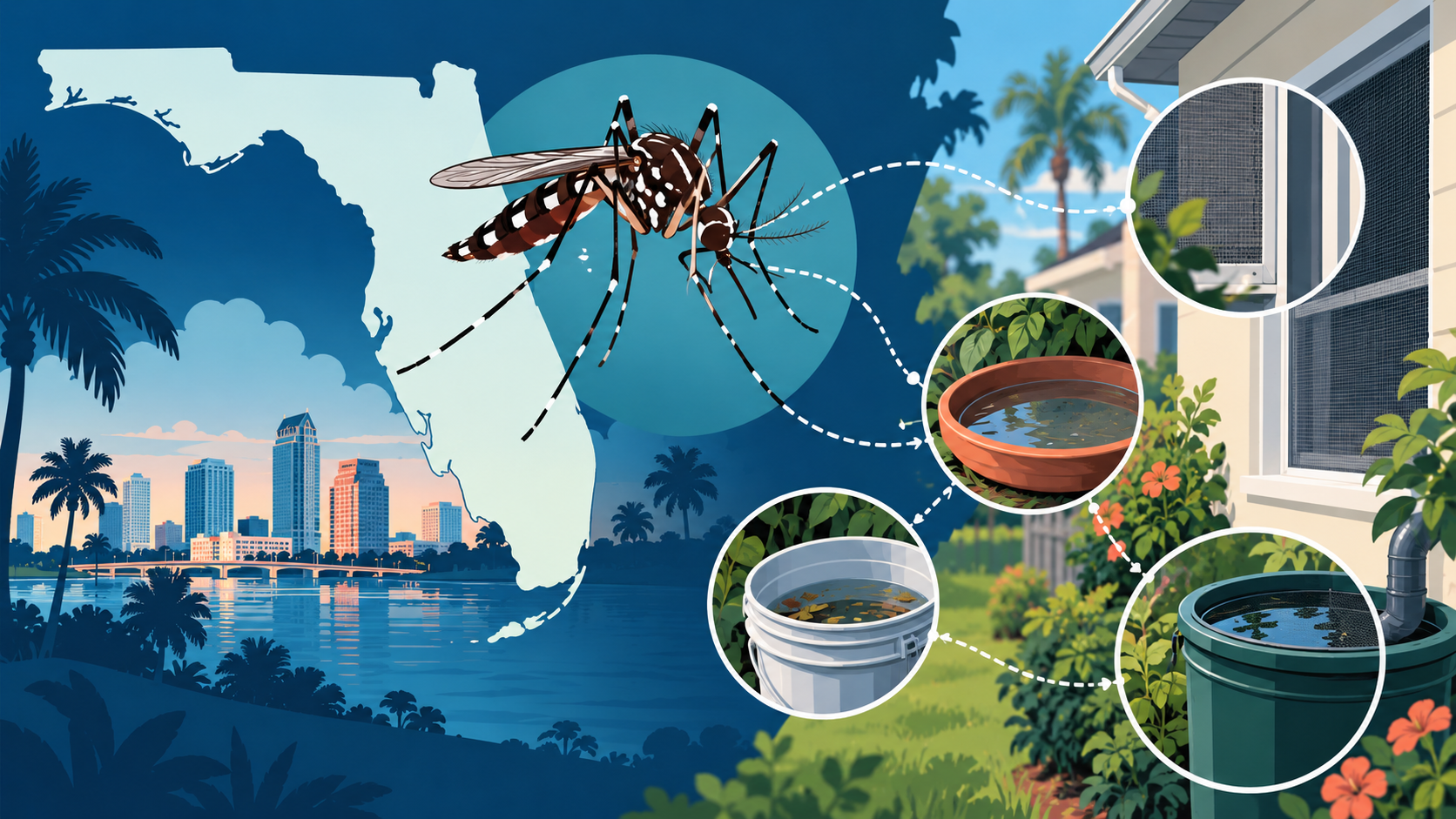
Florida health officials recommend draining standing water at least weekly from flowerpot saucers, buckets, toys, tarps, gutters, pet bowls, birdbaths and discarded tires. Window and door screens should be repaired. Aedes aegypti and Aedes albopictus mosquitoes can breed close to homes in very small amounts of water.
Use an EPA-registered insect repellent as directed, wear loose long sleeves and pants when practical, and use screened or air-conditioned spaces. These mosquitoes are active during daylight hours, so precautions should not be limited to dusk.
What Remains Uncertain
Case growth may slow, continue or be partly hidden by underdiagnosis
Recent mosquito testing and intensified control may reduce transmission, but public data cannot yet establish that the outbreak has peaked. Weather, mosquito abundance, human movement and the interval between infection, testing and reporting can all affect weekly counts.
Verified fact: Florida has reported 252 locally acquired cases through the latest surveillance week. Analysis: the concentration around Tampa Bay supports targeted control while statewide bite prevention remains prudent. Forecast: claims that dengue will become permanently widespread in Florida—or disappear after cooler weather—remain uncertain.
Bias Lens: record outbreak, climate context and personal precautions
Florida reports 252 locally acquired infections, 245 travel-associated infections and one death in 2026; Hillsborough County is the principal center of local transmission.
Associated Press, a center-oriented wire service, emphasizes the historical scale, surveillance limits and why Florida is vulnerable to introductions. The left-leaning Guardian places more weight on climate change and emergency declarations. Right-leaning Fox News foregrounds household precautions, county responses and mosquito behavior. These are differences in emphasis, not competing case counts; the state surveillance baseline should anchor all three frames.
Principal Sources
Evidence and guidance used
- Florida Department of Health — arbovirus surveillance
- Florida Department of Health — dengue symptoms and prevention
- CDC — current dengue data and surveillance limitations
- Associated Press — historical comparison and outbreak reporting
No suitable directly relevant authorized video with clear embedding permission was available.