UNITED STATES — PUBLIC HEALTH
Pennsylvania Measles Outbreak Passes 900 Cases: What to Know
Pennsylvania’s 2026 measles total reached 903 on Monday, including 176 hospitalizations. The rapid increase is verified; the classification of four reported deaths remains under review at the federal level.
By Health Politics Daily News Desk · Published Monday, September 28, 2026 at 4:01 p.m. America/New_York · Approximately 6 minutes
Verified Baseline
The state count reached 903 cases
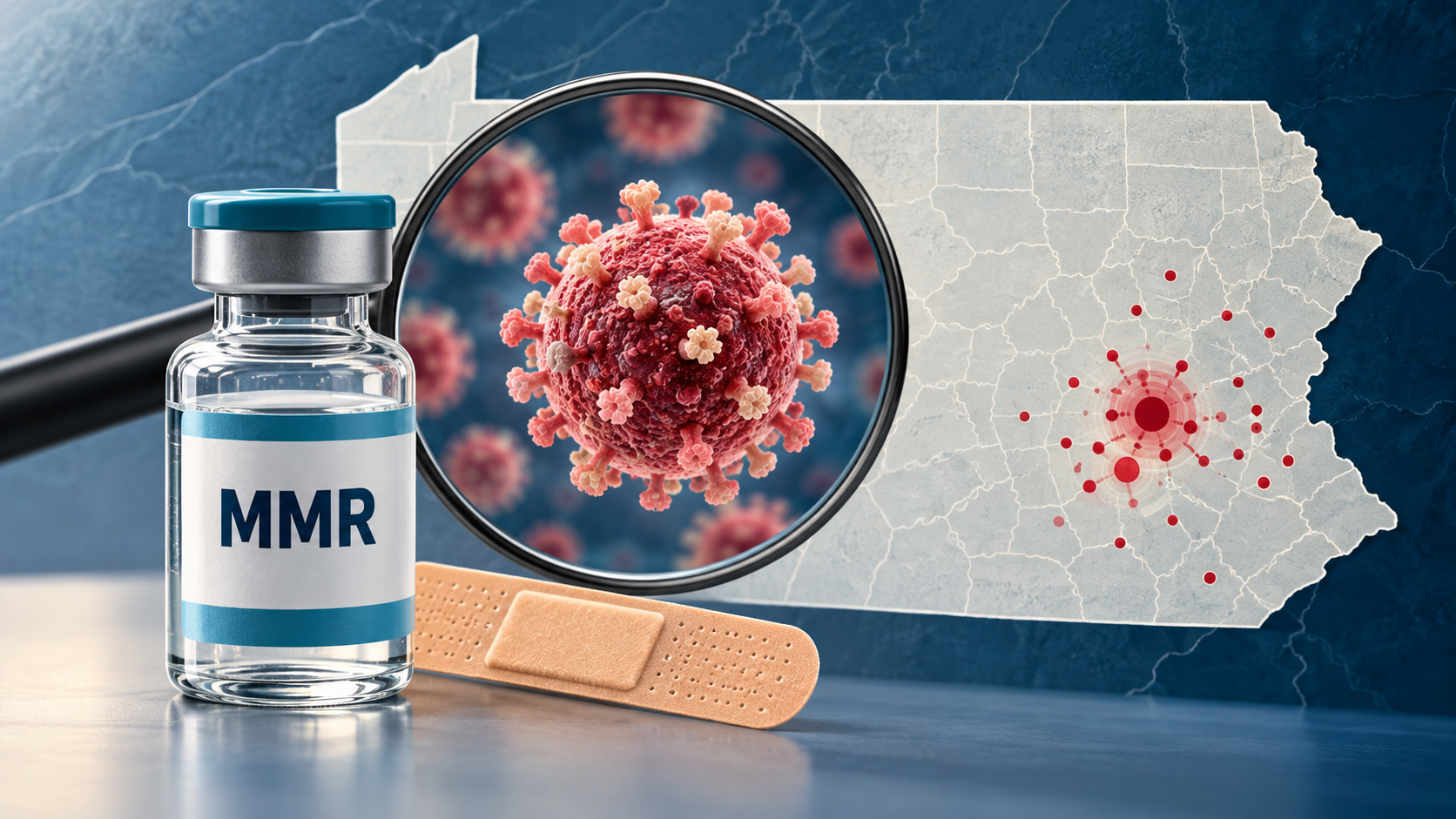
Pennsylvania health-department data reported by Reuters showed 903 cases on September 28—68 more than the previous Wednesday—and 176 hospitalizations. Lancaster County remains the hardest-hit area. The state’s most recent formal release, issued Friday, reported 890 cases across 39 counties, showing that the dashboard continued to rise over the weekend.
Nationally, the Centers for Disease Control and Prevention reported 3,659 confirmed cases as of September 24, with 95% associated with outbreaks. Pennsylvania therefore accounts for roughly one-quarter of the national count, although reporting dates and case assignments can be revised.
Why It Matters
Measles spreads before the rash is obvious
Measles is an airborne viral disease. An infected person can spread it from four days before through four days after the rash appears, and the virus can remain infectious in the air for up to two hours after that person leaves. Early symptoms commonly include fever, cough, runny nose and red eyes, followed by a rash.
The disease is especially dangerous for babies, young children, pregnant people and people with weakened immune systems. Complications can include pneumonia, brain inflammation and death. Two doses of the measles, mumps and rubella vaccine provide about 97% protection against measles, according to the CDC.
What Is Disputed
Pennsylvania and federal officials count deaths differently
Pennsylvania has classified four deaths among unvaccinated residents as measles-associated. The CDC’s public tally currently lists one verified measles death nationally and has not adopted all four state classifications. That disagreement concerns how deaths are attributed—not whether the 903 cases or 176 hospitalizations exist.
Confirmed fact: state epidemiologists say all four deaths met Pennsylvania’s measles-associated definition. Uncertainty: federal review has not produced a final harmonized count, and public reporting does not establish that measles was the sole immediate cause in every case.
Bias Lens: outbreak facts versus political conflict
Pennsylvania reports 903 cases and 176 hospitalizations. The CDC reports 3,659 U.S. cases through September 24. Two MMR doses provide about 97% protection.
Reuters leads with the rising case and hospitalization counts and notes the death-classification dispute. The Guardian gives greater emphasis to criticism of federal officials and changes in death reporting. Fox News foregrounds federal skepticism and coroners’ questions about how “measles-associated” deaths are described. These framing differences matter, but they do not alter the state case count, hospitalizations or established evidence supporting MMR vaccination.
Practical Implications
Check exposure notices before entering a clinic
People who believe they were exposed or develop compatible symptoms should contact a health-care provider before arriving in person so the facility can prevent additional exposures. Pennsylvania residents can also call 877-PA-HEALTH. Emergency symptoms—including difficulty breathing, severe dehydration, confusion or seizures—require urgent medical attention.
This report does not replace individual medical advice. Vaccine timing can differ for infants, travelers, pregnant people and people with immune conditions; those questions should be discussed with a clinician or local health department.
What Remains Uncertain
The outbreak’s peak is not yet visible
Analysis: the addition of 68 cases in less than a week shows ongoing transmission, not merely a historical backlog. Forecast: officials have not established when cases will peak, and the number can continue rising because infections may be detected after exposure chains have already expanded.
The most useful next indicators are new weekly cases, the share linked to known outbreaks, hospitalizations, geographic spread and vaccine uptake—not isolated political claims about one death classification.
Principal Sources
Evidence and reporting used
- Pennsylvania Department of Health — measles information and dashboard
- Pennsylvania Department of Health — September 25 statewide update
- CDC — national measles cases and outbreaks
- Reuters — September 28 case and hospitalization update
No suitable directly relevant authorized video with clear embedding permission was available.