GLOBAL HEALTH — BANGLADESH
Bangladesh Measles Outbreak: New Vaccine Drive Targets 3.4 Million Children
The month-long campaign is focused on children who were unvaccinated or missed earlier efforts. More than 1,000 deaths are reported, but most remain classified as suspected rather than laboratory-confirmed measles deaths.
By Health Politics Daily News Desk · Published Sunday, September 27, 2026 at 4:00 a.m. America/New_York · Approximately 7 minutes

Watch in this article
HHS secretary discusses the Pennsylvania measles outbreak
Official government remarks embedded from the publisher’s YouTube upload.
U.S. Department of Health and Human Services · August 26, 2026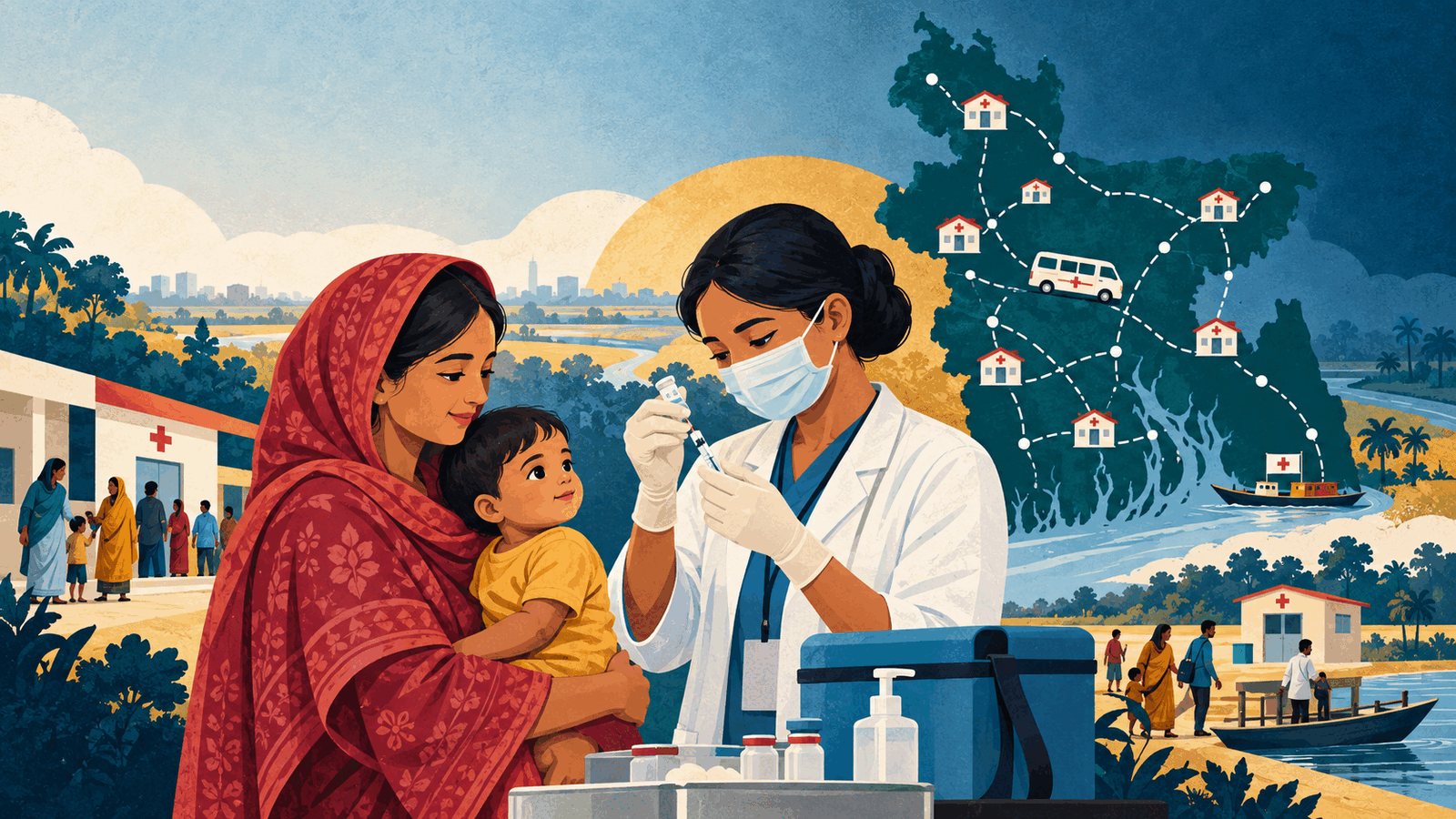
Verified Baseline
A new campaign is targeting children missed before
Bangladesh began a month-long measles-rubella vaccination campaign on September 26, targeting 3.4 million children between 6 and 59 months who were unvaccinated or missed earlier efforts. The government lowered the campaign’s minimum age from the routine nine months because younger infants have been heavily affected during the outbreak, Reuters reported.
This is a follow-up and gap-closing drive, not Bangladesh’s first response. Emergency vaccination began in high-risk districts in April and then expanded nationally. UNICEF’s national campaign statement said vaccination was being delivered through routine sites, evening sessions, schools, religious schools, transport hubs and door-to-door outreach.
Reading the Numbers
“More than 1,000 deaths” needs an important qualifier
Health ministry data cited by Reuters list 1,087 confirmed and suspected measles-related deaths since March 15. Of those, 101 were laboratory-confirmed. The remaining deaths are suspected to be related to measles but have not all been confirmed through laboratory testing.
Authorities have reported nearly 187,000 suspected cases, 21,099 confirmed infections and more than 165,000 hospitalizations. These categories should not be added together: a confirmed case can also appear within a broader suspected-case or hospitalization count, depending on the surveillance system.
The U.S. Centers for Disease Control and Prevention lists Bangladesh first among countries with current measles outbreaks. Its latest comparable table covers an earlier reporting period, so its case total is lower than Bangladesh’s more recent national figures.
Why It Grew
Immunity gaps accumulated before the outbreak
The World Health Organization’s outbreak assessment identified a nationwide vaccine stockout during 2024 and 2025, gaps in routine immunization and the absence of regular nationwide supplementary campaigns since 2020. Political disruption and procurement changes also interrupted vaccination efforts.
That does not mean the vaccine failed. Cases have been concentrated among children who were unvaccinated, partly vaccinated or infected before reaching the routine eligibility age. Measles spreads through the air and is among the most contagious human diseases; preventing sustained transmission generally requires consistently high two-dose coverage.
Practical Implications
What families in Bangladesh should check
- The September campaign is aimed at children aged 6 through 59 months who were missed or remain unvaccinated; local eligibility and clinic details should be confirmed through Bangladesh’s health authorities or an established vaccination site.
- Parents should seek prompt medical guidance for high fever, cough, red eyes or a spreading rash, and call ahead before entering a clinic when possible so facilities can reduce exposure to others.
- Measles can cause pneumonia, diarrhoea, blindness, brain inflammation and death, especially in young children, undernourished children and people with weakened immune systems.
- Vitamin A may be part of clinical management, but it should be given under health-worker guidance; it is not a substitute for vaccination.
This is general public-health information, not an individual diagnosis or vaccination recommendation.
Travel Context
International spread is possible, but risk is not uniform
WHO has warned that population movement and major transit hubs create cross-border risk. The CDC says people who are not protected against measles can acquire it abroad and transmit it after returning home. Travelers should verify that routine measles vaccination is current using official guidance for their age and circumstances, rather than assuming a childhood record is complete.
The outbreak does not mean every traveler will be exposed, and it is not a reason to stigmatize Bangladeshi communities. Exposure risk depends on immunity, destination, contacts and local transmission.
What Remains Uncertain
Campaign reach and the final toll are still developing
The September drive’s actual coverage is not yet known. Officials will need to show how many of the 3.4 million targeted children received a dose, which districts remain below the 95% goal, whether hospitalizations and deaths decline, and whether routine two-dose coverage recovers after the emergency phase.
Surveillance totals can change as laboratory results arrive and suspected deaths are reclassified. It would be premature to forecast when transmission will be interrupted or treat the campaign’s target as the number already vaccinated.
Bias Lens: how coverage frames the outbreak
Bangladesh launched a month-long measles-rubella drive for 3.4 million missed or unvaccinated young children. The reported death total combines suspected and laboratory-confirmed measles-related deaths, and the campaign’s final coverage is not yet known.
Reuters, used as the center baseline, foregrounds the scale of deaths and the new campaign while distinguishing confirmed from suspected totals. The Daily Star, a Bangladeshi general-news outlet, emphasizes implementation, government targets and local rollout. This is primarily a public-health story rather than a left-right political dispute, and no comparably detailed mainstream right-leaning treatment was available at publication. Forcing a partisan three-way comparison would add more heat than information; WHO, UNICEF and national surveillance data remain the factual anchor.
Principal Sources
Evidence and reporting used
- World Health Organization — outbreak assessment and response
- UNICEF Bangladesh — campaign design and delivery
- U.S. CDC — global outbreak comparison
- Reuters — September 26 campaign and current national figures
No suitable directly relevant authorized video with clear embedding permission was available.