GLOBAL HEALTH — CLIMATE — Forecast · Automated Assistance Disclosed · Editor Review Recommended
Could El Niño Cause 451,000 Heat Deaths? What the Projection Means
A new model estimates a very strong El Niño could cause 451,000 excess heat deaths through February 2027. The number is a forecast with important assumptions—not a recorded toll.
By Health Politics Daily News Desk, United States · Published Wednesday, September 23, 2026 at 3:57 p.m. America/New_York · Approximately 6 minutes

Watch in this article
Pumpjack operating at the Kern River Oil Field
A short CC0 field video provides visual context for reporting on oil production and fuel supply.
Thomas Farley / Wikimedia Commons · CC0 1.0 · License and source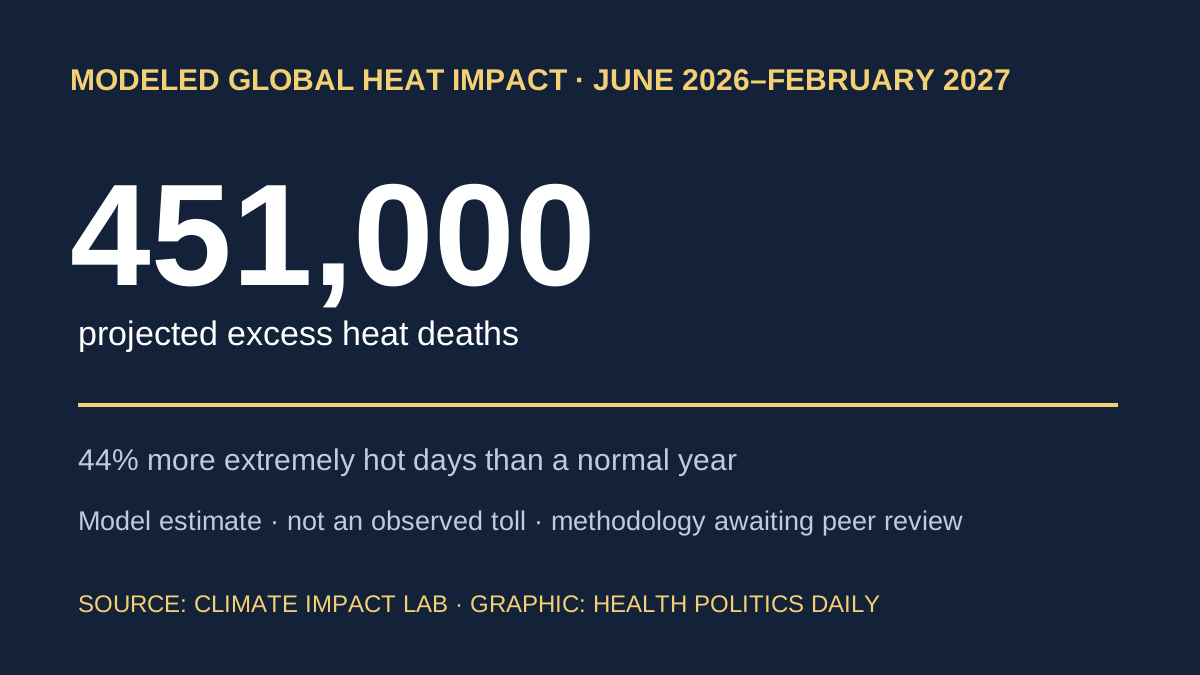
Verified Baseline
The 451,000 figure is a model estimate
The University of Chicago’s Climate Impact Lab projects 451,000 excess heat deaths globally from June 2026 through February 2027 compared with a normal year. The report estimates 44% more extremely hot days and says the burden will fall disproportionately on the Global South. Reuters reported the findings September 23.
This does not mean 451,000 deaths have occurred or are inevitable. It is an estimate produced by combining temperature forecasts with modeled relationships between heat and mortality.
How the Estimate Works
Researchers compare forecast heat with a normal-year baseline
The team estimates deaths expected under El Niño-driven temperatures and compares them with deaths expected if temperatures resembled the 1996–2025 average. For the next six months, it projects 239,000 additional deaths globally, with an uncertainty range of about ±11,000. The full nine-month figure includes the already-started June-to-February period.
The detailed methodology is expected to be published in a peer-reviewed journal but had not completed that process at publication time. That limits independent assessment of assumptions, country-level data quality and how adaptation is represented.
Where Risk Is Concentrated
The model identifies the Sahel and parts of Asia as major hotspots
For the next six months, the report projects about 66,800 excess heat deaths across the Sahel, including 31,400 in Nigeria, 17,500 in Sudan, 10,000 in Niger and 8,000 in Chad. It also projects 19,300 in Indonesia, 19,400 across the Philippines, Vietnam, Thailand and Cambodia, and 15,800 in India.
Those figures are forecasts, not country death certificates. They are most useful for identifying where preparedness could have the largest payoff.
Why It Matters
Heat protection can change the outcome
Early warnings, public cooling spaces, worker protections, reliable electricity, hydration access and targeted outreach to older adults and people with chronic illness can reduce heat deaths. Health systems can also plan staffing and supplies around forecast heat periods.
The projection should inform preparedness without manufacturing certainty. Actual mortality will depend on weather, exposure, local infrastructure, public-health response and whether people can access cooling and care.
Practical Implications
Use local warnings, not a global number, for personal decisions
People should follow their national weather service and local health authority for heat alerts. During extreme heat, check on vulnerable neighbors, reduce strenuous activity during the hottest hours and seek urgent care for confusion, fainting or other signs of heat stroke. This is general public-health information, not personalized medical advice.
What Remains Uncertain
The final strength, local weather and mortality response can differ
“Super El Niño” is an informal label; NOAA generally uses “very strong” for the highest category. El Niño changes global odds but does not determine the weather of every place or day. Mortality models also cannot perfectly capture migration, outages, conflict, air conditioning access or emergency interventions.
Bias Lens: the 451,000 projection
The Climate Impact Lab published a model estimate of 451,000 excess heat deaths through February 2027. It is not an observed count, and the methodology is awaiting peer review.
Coverage differs in whether it emphasizes climate justice, the model estimate or regional forecasting. The report itself—not the outlet label—sets the evidentiary baseline.
Principal Sources
Evidence and reporting used
- Climate Impact Lab — report, estimates and methodology summary
- Reuters — independent reporting on the new estimate
- NOAA Climate.gov — official ENSO background
- Fox Weather — U.S. forecast framing
A relevant publisher-authorized PBS NewsHour video explains the broader El Niño pattern; it is linked rather than embedded because the current mortality report is not its subject.