INTERNATIONAL POLITICS — THAILAND
Could Thailand’s 2026 Election Be Annulled? What the Ballot Case Means
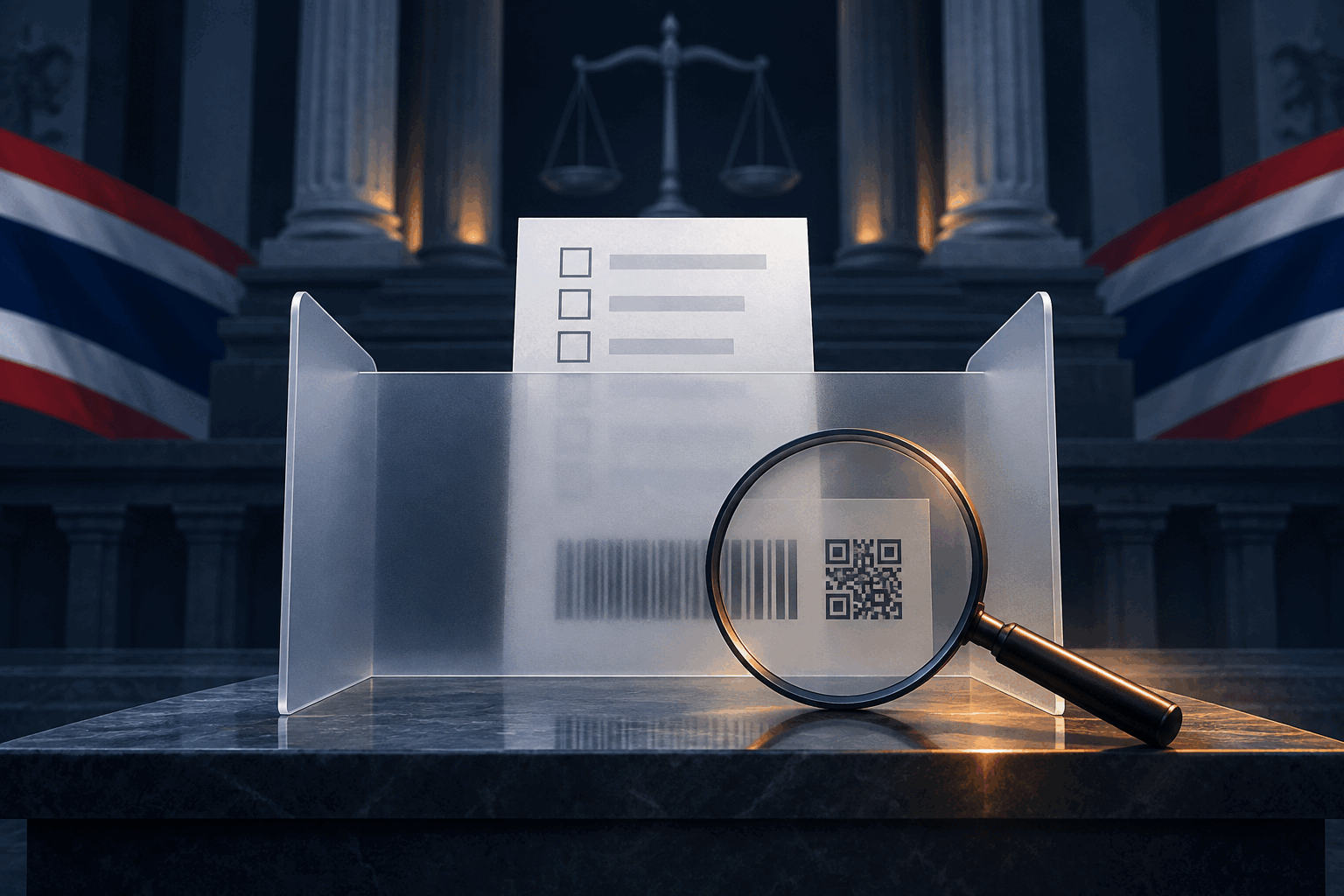
Thailand’s Constitutional Court is reviewing whether barcodes and QR codes on February ballots violated the constitutional guarantee of a secret vote. The case could affect part or all of the result, but the election has not been annulled and no ruling has established fraud.
By Health Politics Daily News Desk · Published Monday, September 28, 2026 at 2:04 a.m. America/New_York · Approximately 7 minutes
Verified Baseline
The court is deciding whether ballot secrecy was protected
Reuters reported that Thailand’s Constitutional Court would rule Monday on a challenge arising from barcodes and QR codes printed on ballots used in the February 8 election. Nearly 38 million people voted. Prime Minister Anutin Charnvirakul’s Bhumjaithai Party won decisively and later formed a coalition controlling more than 290 of parliament’s 500 seats.
The election result and government remain in force unless the court orders otherwise. A scheduled ruling is not itself an annulment.
The Legal Question
Could the codes connect a ballot to an individual voter?
The Ombudsman petitioned the court after complaints that unique codes could be matched with ballot stubs and reveal how an individual voted. The Election Commission says the codes were security features and that identification would require access to separately stored stubs.
The Asian Network for Free Elections said the codes created a traceability concern and urged an independent technical review. That concern does not by itself prove that anyone actually identified voters or changed votes.
Possible Outcomes
The court could uphold the ballots or disturb some or all results
The court could dismiss the challenge and leave the election intact. If it finds that secrecy was breached, it could invalidate affected voting or, in the broadest scenario, annul the nationwide result. Reuters cited legal analysts who considered dismissal the likeliest outcome and a national rerun unlikely.
Thailand’s court has annulled national elections before, including in 2006 over polling arrangements that compromised secrecy and in 2014 because voting could not occur nationwide on the same day. Those precedents explain the stakes but do not dictate this result.
Why It Matters
A ruling could reshape government legitimacy and election administration
An annulment would create a new electoral process and immediate political uncertainty. An order limited to ballot procedures could still require changes before future votes. If the case is dismissed, the coalition keeps governing, though questions about transparency may persist.
For residents, businesses and travelers, there is no automatic legal or travel change merely because a decision is pending. Any practical disruption would depend on the ruling and the political response that follows.
Bias Lens: how coverage frames the case
The court is reviewing whether coded ballots compromised secrecy; the Election Commission defends the codes as security tools; no court has yet found that the election was fraudulent or invalid.
Reuters emphasizes the legal stakes and likely outcomes. Channel News Asia foregrounds institutional context and the government’s parliamentary majority. ANFREL, an election-monitoring organization rather than a partisan news outlet, emphasizes technical traceability and public trust. A meaningful left-center-right comparison was not available across reputable English-language coverage; forcing one would create false symmetry.
What Remains Uncertain
The reasoning and remedy matter as much as the headline result
Until the written decision is released, it is unknown whether the judges will address only the theoretical ability to trace ballots, require proof of actual access, or prescribe changes to election procedures. It is also uncertain whether any party will mobilize protests or whether the decision will produce a largely administrative response.
Forecast: even an election-validating ruling is likely to increase pressure for clearer ballot-design rules and independent auditing. That is analysis, not a confirmed policy decision.
Principal Sources
Evidence and reporting used
- Reuters — pending ruling, stakes and analyst expectations
- Reuters — court acceptance and Election Commission response
- Associated Press — government formation and election challenge
- ANFREL — ballot-code technical concern
No suitable directly relevant authorized video with clear embedding permission was available.