U.S. ELECTIONS — SUPREME COURT
Supreme Court Allows Federal Voter Database for Now: What It Means
States may again use the expanded SAVE system while the lawsuit continues. The order is consequential, but it is not a final ruling that the database is lawful or accurate.
By Health Politics Daily News Desk · Published Sunday, September 27, 2026 at 12:01 a.m. America/New_York · Approximately 7 minutes

Verified Baseline
The justices lifted a lower-court block during the appeal
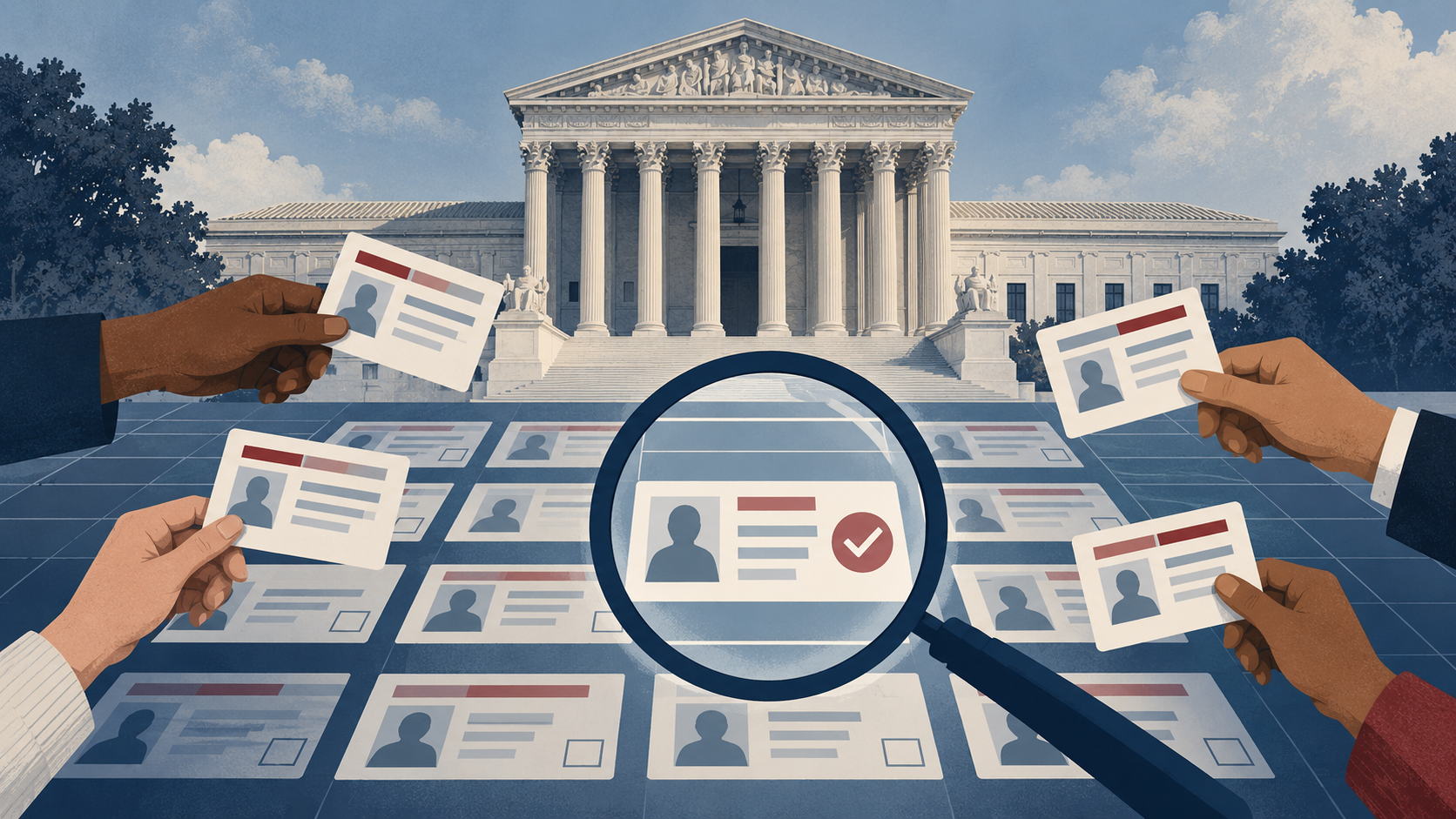
The U.S. Supreme Court on September 25 granted the administration’s emergency request to pause a lower-court order that had stopped the expanded Systematic Alien Verification for Entitlements program, or SAVE. That lets government agencies and participating states resume using Social Security numbers and other federal records for citizenship checks while the case proceeds.
The official order in Department of Homeland Security v. League of Women Voters says the challengers were unlikely to prevail on their claim that federal law forbids the relevant data sharing. Justices Ketanji Brown Jackson, Sonia Sotomayor and Elena Kagan dissented. Roll Call’s account notes that federal restrictions on systematic list maintenance close to an election limit its potential effect on the November midterms, although individualized checks may continue.
What Changed
SAVE can again support large-scale citizenship checks
USCIS describes SAVE as an online service through which authorized government agencies verify immigration status. The administration expanded it to allow bulk searches and searches using Social Security numbers, linking records that previously were not available through the program in the same way.
Several Republican-led states have used the expanded system to compare voter rolls with federal records. The administration says those checks help identify noncitizens who are ineligible to vote. Voting and privacy groups say incomplete or stale records can wrongly flag naturalized citizens and other eligible voters.
What Did Not Change
The Court did not validate every match or cancel registrations
The emergency order does not itself remove any voter, approve a particular state process or finally decide the underlying Privacy Act and Social Security Act claims. It changes which rules apply while appellate litigation continues.
Election administration remains primarily a state responsibility, and states must follow federal and state notice, timing and eligibility rules before altering a registration. A SAVE response is a government data match—not a judicial finding that a person is ineligible.
Why It Matters
Errors can impose burdens even when they are corrected
The system’s overall error rate has not been publicly established. Reuters reported that challengers cited a Texas election official who said one-quarter of noncitizen matches in Travis County involved people who had already proved citizenship, while reporting from St. Louis County found a much higher share of erroneous responses. Texas disputes claims that the system is unreliable.
A false match does not necessarily become a cancellation, but it can force an eligible voter to provide documents or respond quickly. Conversely, federal law prohibits noncitizens from voting in federal elections, and states have a legitimate obligation to maintain accurate rolls. The central dispute is whether this system improves accuracy without creating unlawful privacy risks or shifting too much error onto eligible citizens.
Practical Implications
What voters should watch for
- Check registration status through the official election website for the state or local jurisdiction, especially after a move or name change.
- Open and read official election mail; a verification notice may include a response deadline and appeal process.
- If a record is challenged, use the contact information published by the election office rather than sending identity documents to an unsolicited message.
- Keep a copy of any response and ask the election office what identification or provisional-ballot options apply if the issue remains unresolved.
The U.S. Election Assistance Commission’s voter portal links to official state resources. This is general civic information, not legal advice.
What Remains Uncertain
The legality, accuracy and state-by-state effects are unresolved
The lower courts must still address the merits after the Supreme Court’s emergency intervention. Public information does not establish how many states will use bulk checks, how many voters will receive notices, or how often matches will be confirmed, corrected or lead to a registration change.
State deadlines and procedures vary. The Supreme Court could later review the case again after a fuller record, and Congress could clarify the agencies’ data-sharing authority.
Bias Lens: how coverage frames the order
The Supreme Court temporarily allowed the expanded SAVE program to operate while the legal challenge continues. The order did not finally decide the program’s legality, verify its accuracy or directly remove a voter.
The Guardian, a left-leaning outlet, foregrounds the database’s controversy and the administration’s wider push for voting restrictions. Reuters, used as the center baseline here, leads with the order and presents both the administration’s election-integrity argument and challengers’ error evidence. Fox News, a right-leaning outlet, emphasizes that the administration and states may use SAVE during the appeal and gives greater prominence to voter verification. These are differences in emphasis, not proof that every report from an outlet shares one viewpoint; the Court’s order remains the common factual anchor.
Principal Sources
Evidence and reporting used
- U.S. Supreme Court — official court and orders portal
- USCIS — official SAVE program description
- U.S. Election Assistance Commission — official voter resources
- Reuters — order, litigation history and competing claims
- Roll Call — scope of the interim order and timing constraints
No suitable directly relevant authorized video with clear embedding permission was available.