U.S. POLITICS — FIRST AMENDMENT — Verified explainer
Judge Blocks White House Media Ban: What the 14-Day Order Means
CNN, MS NOW and Politico must regain White House access while their lawsuit proceeds. The temporary order does not finally decide how the case will end.
By Health Politics Daily News Desk, Washington · Published Thursday, September 24, 2026 at 2:17 a.m. America/New_York · Approximately 6 minutes

Watch in this article
Pumpjack operating at the Kern River Oil Field
A short CC0 field video provides visual context for reporting on oil production and fuel supply.
Thomas Farley / Wikimedia Commons · CC0 1.0 · License and source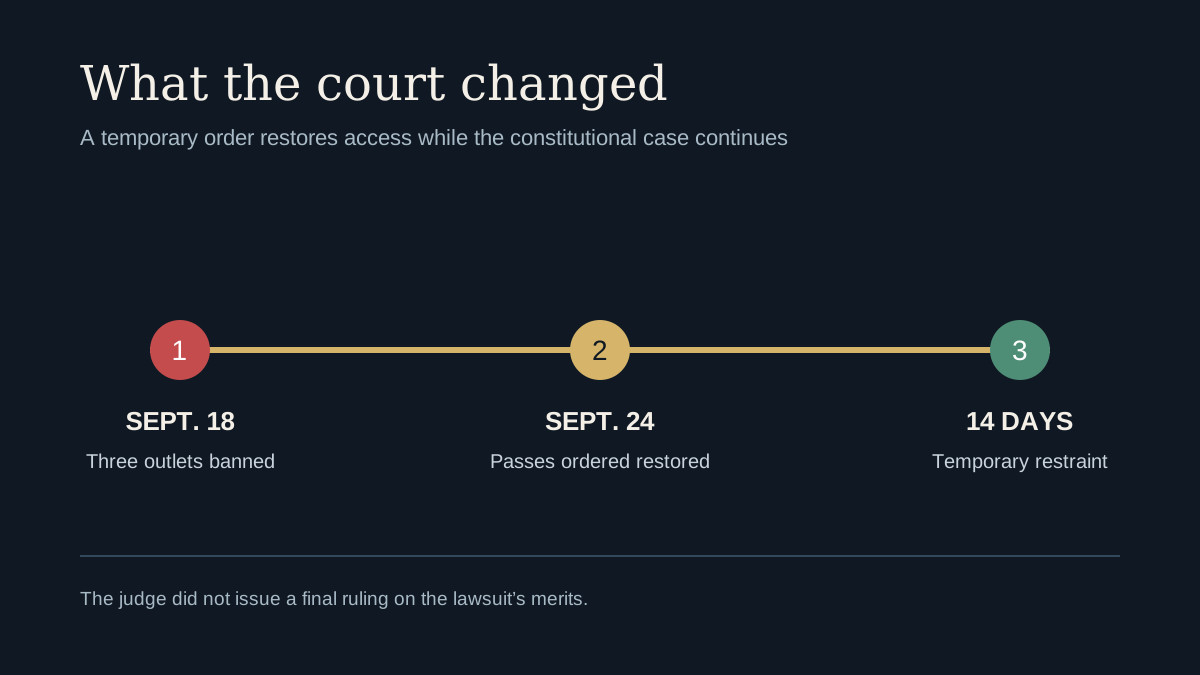
Verified Baseline
The judge restored access for three outlets for 14 days
U.S. District Judge Timothy Kelly ordered the administration to return White House press passes to journalists from CNN, MS NOW and Politico and temporarily barred enforcement of the September 18 ban. Reuters reported the order at 5:07 a.m. UTC on September 24.
Kelly said the outlets were likely to succeed on claims that the ban violated First Amendment protections and due-process requirements. “Likely to succeed” is a preliminary legal assessment used when deciding emergency relief; it is not a final judgment after a completed case.
What Changes Now
The journalists can return while the litigation continues
The practical effect is immediate: the three organizations regain the White House access associated with their passes. The order also prevents officials from enforcing the ban for 14 days, preserving access while the court considers next steps.
The ruling does not require the president or officials to answer questions, guarantee a seat at every restricted event or settle all rules governing press pools. It addresses the specific revocation at issue.
Why the Judge Intervened
The record did not support the administration’s national-security rationale
The Justice Department argued that White House access is a privilege and that the president may suspend it for national-security reasons. Kelly found the record lacked factual support that restoring these passes would endanger national security. He also noted that the president publicly connected the decision to the outlets’ alleged negativity and lack of truthfulness.
The outlets argued that they were punished for editorial viewpoint and received no meaningful advance notice or chance to contest the revocation. At the hearing, Kelly relied on D.C. Circuit precedents requiring due process before a White House press pass is withdrawn.
Why It Matters
The dispute tests the boundary between security control and viewpoint discrimination
The White House controls access to a secure workplace and can impose neutral credential rules. The constitutional question is whether it can revoke otherwise valid access because officials object to an outlet’s coverage. The temporary order indicates the court sees a substantial problem with the government’s current justification and process.
For the public, press access affects which questions are asked and what firsthand reporting is available. The ruling protects access during the case; it does not establish that every outlet has an unlimited right to every presidential event.
What Remains Uncertain
An appeal, extended injunction or revised policy could come next
The administration may appeal, ask the judge to narrow the order or issue a new policy with additional procedures. The outlets may seek longer-lasting relief before the 14-day period expires. The final outcome could turn on whether the court finds viewpoint retaliation, deficient process or both.
Any later appellate ruling could shape how future administrations manage White House credentials. Until then, the narrow verified conclusion is that access is restored temporarily—not that the entire constitutional dispute is settled.
Bias Lens: the White House press-access ruling
A federal judge ordered CNN, MS NOW and Politico’s passes restored and blocked enforcement for 14 days, finding the outlets likely to succeed on constitutional claims. The case is ongoing.
The Guardian frames the dispute around retaliation and press freedom. Reuters and AP emphasize the order and competing legal arguments. The New York Post gives more prominence to the administration’s defense and the television-pool dispute. These are framing differences; the order’s duration and effect are verifiable facts.
Principal Sources
Evidence and reporting used
- Reuters — September 24 order and legal reasoning
- Associated Press — September 23 hearing and arguments
- Associated Press — lawsuit and access chronology
- Free Speech Center at MTSU — complaint analysis
No suitable directly relevant authorized video with clear embedding permission was available.