HEALTH — DIABETES — FDA EXPLAINER
FDA Approves Lilly’s Once-Weekly Insulin Onswik: What Patients Should Know
Onswik gives some adults with type 2 diabetes a weekly basal-insulin option. Fewer injections do not mean fewer safety checks, and the drug is not approved for type 1 diabetes.
By Health Politics Daily News Desk · Published Thursday, September 24, 2026 at 9:57 a.m. America/New_York · Approximately 7 minutes

Watch in this article
Pumpjack operating at the Kern River Oil Field
A short CC0 field video provides visual context for reporting on oil production and fuel supply.
Thomas Farley / Wikimedia Commons · CC0 1.0 · License and source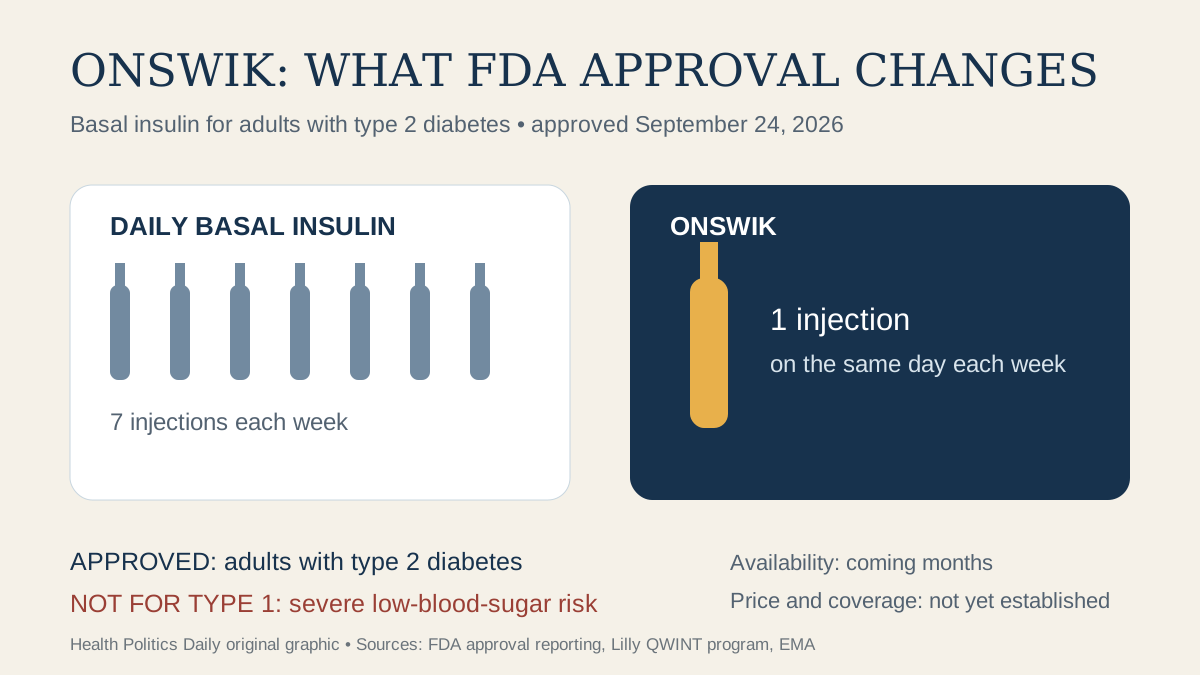
Verified Baseline
The FDA approved Onswik for adults with type 2 diabetes
The Food and Drug Administration approved Eli Lilly’s Onswik, or insulin efsitora alfa-gobe, as a once-weekly basal insulin used with diet and exercise to improve blood-sugar control in adults with type 2 diabetes, according to Reuters’ September 24 report. Lilly says U.S. availability is expected in the coming months.
This is not the first weekly basal insulin approved in the United States. The FDA approved Novo Nordisk’s Awiqli in March. The new decision adds another weekly option rather than creating the category.
What Weekly Means
One dose is designed to cover seven days of background insulin
Basal insulin provides steady background control between meals and overnight. Onswik can reduce basal injections from seven per week to one, administered on the same day each week. That may reduce treatment burden, particularly for people who need help with injections.
The approval rests on four late-stage QWINT studies involving more than 3,400 adults with type 2 diabetes. Onswik met each study’s main goal: its A1C reductions were not inferior to daily insulin glargine. “Not inferior” means the studies showed comparable glucose-lowering within a prespecified margin; it does not mean Onswik was universally safer or better.
Safety Boundary
Onswik should not be used for type 1 diabetes
Lilly says the medicine should not be used in people with type 1 diabetes because of an increased risk of severe hypoglycemia, or dangerously low blood sugar. Hypoglycemia is also the most common adverse effect identified in the European Medicines Agency’s assessment.
A weekly drug also changes the consequences of dosing errors: a dose is intended to remain active for days. Patients should not convert daily units into a weekly amount on their own, share pens or switch products without a clinician’s dosing plan. This article is general information, not individualized medical advice.
Practical Implications
Approval does not guarantee immediate access or lower cost
Lilly says Onswik will come in prefilled pens at two concentrations, 500 and 1,000 units per milliliter. U.S. list price, insurance formulary placement, out-of-pocket cost and pharmacy availability were not established in the initial announcement. Those factors may determine whether the convenience is meaningful in practice.
People considering a future switch will need to review timing, dose conversion, glucose monitoring and low-blood-sugar plans with their prescriber. The correct comparison is not simply “weekly versus daily”; it includes control, safety, concentration, device use, coverage and personal routine.
What Remains Uncertain
Real-world use will test adherence, safety and access
Clinical trials are structured and closely monitored. Wider use will show whether weekly dosing improves adherence, whether concentrated pens create new medication-error risks and how insurers compare Onswik with Awiqli and lower-cost daily insulins.
Forecast: competition between two weekly products could improve formulary bargaining, but it does not by itself guarantee lower patient costs. That is an economic possibility, not a verified outcome.
Bias Lens: covering weekly insulin
The FDA approved Onswik for adults with type 2 diabetes after four phase 3 studies showed A1C reduction comparable with daily basal insulin. It is not approved for type 1 diabetes, and U.S. price and coverage details remain unsettled.
Coverage is not strongly partisan. Health-policy outlets may lead with affordability and access; Reuters centers the regulatory decision and trial results; market-focused outlets may emphasize Lilly–Novo competition. These frames answer different questions and should not be mistaken for clinical guidance.
Principal Sources
Evidence and reporting used
- Reuters — FDA approval, indication, trial program and availability
- European Medicines Agency — mechanism, indication, comparative efficacy and adverse effects
- Eli Lilly — QWINT phase 3 program
- FDA label — Awiqli, the previously approved weekly basal insulin
No suitable directly relevant authorized video was available.