Oil · Saudi Arabia · Household costs
Brent Oil Rises Above $110 as Saudi Attacks Increase Supply Risk
The global benchmark rose as attacks on Saudi infrastructure, regional shipping risks and another decline in U.S. crude inventories tightened the market outlook. A higher crude price can pressure fuel bills, but it does not translate one-for-one into retail prices.
By Health Politics Daily News Desk · October 21, 2026 at 11:55 p.m. ET

Watch in this article
Pumpjack operating at the Kern River Oil Field
A short CC0 field video provides visual context for reporting on oil production and fuel supply.
Thomas Farley / Wikimedia Commons · CC0 1.0 · License and source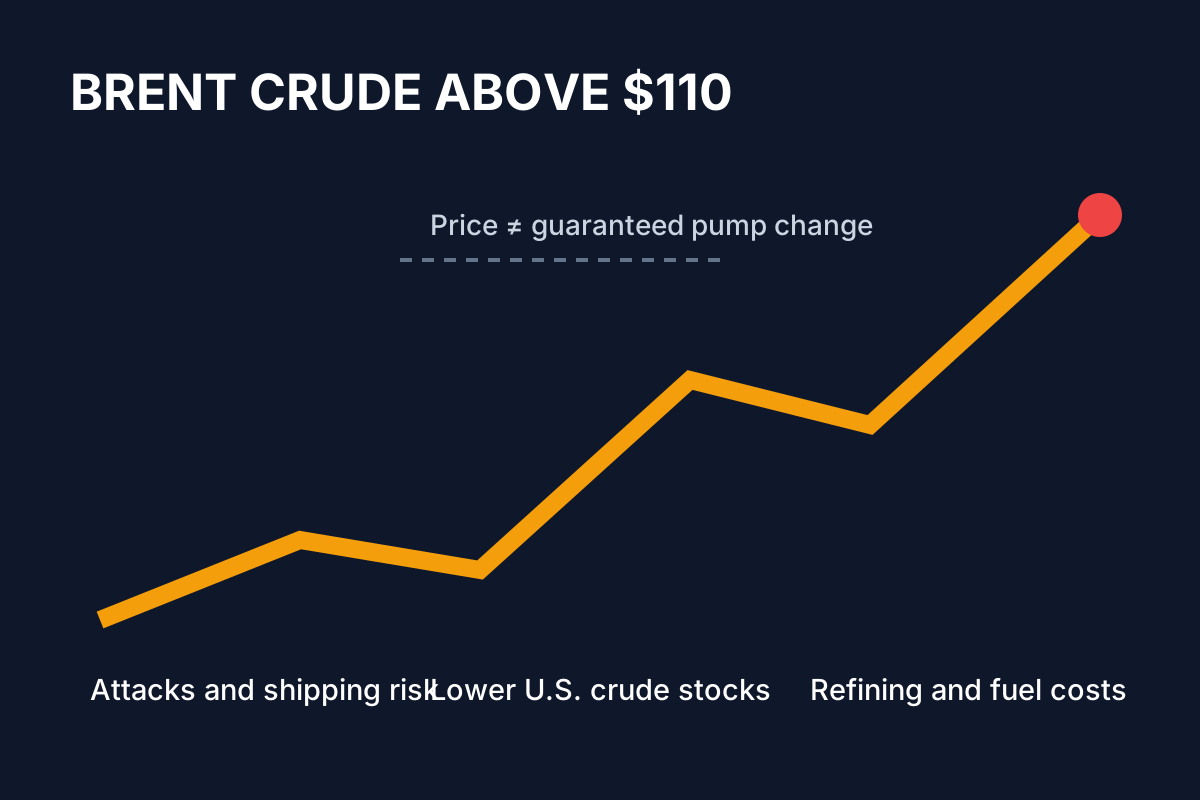
Brent crude rose to about $110.11 a barrel in early Thursday trading, while U.S. West Texas Intermediate reached about $98.12, Reuters reported. Traders were weighing attacks on Saudi airports and an oil field, risks to Gulf shipping and shrinking U.S. crude stocks.
The U.S. Energy Information Administration’s October 21 weekly report showed commercial crude inventories fell by about 3.06 million barrels. Distillate inventories, which include diesel and heating oil, rose during the week; that increase does not erase broader concerns about winter supply or regional distribution.
Why the move matters
Crude oil is a major input for gasoline, diesel, jet fuel and heating oil. Sustained increases can raise transportation and production costs and complicate central-bank efforts to control inflation. Short-term futures moves, however, can reverse quickly if shipping risk eases, production rises or diplomacy improves.
The attacks also matter because Saudi Arabia is both a major producer and a central exporter. Damage to one facility does not establish a nationwide supply loss, but repeated attacks add an insurance and security premium to prices.
Fact, analysis and forecast
Verified fact: Brent traded above $110, U.S. crude inventories declined, and Saudi authorities reported casualties and infrastructure attacks. Analysis: the price includes fear of future disruption as well as current physical supply conditions. Forecast: prolonged attacks or shipping interruptions could keep crude and refined-fuel costs elevated; de-escalation could reduce the risk premium. Opinion: Health Politics Daily takes no position on energy trading or military policy, and this report is not investment advice.
Practical implications
- Drivers may see higher pump prices, but timing varies by region, refinery margins, taxes and existing inventories.
- Households using heating oil should compare current supplier terms and official assistance information without assuming futures prices predict one exact winter bill.
- Businesses with fuel exposure should distinguish short-lived market volatility from sustained cost changes before revising budgets.
For the underlying security context, see our reports on the U.S. diplomatic drawdown in Saudi Arabia and the attack on Saudi Aramco headquarters.
Bias Lens: supply shock or temporary risk premium?
Verified baseline: oil benchmarks rose while attacks and shipping risks intensified and U.S. commercial crude stocks fell. The size and duration of any physical supply loss remain uncertain.
Left-leaning — The Guardian: places regional escalation within Yemen’s humanitarian crisis and the civilian consequences of war.
Center — Associated Press: emphasizes airport attacks, casualties and diplomatic-security measures.
Center/business — Reuters: leads with benchmark prices and the competing effects of geopolitical risk and inventory data.
Right/business — Investor’s Business Daily: stresses market levels, tanker attacks and consumer fuel costs. The difference is emphasis, not proof that one frame alone captures the full story.
Principal sources
- U.S. EIA Weekly Petroleum Status Report
- EIA weekly petroleum-stock series
- Reuters market report
- Associated Press regional update
No suitable directly relevant official or publisher-authorized video with verified embedding permission was available, so none was embedded.