U.S. MILITARY JUSTICE — PUBLIC POLICY
Trump Cancels Fort Hood Execution Livestream as Kelly Seeks Legal Ban
The president halted the planned broadcast while leaving the December 3 execution scheduled. A Senate proposal would create broader, lasting restrictions, but it has not become law.
By Health Politics Daily News Desk · Published October 16, 2026 at 8:00 p.m. ET · 6 minute read
Verified baseline
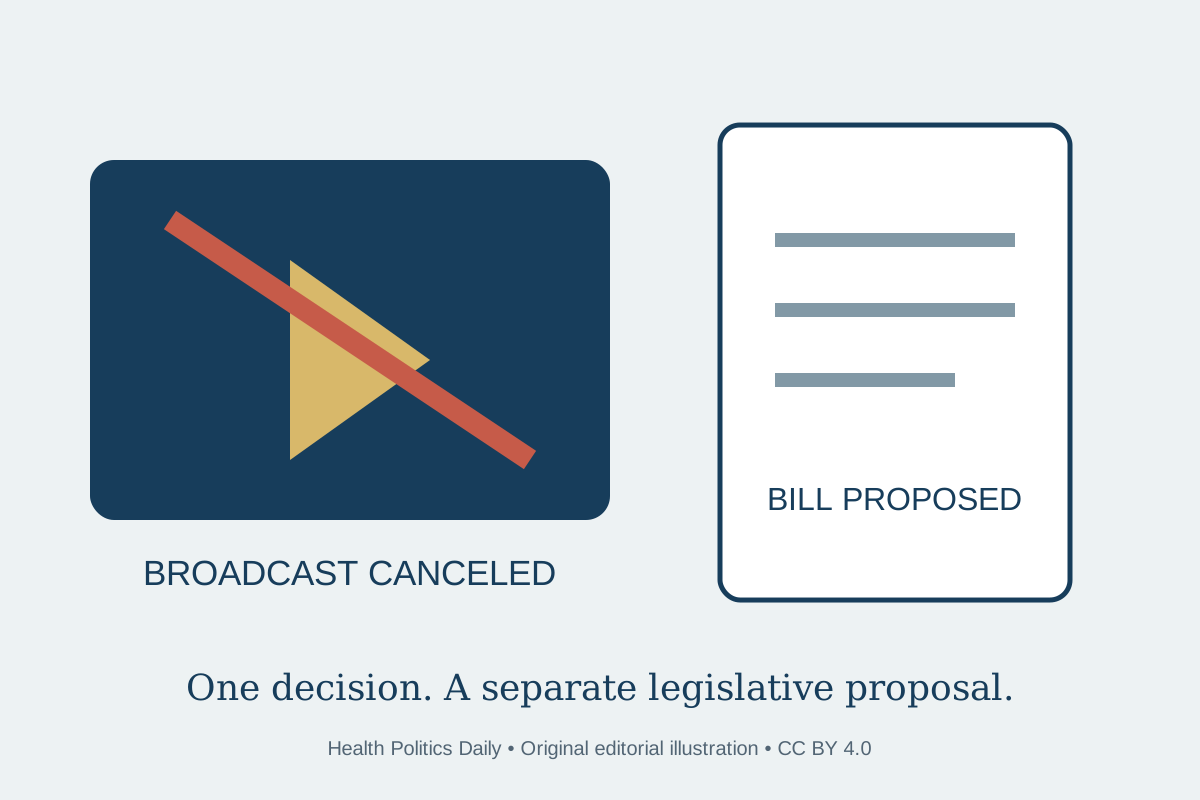
The broadcast is canceled; the execution remains scheduled
President Donald Trump said October 15 that Nidal Malik Hasan’s execution would not be livestreamed. The Pentagon confirmed the change, while the December 3 firing-squad execution remains scheduled. Immediate relatives of victims may attend in person, according to Associated Press reporting. Hasan was convicted for the 2009 Fort Hood attack that killed 13 people.
The reversal changes the public-viewing plan described in our earlier report on the Pentagon announcement. It does not commute the sentence or establish that every remaining legal challenge has been resolved.
Primary record
Kelly’s proposal would put restrictions into federal law
Senator Mark Kelly announced legislation to prohibit public broadcasts of military executions and federal spending on recording or publicly distributing executions. His office’s release and published bill text describe restrictions covering livestreaming and distribution of footage, rather than only one proposed event.
The proposal would apply to executions carried out after enactment, including cases in which the sentence had already been imposed or approved. It is proposed legislation, not an enacted prohibition. A sponsor’s announcement and draft text do not establish passage, committee approval or a presidential signature.
Why it matters
An administrative reversal and a statutory ban offer different durability
Analysis: a presidential instruction can stop this broadcast immediately. Legislation would determine what future officials may authorize and spend public money on. The distinction matters even after the immediate controversy ends: Congress would be deciding a general rule rather than simply endorsing the outcome in one case.
Support for capital punishment and support for televising it are separate policy questions. Opposition to the broadcast crossed party lines. Supporters had argued that public viewing could deter terrorism; opponents raised dignity, propaganda and public-harm concerns. Those are competing arguments, not demonstrated measurements of the effects of this canceled broadcast.
Practical implications
There is no public livestream to plan around
- For the public: the earlier broadcast announcement has been superseded. The cancellation concerns distribution of images, not the underlying sentence.
- For victims’ relatives: reported permission for in-person attendance is distinct from a public transmission. Official military communications should govern arrangements.
- For lawmakers: the next evidence is committee action and final statutory language, not predictions that the proposal will pass.
The controversy also sits within a wider debate over government communication and access, including the court dispute over White House press credentials. The legal questions differ, but both require distinguishing an announced policy from a binding legal rule.
What remains uncertain
The bill’s prospects and execution litigation remain separate
There is no verified enactment of Kelly’s proposal in the sources reviewed. The execution date could still be affected by judicial proceedings or later official action. Forecast: the canceled broadcast reduces the immediate distribution dispute, while the proposed ban could preserve a congressional debate over future executions. Neither prediction establishes what courts or Congress will do.
No editorial position on capital punishment is asserted here. The reporting distinguishes verified decisions, legislative proposals and the arguments offered for each.
Bias Lens: what changed, and how outlets frame it
The livestream was canceled; the execution remains scheduled. Kelly’s bill is a proposal.
Left-leaning: The Guardian foregrounds condemnation and human-rights objections. Center: AP centers the decision and bipartisan opposition. Right-leaning: The Wall Street Journal examines internal administration deliberations.
These are differences in emphasis, not three incompatible accounts. They do not require assuming that all conservatives supported the broadcast or all opponents opposed the death penalty. The official bill text is the baseline for its proposed legal scope.
Sources and video
Read the primary proposal and corroborating coverage
- Kelly’s Senate office: proposal and scope
- Published legislative text
- AP: cancellation and scheduled execution
- Reuters: presidential reversal
Publisher-hosted news video: Fox News report on the cancellation. Linked to the publisher’s player; no footage is downloaded or rehosted.
Related Coverage