SUPREME COURT — FCC — MIDTERM ELECTIONS
Supreme Court Keeps Party-Committee Ad Discounts in Place Before Midterms
The justices paused a lower-court deadline that would have forced the FCC to act within 48 hours. The ruling leaves the agency's disputed broadcast-ad policy operating for now, but does not decide whether extending candidate-style rates to party committees is lawful.
By Health Politics Daily News Desk · Published Wednesday, October 14, 2026 at 10:00 p.m. America/New_York · Approximately 8 minutes
Verified Baseline
The Court stayed an agency deadline, not a final merits judgment
In a five-page per curiam opinion Wednesday, the Supreme Court stayed an October 7 order from the U.S. Court of Appeals for the Fourth Circuit. That lower-court order had required the Federal Communications Commission to resolve four Democratic congressional candidates' administrative challenge within 48 hours.
The Supreme Court said the Communications Act requires the FCC to resolve applications for review but does not prescribe a particular timetable. It concluded that the Fourth Circuit used the extraordinary writ of mandamus inappropriately while the agency's deliberations were underway. Justices Sonia Sotomayor and Ketanji Brown Jackson said they would have denied the stay.
Verified fact: the FCC no longer faces the lower court's two-day deadline. Not decided: whether federal law ultimately permits political parties and qualifying joint fundraising committees to receive the favorable rates.
What the Rate Rule Does
A candidate benefit now reaches some coordinated party advertising
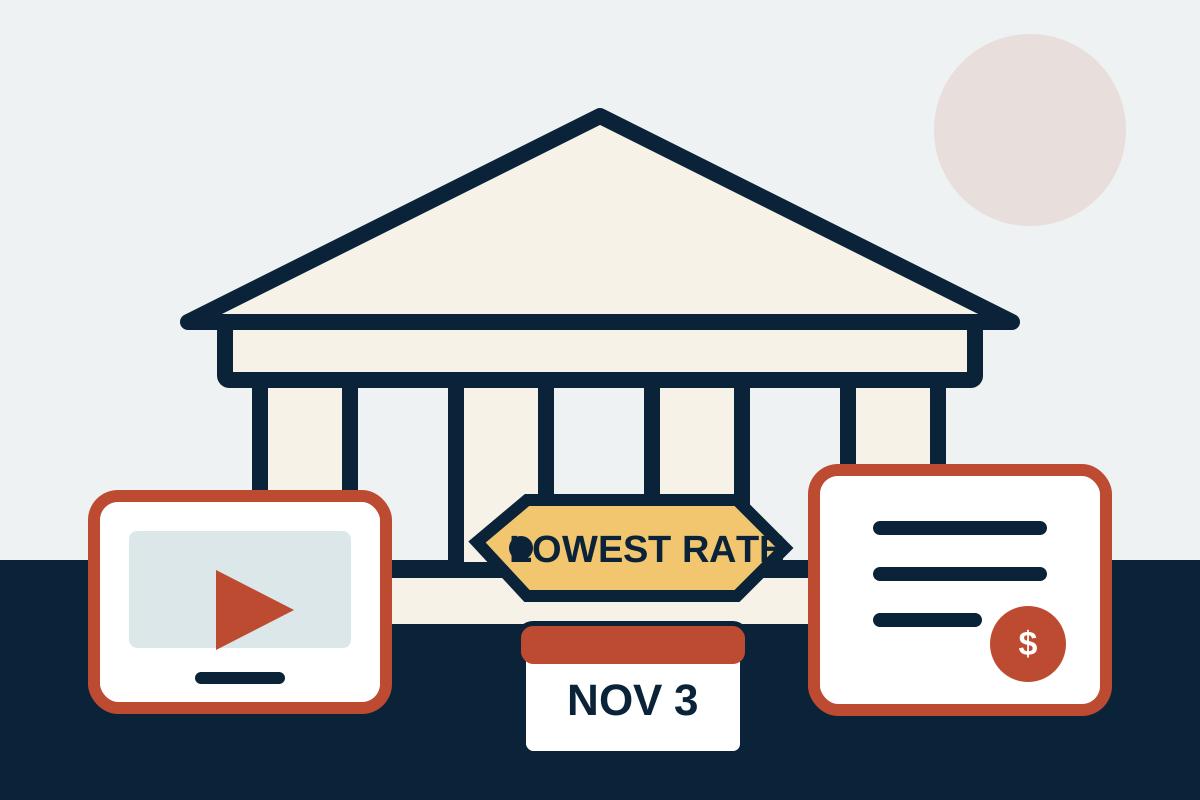
Federal law generally requires a broadcaster, during the 45 days before a primary and 60 days before a general election, to charge a legally qualified candidate no more than the station's lowest price for the same class and amount of time. The rule applies to broadcast television and radio—not every digital advertisement.
On March 30, the FCC's Media Bureau issued guidance stating that candidates, political parties engaged in coordinated activity and joint fundraising committees with noncandidate members can qualify for the lowest unit charge. Democratic candidates Sherrod Brown, Jon Ossoff, Roy Cooper and Kristen McDonald Rivet asked the full commission to set the notice aside. The National Republican Congressional Committee and National Republican Senatorial Committee intervened to defend it.
The general-election pricing window opened September 4. Because the FCC has not issued a final order and Wednesday's stay removes the expedited deadline, broadcasters continue operating under the Media Bureau notice unless the agency or a later court ruling changes it.
Why It Matters
Lower prices can stretch party advertising budgets in the campaign's final weeks
A lower unit charge does not provide free airtime, reserve inventory or guarantee placement. It can, however, let an eligible buyer purchase more comparable broadcast time for the same amount of money. That makes the dispute consequential when parties are concentrating spending shortly before the November 3 election.
Analysis: the immediate effect favors committees positioned to buy coordinated broadcast advertising. Reuters reports that Republican national committees entered the closing period with a larger cash advantage, so they may benefit more in practice. The policy is written in general terms, however, and is not legally restricted to one party.
Viewers may see a greater volume of party-coordinated television and radio ads than would have been affordable at ordinary commercial rates. Stations must still follow political-file and sponsorship-identification requirements; the Supreme Court order does not relax those transparency rules.
The Legal Divide
The courts disagree over timing, agency authority and statutory text
The Fourth Circuit said the Media Bureau created a new rule beyond the statute's reference to a “legally qualified candidate” and accused the FCC of delaying review until the election would make a challenge largely academic. Its October 7 majority ordered immediate agency action.
The Supreme Court focused on a different question. It said courts should not force an agency to abandon an ongoing deliberative process on an exceptionally short schedule when Congress imposed no specific deadline. That reasoning addresses procedure and separation of powers; it does not endorse the FCC's reading of who qualifies for the discount.
Opinion: Health Politics Daily takes no position on the preferred campaign-finance rule. The clearest public explanation should keep the procedural holding separate from the unresolved statutory dispute and acknowledge that the timing itself has real electoral consequences.
What Happens Next
The FCC can still act, and later judicial review remains possible
The stay lasts while a petition asking the Supreme Court to review the Fourth Circuit's mandamus order is filed and resolved. If review is denied, the stay ends automatically; if review is granted, it lasts until the Court sends down its judgment. Separately, the FCC may issue its final decision on the candidates' application at any time.
Forecast: because Election Day is less than three weeks away and the Court removed the only court-imposed deadline, the current pricing policy is likely to remain in effect for most or all of the campaign. That is an assessment, not a guarantee.
What remains uncertain: when the FCC will rule, whether it will address the merits or dismiss the application on procedural grounds, whether a later court will accept the agency's statutory interpretation, how many ads will receive the discount and how much the policy will change total spending.
Bias Lens: party advantage versus procedural restraint
The Supreme Court stayed the Fourth Circuit's 48-hour deadline. The FCC's current policy therefore remains operative, while the legality of extending favorable rates beyond candidates is unresolved.
Left-leaning coverage: the Los Angeles Times foregrounds the Republican financial advantage and criticism that the FCC changed policy without sufficient public process. Center coverage: Reuters emphasizes the partisan stakes while explaining the agency-review sequence, and Roll Call focuses on how the unsigned order slows the case. Right-leaning coverage: Fox News describes the result as preserving the existing policy and access to cheaper ads while the legal fight continues.
The difference is mainly emphasis: who gains in the election, whether the FCC created a new rule, or whether the Court protected orderly agency procedure. None of those frames changes the narrow holding or resolves the statute's meaning.
Principal Sources
Primary records and corroborating reporting
- U.S. Supreme Court — FCC v. Brown stay opinion, October 14
- Fourth Circuit — October 7 mandamus order
- FCC Media Bureau — public notice and review procedures
- Reuters — election stakes, parties and agency response
- Roll Call — procedural effect and litigation timeline
No directly relevant official or publisher-authorized video of Wednesday's order was available; no video was embedded.
Related Coverage