WEATHER — HAWAII — Public-safety explainer
Tropical Storm Nolo Threatens Hawaii: What Residents and Travelers Should Check
Hawaii County is under a hurricane watch as Nolo strengthens south of the islands. The track remains uncertain, but dangerous rain can arrive well before the center’s closest approach.
By Health Politics Daily News Desk · Published Thursday, September 24, 2026 at 7:58 a.m. America/New_York · Approximately 7 minutes

Watch in this article
Pumpjack operating at the Kern River Oil Field
A short CC0 field video provides visual context for reporting on oil production and fuel supply.
Thomas Farley / Wikimedia Commons · CC0 1.0 · License and source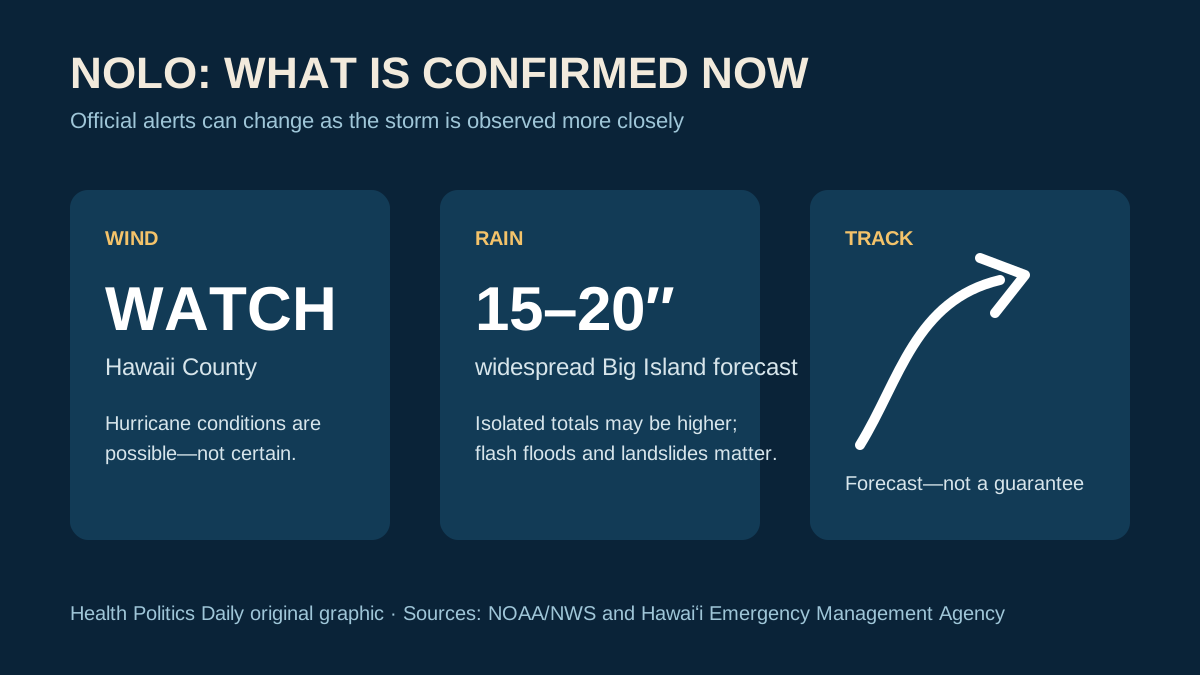
Verified Baseline
A hurricane watch is in effect for Hawaii County
The National Hurricane Center and Central Pacific Hurricane Center list Tropical Storm Nolo south of Hawaii and say it is expected to strengthen. A hurricane watch means hurricane conditions are possible in the watch area; it is not a statement that landfall is certain.
Hawaii officials say the Big Island could receive widespread rainfall of 15 to 20 inches, with isolated totals substantially higher in southeastern areas. The Hawaiʻi Emergency Management Agency warns that catastrophic flooding and life-threatening landslides are possible, especially in steep terrain.
Why Rain Is the Immediate Risk
Flooding does not depend on the eye crossing land
Tropical cyclones can push long bands of moisture over mountainous islands while their centers remain offshore. On the Big Island, steep slopes can accelerate runoff, isolate roads and trigger debris flows. Residents should not use the forecast center line as a boundary between safety and danger.
Maui also faces a significant rain threat. Forecast totals are ranges, not guarantees at a specific home; terrain, band placement and the storm’s speed can produce sharp local differences.
Practical Implications
Finish outside preparation before winds make it unsafe
People in the watch area should follow county alerts, identify their nearest shelter, charge communication devices, secure loose outdoor objects and avoid crossing flooded roads. Those who rely on medication, powered medical equipment or refrigerated supplies should review backup plans early.
Travelers should check directly with airlines, hotels and inter-island carriers. A flight that remains scheduled can still be delayed, and road access to an airport may be affected independently of airport operations.
What Remains Uncertain
Intensity and the exact turn near the Big Island can still change
Forecasts show Nolo strengthening and then turning near Hawaii, but small changes in timing and direction could substantially change wind and surf effects. Hurricane-hunter observations and later advisories may narrow that uncertainty.
A projected major hurricane is a forecast category, not a measured current intensity. Readers should use the time-stamped official advisory rather than screenshots or older social posts.
What to Check Next
Use the newest official alert for your island and district
Check the National Weather Service Honolulu office for watches and warnings, Hawaiʻi Emergency Management for statewide instructions and county civil-defense channels for shelters, closures and evacuation information. A watch can be upgraded, changed or canceled as new observations arrive.
This article reports public information and does not replace an evacuation order or local emergency instruction.
Bias Lens: covering Tropical Storm Nolo
Hawaii County is under a hurricane watch. Officials forecast potentially extreme rainfall, while Nolo’s exact track and eventual intensity remain uncertain.
Weather coverage is less ideologically divided than political coverage. Climate-focused outlets may emphasize resilience and repeated storm exposure; CBS News emphasizes the official watch and forecast evolution; Fox Weather emphasizes the unusual potential for a close major-hurricane approach. These are framing choices; the official NOAA/NWS alert is the shared factual baseline.
Principal Sources
Evidence and reporting used
- NOAA National Hurricane Center — current advisories and watch status
- Hawaiʻi Emergency Management Agency — rainfall and preparation updates
- National Weather Service Honolulu — local forecasts and alerts
- CBS News — formation, position and forecast context
- Fox Weather — rainfall, wind and uncertainty context
No suitable directly relevant authorized video with clear embedding permission was available.