U.S. policy · Agriculture · Household and business costs
USDA Announces $8 Billion Harvest Fuel Relief; Payment Rates Due in November
USDA’s new harvest aid will use modeled losses, not a blanket diesel refund. Key payment rates and application details remain pending after the October 19 announcement.
By Health Politics Daily News Desk · October 20, 2026 at 12:05 a.m. ET
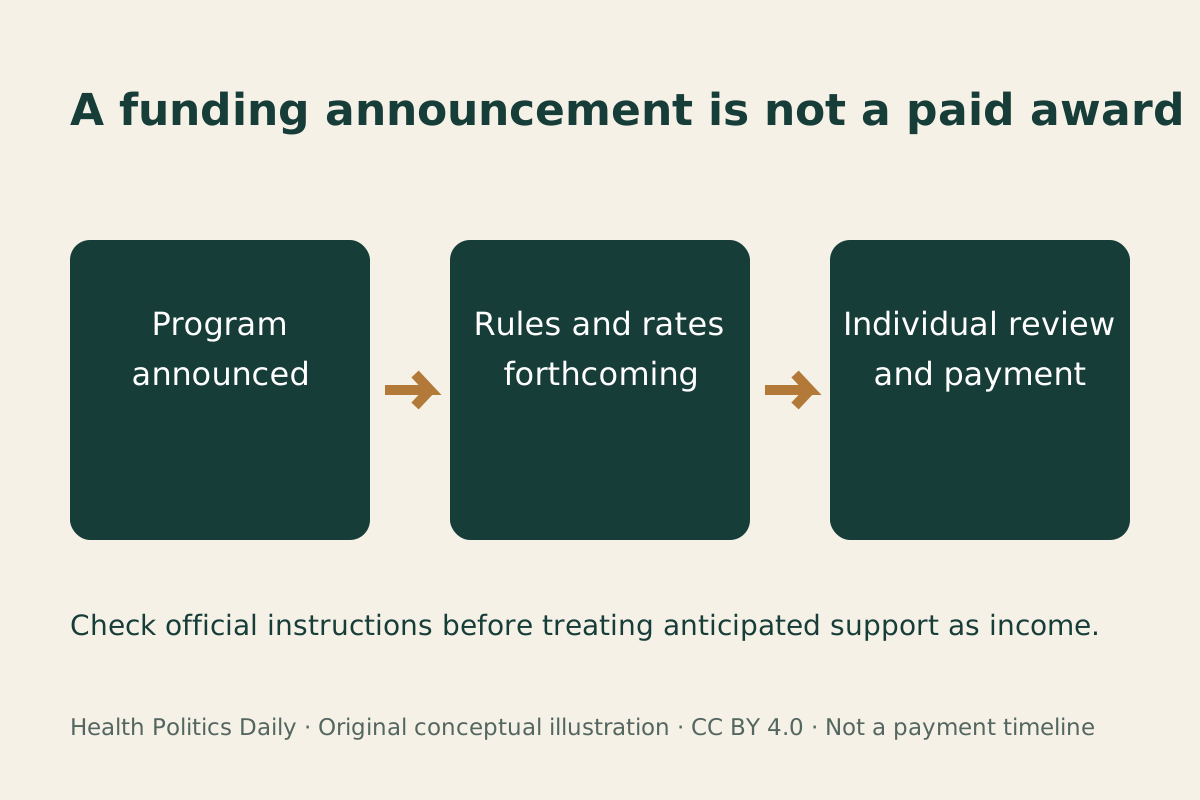
The U.S. Department of Agriculture announced October 19 that it will make $8 billion available for one-time Harvest Fuel Relief payments. Commodity-specific rates for Title I commodities are due in November; methods for other eligible commodities will follow later.
For producers paying to run machinery and move crops, the immediate question is not just the size of the announcement. It is when a particular operation can apply, what formula will cover its production and when an approved payment will reach its account. Those implementation steps must not be confused with the headline funding commitment.
What USDA has actually specified
USDA says the Farm Service Agency will administer the program under the Commodity Credit Corporation Charter Act. Support will cover part of modeled 2026 losses using planted acreage, production-cost estimates, and crop yields and prices. That describes a formula-based payment, not a promise to reimburse every diesel receipt.
The release says crop-insurance linkage is not required. It encourages producers to establish a Login.gov account linked to USDA ahead of an application-period announcement. Preparing an account is not itself an application, approval or confirmation of eligibility.
The department also invites non-Title I producers, including specialty-crop growers and fishermen, to submit increased-fuel-cost information to HarvestFuel@usda.gov for consideration in rate setting. That invitation is not a published payment rate for those groups.
Why a payment program is different from cheaper fuel
Analysis: A transfer can offset an eligible recipient’s costs without lowering the price posted by a fuel distributor. Even a substantial national allocation cannot establish how much one farm will receive before the applicable formula and eligibility rules are known.
Timing matters separately from the eventual amount. Fuel bills and other obligations arrive on their own schedules; an announced payment is not cash already available to settle them. This report does not recommend borrowing against anticipated aid or treating an estimate as guaranteed income.
The new program is also distinct from changes to diesel-tax treatment or international fuel-supply arrangements. Our report on diesel-price pressures explains why fuel costs reach beyond the pump, while our coverage of the Russian diesel license examines a separate policy channel. A payment announcement does not establish that either channel has delivered lower prices.
The political setting—and its limits as evidence
President Donald Trump announced the plan during an October 19 Kansas campaign appearance, Reuters reports. The timing places it in the closing weeks before the November congressional elections; it does not by itself establish whether the program will be administered effectively or change a voter’s decision.
Associated Press reporting from Kansas describes farmers facing cost pressures alongside Republican concerns about turnout. Interviews illustrate individual experiences, not a representative measure of how all producers will vote. The policy can be examined on implementation and outcomes without endorsing either party’s campaign claims.
What producers can usefully verify next
Use the linked USDA announcement as the starting point for subsequent official instructions. Check whether a notice concerns this program rather than an older assistance scheme, whether it actually opens applications, which commodities and production records it covers, and whether it states payment limits or delivery dates.
Keep a distinction between supplying information, applying, being approved and receiving money. An unsolicited message claiming those steps are interchangeable should not substitute for verified agency instructions. This is general public-service reporting, not individualized tax, eligibility or financial advice.
What remains uncertain
The announcement reviewed for this edition does not provide a complete application timetable or a producer-specific award calculation. The eventual distribution across operations, payment speed and effect on financial stress remain to be demonstrated. Modeled losses also should not be mistaken for an audited measurement of every recipient’s actual expenses.
Bias Lens: the commitment, the campaign and the missing rules
Verified baseline: USDA has announced the program, but important implementation details remain forthcoming. Announced support and completed payments are different milestones.
Center—Reuters: The report combines the new aid commitment with the election context and other financial pledges.
Center—Associated Press: Its Kansas reporting foregrounds producers’ experiences and Republican turnout concerns. That emphasis differs from a program-rule explainer.
Official advocacy, not independent coverage: USDA presents the announcement as support for farmers. Its promotional assessment is not a measured finding that uncertainty or financial hardship has already ended.
Left/right comparison limit: This edition could not verify directly relevant left-leaning and right-leaning accounts of the newly announced program. It therefore does not manufacture a three-way comparison or substitute unrelated partisan stories. The categories above orient readers to these particular reports, not every story their publishers produce.
Sources and media
Primary source: USDA release 0137.26, dated October 19, 2026. Reuters corroborates the announcement; AP supplies clearly attributed campaign and farming context. The original diagram is a conceptual explanation, not an application portal or payment forecast. No suitable directly relevant authorized video was verified, so none is embedded.