SPAIN — ELECTIONS AND HOUSING
Spain Calls November 29 Snap Election After Housing Defeat
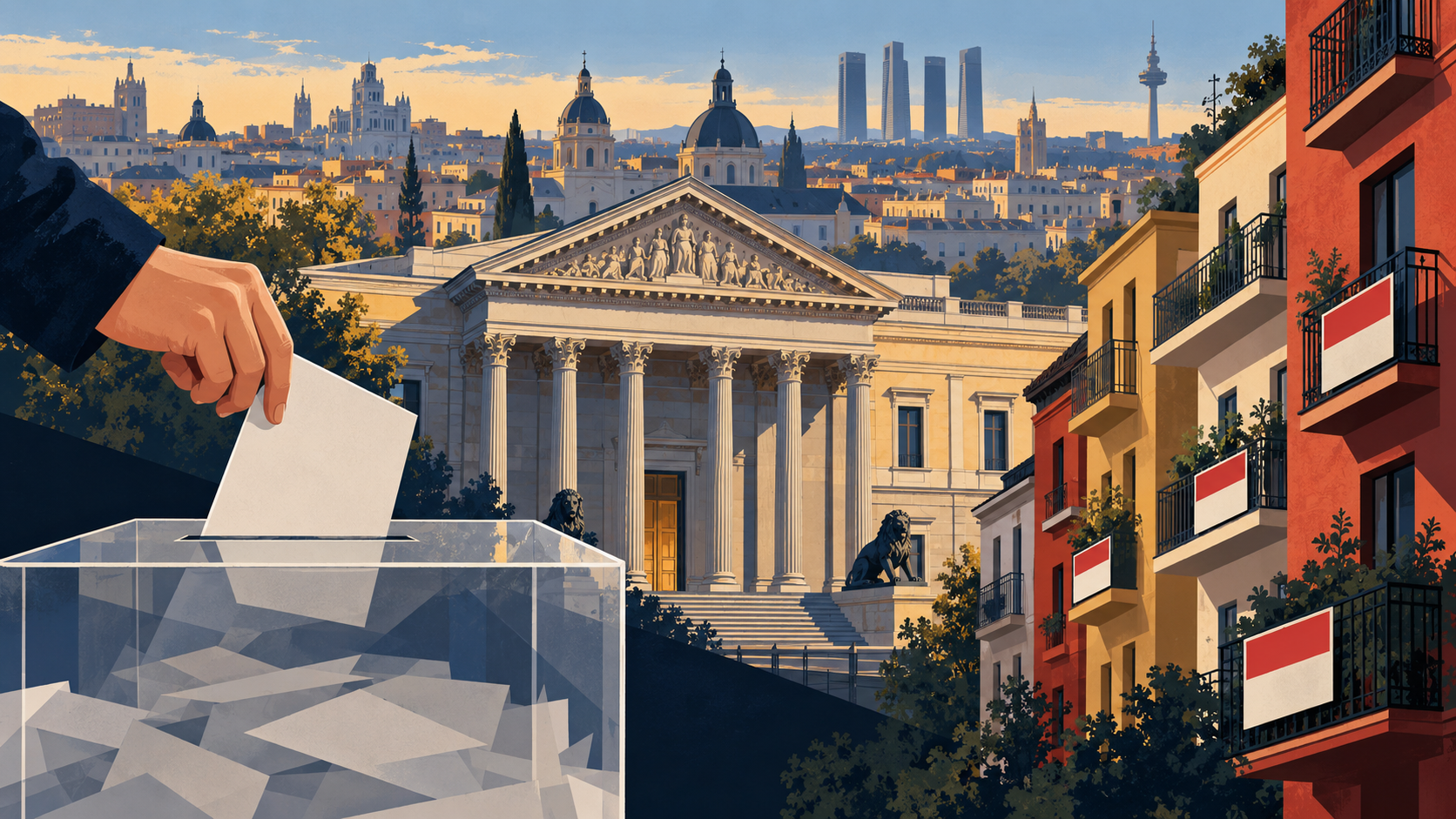
Prime Minister Pedro Sánchez has moved Spain’s general election forward to November 29 after his minority government lost crucial housing votes. Voters will choose a new Congress and Senate, but the announcement does not determine who will govern or what will happen to the rejected housing measures.
By Health Politics Daily News Desk · Published Monday, October 5, 2026 at 6:03 a.m. America/New_York · Approximately 8 minutes
Verified Baseline
The vote is scheduled for November 29
Sánchez announced Monday that Spain will hold an early general election on Sunday, November 29. In the official La Moncloa transcript, he said he had informed King Felipe VI and called an extraordinary Council of Ministers to dissolve the Cortes Generales under Spain’s legal timetable.
The announcement advances an election that otherwise could have been held in 2027. It follows Parliament’s rejection of two emergency housing decrees and months of difficulty assembling majorities in a fragmented Congress. The Associated Press and Reuters independently reported the date and political context.
Why Now
The housing votes exposed the government’s parliamentary limits
Sánchez has governed through a coalition led by his Socialist Workers’ Party, relying on several smaller and regional parties to pass legislation. Last week, opposition parties and Junts rejected housing decrees that included eviction protections and measures aimed at temporary rentals and real-estate speculation.
The defeat did not automatically force an election. Sánchez made a political choice to seek a new mandate rather than continue negotiating legislation through the existing Congress. In his address, he argued that a larger progressive majority was necessary. That is a campaign position, not an independent finding about the causes of the deadlock.
What Voters Should Know
A national election chooses Parliament, not the prime minister directly
Spanish voters elect members of the Congress of Deputies and Senate. After the vote, the monarch nominates a candidate for prime minister, who must win the confidence of Congress. If no party has a majority, negotiations among parties will determine whether a coalition or support agreement can produce a government.
Dissolution ends the ordinary work of the current chambers, while the government continues in a caretaker capacity through the transition. The election decree and official calendar govern deadlines for candidacies, campaigning and voting arrangements; voters should rely on Spain’s electoral administration and the Official State Gazette for final procedural dates.
Housing Policy
The rejected decrees do not become law because an election was called
The election elevates housing affordability into a central campaign issue, but it does not revive measures Parliament rejected. Any replacement policy would still need a valid legal route—through a caretaker mechanism where permitted, or through the Parliament formed after the election.
Spain’s housing pressures include sharply rising rents, eviction disputes and disagreement over whether rent regulation, construction, public housing or tax changes should carry more weight. The parties are likely to offer different mixes of those policies. None can be treated as enacted until the relevant legal process is complete.
Political Stakes
Polls point to uncertainty, not a predetermined result
Reuters reports that Sánchez’s Socialists trail the conservative Popular Party in most current polls, while Vox has gained support. Polls estimate opinion at a particular time; Spain’s electoral districts, turnout and post-election alliances determine seats and governing power.
The result could preserve a left-led coalition, produce a PP-led government with or without Vox support, or yield another hung parliament. Those are scenarios—not forecasts this report can verify. Candidate lists, coalitions and campaign platforms were still developing at publication time.
Fact, Analysis And Forecast
What is known—and what remains uncertain
Verified fact: Sánchez announced a November 29 election after informing the king and convening ministers to dissolve Parliament. Analysis: the failed housing votes exposed a broader inability to pass major legislation reliably. Forecast: housing, coalition stability and corruption allegations will be prominent campaign themes, but their effect on turnout and seats cannot yet be known.
It is also uncertain whether the next Parliament will produce a stable majority quickly. Spain’s constitutional process allows negotiations after the vote; election night totals alone may not identify the eventual government.
Bias Lens: how coverage frames the election
Spain is set to vote on November 29 after Sánchez announced an early election following Parliament’s rejection of two housing decrees.
Left-leaning: The Guardian centers the housing crisis and the policies defeated by conservative and regional parties. Center: AP emphasizes the confirmed timetable, legislative defeat and competing political pressures. Right-leaning: El Español’s editorial page presents the election primarily as evidence of government failure and corruption.
The distinction is clearest in causal emphasis: policy blockage and housing hardship on the left, procedural and electoral uncertainty in center reporting, and government accountability on the right. The cited El Español item is opinion, not straight reporting; its claims should not be confused with verified facts.
Principal Sources
Official announcement, election law and reporting
- La Moncloa — Sánchez’s official announcement
- La Moncloa — official video of the announcement
- Official State Gazette — Spanish Constitution
- Associated Press — election announcement and housing context
- Reuters — political and polling context
The official La Moncloa video is linked rather than downloaded or rehosted.