World History · Daily chronology
Salamis, Emancipation and the Iran–Iraq War: September 22 Across the Centuries
Six turning points—from a traditionally dated Greek naval victory to civil war, revolution, emancipation and modern interstate conflict—show both the value and limits of an exact anniversary.
Published Tuesday, September 22, 2026 at 8:51 a.m. America/New_York · Approximately 9 minutes
480 BCE · Greece and Persia · traditional, disputed date
The Greek fleet defeats Persia at Salamis
A coalition of Greek city-states defeated the much larger Persian fleet in the straits beside Salamis, near Athens. The confined water limited Persian numerical advantage, while the Greek crews’ local knowledge and formation helped produce a decisive victory. Salamis did not end Xerxes’ invasion by itself, but it damaged Persian naval power and made sustaining the campaign far harder. Ancient evidence securely places the battle in 480 BCE; modern reconstructions variously propose September 22, September 28 or other nearby dates. The exact modern day should therefore be treated as traditional, not certain.
1236 · Baltic Crusades
The Battle of Saule breaks the Livonian Brothers of the Sword
Samogitian forces defeated the crusading Livonian Brothers of the Sword at the Battle of Saule, fought on September 22, 1236, probably in what is now Lithuania or Latvia. The order lost its master and much of its fighting strength. Its survivors were incorporated into the Teutonic Order the following year. The battle checked one phase of Christian military expansion into the eastern Baltic, but it did not end the northern crusades or the long contest over land, conversion and political authority.
1499 · Central Europe
The Peace of Basel ends the Swabian War
The Treaty of Basel, concluded on September 22, 1499, ended fighting between the Swiss Confederacy and forces aligned with the Habsburg king Maximilian I and the Swabian League. The settlement exempted the Swiss from important imperial institutions and confirmed the practical autonomy the confederates had defended on the battlefield. It is often described as Swiss independence, but that wording compresses a longer constitutional development: formal separation from the Holy Roman Empire is conventionally associated with the Peace of Westphalia in 1648.
1792 · France
Year I of the French Republic begins
France’s National Convention had abolished monarchy on September 21. The following day—September 22, 1792, also the autumnal equinox—was later designated the first day of Year I in the French Republican calendar. The change did more than rename a government. Revolutionaries attempted to reorder political time itself, replacing royal and Christian reference points with a civic chronology. The republic’s institutions, borders and political character remained violently contested.
1862 · United States
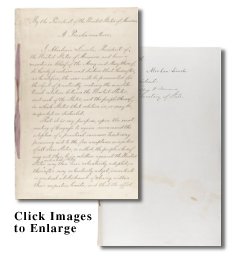
Lincoln issues the preliminary Emancipation Proclamation
Five days after the Battle of Antietam, President Abraham Lincoln announced that enslaved people in states still in rebellion on January 1, 1863, would be declared free. The preliminary proclamation did not immediately abolish slavery everywhere: it excluded loyal slave states and ultimately depended on Union military power in Confederate territory. Yet it transformed the war’s declared purpose, warned the Confederacy of the coming policy and prepared the way for Black enlistment. Nationwide abolition required the Thirteenth Amendment.
1980 · Iran and Iraq
Iraq invades Iran
Iraqi forces crossed the Iranian frontier and launched air attacks on September 22, 1980, opening an eight-year war. Saddam Hussein’s government sought advantage from revolutionary Iran’s instability, disputed borders and control around the Shatt al-Arab waterway. The anticipated short campaign became a grinding conflict of trenches, missile attacks on cities, assaults on shipping and Iraqi chemical-weapons use. A 1988 ceasefire ended the fighting without the decisive territorial settlement Baghdad had sought; the human and political consequences reshaped both states and the wider Gulf.
Across the centuries
A date can mark a decision without explaining the whole transformation
Salamis, Saule and the Iran–Iraq invasion began or redirected wars whose outcomes unfolded over years. Basel, the French republican calendar and Lincoln’s proclamation announced political changes that still required enforcement, recognition or later law. Read together, they caution against treating a dated act as an instantaneous transformation: September 22 often marks a hinge, not a finished story.
Sources
Documents and references used
- Encyclopaedia Britannica — Battle of Salamis
- Encyclopaedia Britannica — Battle of Saule
- Historical Dictionary of Switzerland — Swabian War
- Élysée — origins of the French Republic
- U.S. National Archives — Preliminary Emancipation Proclamation
- U.S. National Archives — scope and effect of the final Emancipation Proclamation
- U.S. State Department Office of the Historian — Iran–Iraq War
- Encyclopaedia Britannica — Iran–Iraq War